
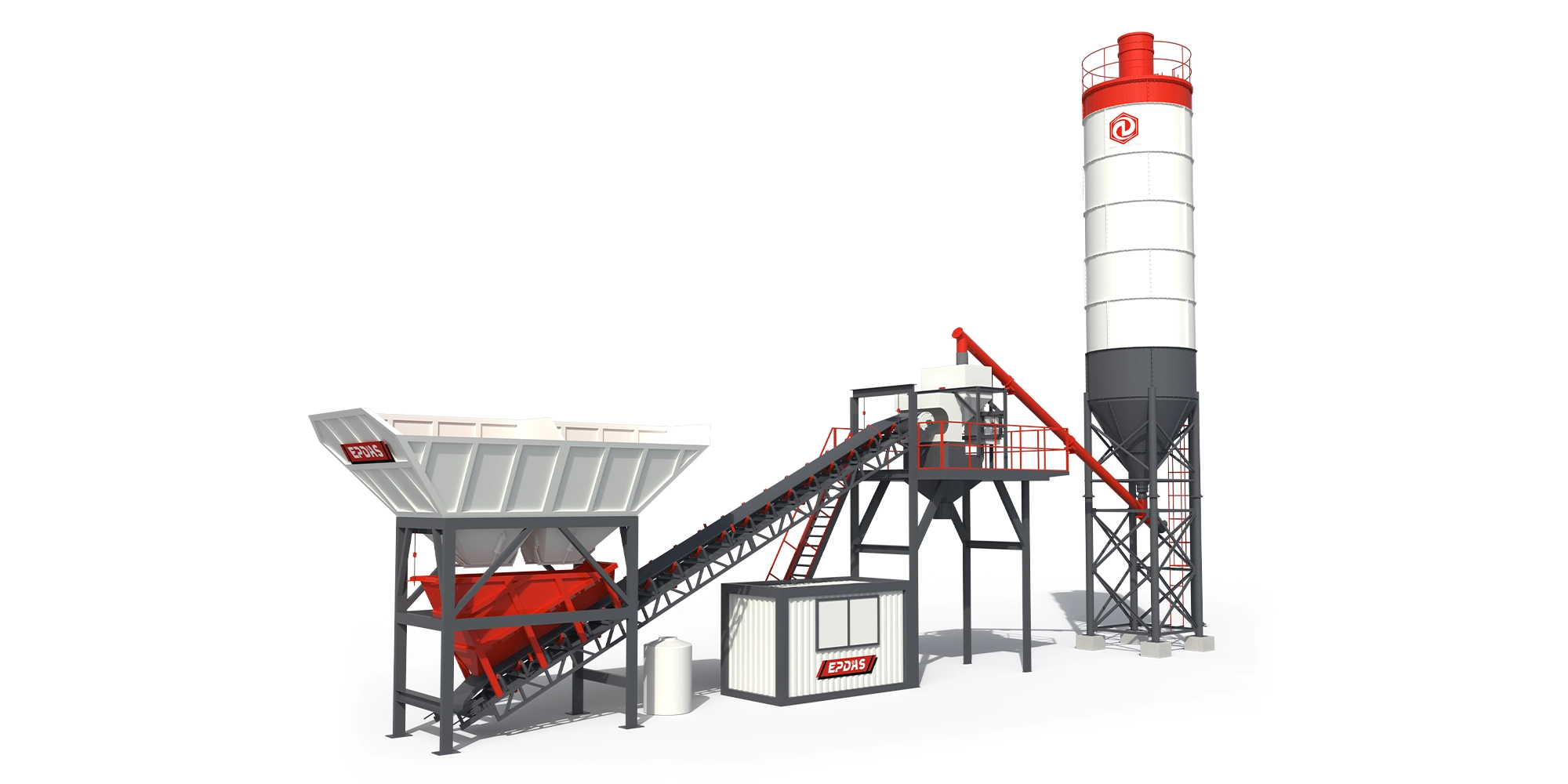
Dry Mix Concrete Plant
Dry Mix Concrete Plant is a professional engineering device for producing dry-mix concrete, featuring precise batching of cement, sand, aggregate and additives. It has compact structure, easy installation and high mixing accuracy, widely applied in road, bridge and construction projects with flexible on-site operation.
- Productivity:20-150m³/h
- Type:GHZ20/60/80/100/150
What is a Dry Mix Concrete Batching Plant
A dry mix concrete batching plant mixes aggregates and cement evenly without water at the station. We only add water when we get to the construction site or on the way of delivery. The equipment mainly consists of storage bins, batching machines, mixers, conveyors and control cabinets. Different from wet mix plants, there are no water tanks or water pumps on it.

- Dry Mix Concrete Plant
GHZ60/90/120
Precision batching control, modular site assembly, zero-waste material flow, rugged low-maintenance design, and high-uniformity dry blending.
| Model | GHZ60 |
| Productivity | 50~60m³/hr |
| PL1600 Aggregate system
| Storage bins 4×6 m3 |
| Vibrator MVE100/3 | |
| Scale hopper 1.6 m3 | |
| Feeding belt conveyor 11kw | |
| Belt width 650mm | |
| Cement scale
| Scale hopper 500kg |
| Vibrator MVE60/3 | |
| Butterfly valve SD250 | |
| Water scale
| Scale hopper 250kg |
| Butterfly valve SD100 | |
| Water pump 2.2kw | |
| Additive scale
| Scale hopper 30kg |
| Butterfly valve SD50 | |
| Water pump 1.1kw | |
| PE Storage bucket 1.5m³ | |
| Main structure
| Outer frame (25U-bar welding) |
| Leg braces and triangle braces | |
| Ladder & handrail | |
| Tires and chassis movement system (OPTIONS) | |
| Hopper for gathering materials
| Hopper |
| Wear-resistant liner plate | |
| Rubber cylinder | |
| Pneumatic control system
| Air compressor 7.5kW |
| Oil-water separator | |
| Solenoid valve | |
| Air ropes and connectors | |
| Electrical control system
| Integrated control cabinet |
| Voltammeter | |
| Buttons and indicator lights | |
| Weighing display instrument | |
| Control computer and software (OPTIONS) | |
| Uninterruptible Power Supply 500VA (OPTIONS) | |
| Cement screw conveyor | Φ219×9m (OPTIONS) |
| Cement silo | PSC100 set (100 tonnes OPTIONS) |
Common Faults and Emergency Troubleshooting of Dry Mix Concrete Batching Plants
Small breakdowns are hard to avoid during actual construction. Knowing how to deal with them quickly can reduce shutdown time and keep the project on schedule. The faults listed here are what we meet almost every day, and we can fix most of them without waiting for after-sales workers.

- Inaccurate Batching Machine Measurement
This is one of the most common problems on site. When the batching weight departs from the set value beyond the allowable range, generally ±2% for aggregates and ±1% for powder, the concrete mix ratio and quality will be directly affected. On real job sites, this problem usually comes from three things, sensors blocked by materials or damaged, hoppers of batching machines out of shape, and electrical circuits in poor contact. This is not a serious breakdown in most cases, but it must be handled at once. If not fixed in time, this can stop production for 2–4 hours and waste a large amount of raw materials.
Solution: Shut down the machine and clean the residual materials on the sensors, check whether the sensors are loose, and replace them with spare ones temporarily if they are broken. We can correct the slightly deformed hopper temporarily, but we have to stop the machine to repair or replace the seriously deformed one to keep it level. For loose circuits, just plug the interfaces again to make them firm, then recalibrate the batching machine, and we can use it again when the error is within the allowable range. - Uneven Mixing of the Mixer
Uneven mixing leads to insufficient concrete strength, and we can see cement clumps and uneven aggregate distribution in the dry mixture. From our practical experience, this problem is mostly caused by worn mixing blades, unreasonable mixing time setting, or wrong formula logic in the automatic control system.
Solution: Shut down the machine and check the mixing blades. Replace them in time if there are mixing dead corners or obvious efficiency drop. We check and replace the blades every 6 to 8 months as a routine. For forced-action mixers, the mixing time is usually set at 30 to 90 seconds according to the equipment manual to ensure even mixing of dry materials. We also need to check the formula logic in the control system to avoid uneven mixing caused by wrong feeding sequence. - Conveyor Jamming or Failure to Run
Belt conveyors are the most prone to problems, such as belt deviation, material jamming, or even failure to start. Common reasons include loose belts, materials accumulated on rollers, damaged or stuck idlers, and motor failures. If we hear abnormal noise, see serious belt variation or belt slipping, we must shut down the machine immediately to check to avoid making the fault worse.
Solution: Adjust the roller position and tighten the belt if it departs, getting into the habit of checking belt tension every 3 months. Clean up the materials on rollers if there is accumulation to prevent jamming. If the motor cannot start, check the circuit and power supply to eliminate short circuits. If the motor is overloaded, we have to find out the cause like material jamming or bearing problems before restarting, otherwise the motor will be burned out. - Cement Silo Blockage
Cement silo blockage is mainly caused by damp and agglomerated cement, especially in rainy construction. The screw conveyor cannot convey cement or the conveying capacity drops significantly. This issue is especially common in rainy regions like Southeast Asia, southern China and coastal areas. The real reasons are poor sealing of the cement silo and damp cement caused by feeding in rainy days.
Solution: Close the feeding port of the cement silo first to stop more damp cement from entering, then use the air cannon to break up the agglomerated cement inside the silo. If the blockage is serious, open the bottom access door to clean it manually. After cleaning, check the sealing parts and replace the damaged gaskets to prevent moisture from entering again. Damp cement must be tested qualified before use, otherwise it will affect the structural quality.
In rainy seasons, turn on the silo top dehumidifier or keep ventilation, and check the silo sealing regularly to reduce the risk of blockage.
Core Differences Between Dry Mix and Wet Mix Concrete Plants
Many construction managers hesitate between dry mix and wet mix plants. There is no absolute good or bad, and the choice depends on project needs. We clarify the core differences below to help you make a quick decision.
The most essential difference lies in mixing and transportation links.
Dry mix plants mix materials dry at the station and add water on site or during transportation, so there is no slump loss during mixture transportation. Wet mix plants add water and mix into finished concrete at the station, with the best transportation distance ≤20 kilometers. Beyond this distance, slump loss exceeds 10% and reduces the final effect of concrete.
There are also obvious differences in equipment structure.
Dry mix plants have no water storage tanks or water pumps, with simpler structure and easier maintenance, and fewer annual maintenance times than wet mix plants. Wet mix plants have complex structures and more components, with higher later maintenance costs, and need more maintenance expenses every year under normal working conditions.
In terms of cost
Dry mix plants have lower initial investment and maintenance costs, suitable for projects with limited budget. Wet mix plants have higher initial investment and maintenance costs, but more precise concrete quality control with small strength error, suitable for large-scale and fixed-site projects with extremely high quality requirements.
The flexibility gap is very large.
Dry mix plants allow on-site mix ratio adjustment with error controlled within ±1%, ideal for temporary and remote projects. Wet mix plants fix the mix ratio at the station, and adjustment needs advance reporting, with poor flexibility, more suitable for large-scale projects with daily capacity exceeding 2,000 cubic meters.
In short, choose dry mix plants for temporary projects, remote projects and limited budgets, and wet mix plants for large-scale projects with extremely high concrete quality requirements.
Maintenance Tips: Extend the Service Life of Dry Mix Concrete Plants
Maintenance of dry mix concrete batching plants is not complicated. Doing daily, regular and seasonal maintenance well can effectively extend the service life of the equipment, reduce faults and avoid delaying the construction schedule. The following maintenance tips are summarized from our daily operation and are easy to implement.

- Daily Maintenance: Must-do Tasks Every Day
Clean the mixer, conveyor and storage bins thoroughly before leaving work every day to prevent material clumping from affecting the next use. Residual dry materials in storage bins and mixers will harden over time, causing equipment blockage and 2 to 4 hours of shutdown.
Check rotating parts such as bearings and gears to ensure sufficient lubrication, and replenish lubricating oil in time to prevent component wear. Insufficient lubrication of bearings will significantly shorten their service life, especially under high load.
In addition, carefully check the control cabinet and electrical system for loose circuits, because electrical problems are one of the most common causes of shutdown on site. - Periodic Maintenance: Regular Inspection and Timely Replacement
Replace worn parts regularly such as belts, mixing blades and seals. Their service life is affected by usage frequency, material type and working conditions. Under normal working conditions, mixing blades last about 6 to 8 months, and belts last 12 to 15 months, which can be adjusted according to usage intensity. Timely replacement is necessary to avoid affecting equipment performance and causing faults.
Tune the batching machine regularly to ensure measurement accuracy, preferably every 3 to 6 months, and shorten the cycle if used frequently, so as to avoid inaccurate batching from affecting concrete quality. Meanwhile, check the cement silo for cracks or corrosion, especially at the welding parts, and handle problems in time to prevent cement leakage, material waste and potential safety hazards. - Seasonal Maintenance: Adjust According to Seasons
In winter, focus on anti-freezing measures, insulate water pipes and equipment to prevent freezing and cracking from affecting water adding operation. Electrical components are more prone to faults in low temperature, so check them in advance to avoid unnecessary shutdown.
In summer, electrical components are easy to overheat and break down. Take cooling measures, install cooling fans next to the control cabinet, and avoid long-time operation under direct sunlight.
Avoid common maintenance mistakes, such as ignoring the cleaning of the dust removal system leading to dust blockage, or overloading the mixer causing accelerated wear.
How to Choose a Suitable Dry Mix Concrete Plant
Many construction bosses choose the wrong equipment, either overcapacity leading to cost waste or inappropriate type for the site, which affects the construction progress. Based on practical experience, we only need to grasp 5 core factors to choose the right equipment.
- 01
Clarify Project Needs First
First, determine the project scale. Different scales match different equipment capacities. For small projects with daily concrete demand less than 100 cubic meters, mobile types of 20 to 80 cubic meters per hour are the best choice. For medium projects of 100 to 300 cubic meters per day, compact plants of 30 to 100 cubic meters per hour are suitable.
We also need to consider the project cycle. Mobile types are for temporary or short-term projects less than 3 months, and stationary types are for long-term projects over 1 year for better stability and durability. - 02
Select According to Site Conditions
Site space is a key factor in selection. Compact dry mix plants are suitable for urban sites with available area less than 150 square meters to save space. Stationary plants are ideal for suburban large sites with area ≥300 square meters with higher capacity to meet large-scale construction needs.
Taking transportation conditions into consideration is also crucial. Mobile types are for remote and inaccessible sites. Meanwhile, make sure there is a stable water supply on site, because we need to add water on site, otherwise it will affect the water adding efficiency and delay the construction. - 03
Focus on Equipment Quality and Reliability
Equipment quality directly affects the construction progress. We should pay attention to the material of components such as storage bins, mixers and conveyors, and choose high-quality steel for better durability and fewer faults.
Check the brand reputation and after-sales service. Regular brands provide more reliable quality and timely maintenance, avoiding delays in the construction schedule. Also confirm the warranty period and later maintenance support, so we don’t have to worry about later use. - 04
Consider Budget Constraints
Budget is a big concern for many construction bosses. Stationary dry mix plants have higher initial investment but lower long-term operating costs. Mobile types have lower initial investment but limited capacity, suitable for small projects with limited budget.
We shouldn’t only look at the initial purchase cost, but also consider long-term operating and maintenance costs such as electricity, parts replacement and labor. Choose the most cost-effective one instead of the cheapest one to avoid greater losses in the later period. - 05
Comply with Local Regulations
Environmental and safety requirements are getting stricter in various regions. We must confirm whether the equipment meets local environmental standards such as dust and noise control, so as not to be shut down due to non-compliance. Ensure that the equipment complies with safety standards, with standardized operation and installation, and complete safety protection measures to avoid safety accidents during construction.
Core Advantages of Dry Mix Concrete Plants
- More Economical Operating Cost
Dry mix concrete plants use very little water because we don’t add water during mixing. This not only reduces water waste, but also saves equipment investment of extra water tanks and water pumps. The simple structure and fewer wearing parts bring lower later maintenance costs. Under normal working conditions, we can save a lot on maintenance every year and reduce parts replacement by 2 to 3 times a year.
- Stronger Flexibility for Multiple Applications
We can adjust the mixture ratio on site according to the actual project needs, instead of fixing it at the station. It can adapt to various aggregates, including sand, gravel and screened recycled aggregates. The applicable proportion of recycled aggregates can reach 30% to 50% depending on concrete strength grade. For C30 and below concrete, the proportion can be up to 50%, and for C40 and above, it is better to control it within 30%.
- More Environmentally Friendly
The dry mix concrete plant produces almost no wastewater because there is no wet mixing process. Compared with wet mix plants, it reduces annual wastewater discharge by about 1,200 cubic meters. With more and more strict environmental requirements in many regions, after being equipped with a dust removal system, it can meet most regional emission standards, usually below 30mg/m³, subject to local standards, so we won’t be shut down due to pollution problems.
- More Guaranteed Concrete Quality
Mixing aggregates and cement dry first ensures more even distribution of raw materials, without local excess cement or aggregates, laying a solid foundation for concrete quality. Adding water on site also effectively avoids slump loss during transportation. Wet mix concrete usually loses more than 10% slump after long distance transportation, while dry mix concrete plant can control slump error within ±5% after on-site water addition, keeping concrete fresh and ensuring construction quality.
- Simple Installation and Operation
Dry mix concrete plant has a simple structure and is easy to install. Mobile types can be installed and debugged in 1 to 3 days without complex foundations. Stationary types take 7 to 15 days to put into use, 30% shorter than wet mix plants of the same capacity, greatly shortening the construction preparation time. The control cabinet is easy to operate with automatic batching and mixing. Ordinary workers can get started after simple training, which saves labor costs for the project.
- Convenient Transportation and Storage
Dry mix concrete plant is in dry state, so we don’t have to worry about premature solidification or segregation during transportation. It supports longer distance transportation and reduces material loss. Different from wet mix concrete, it doesn’t need special heat preservation or moisture preservation transportation conditions, and can adapt to various transport vehicles. It can be stored for a short time in a dry environment without additional storage equipment.
EPDAS Dry Mix Concrete Plant Projects
Equipment Details Display of Dry Mix Concrete Plants
Dry mix concrete plant comprises heavy-duty steel structural frames, high-precision batching modules, centralized transit mixer collection hoppers, sealed powder silos and anti-corrosive conveying components, all made of premium materials with rigorous quality control for durable, reliable structural and component performance.
Dry Mix Concrete Plant FAQs
- How do I choose the right concrete batching plant for my project?
To choose the right concrete batching plant, consider factors such as required output capacity, project duration, site size, and budget. Mobile concrete batching plants are suitable for temporary or remote projects, while stationary batching plants are ideal for long-term, high-capacity concrete production. We are a Professional supplier and can help you select the most efficient solution.
- What types of mixers are used in concrete batching plants?
Concrete batching plants can be equipped with twin-shaft mixers, planetary mixers, pan mixers, or single-shaft mixers. Twin-shaft mixers are widely used in stationary concrete batching plants due to their high output and strong mixing performance, while planetary mixers are ideal for precast concrete and high-quality concrete production. Choosing the right mixer depends on concrete grade, production capacity, and project requirements.
- Can a concrete batching plant control system be customized?
Yes. The batching plant control system can be fully customized, including PLC brand, interface language, automation level, and data management functions. Advanced options include remote monitoring, automatic reporting, and production data storage, making the concrete mixing plant easier to operate and manage.
- What power supply standards can concrete batching plants support?
Concrete batching plants can be designed to match different international electrical standards, such as 380V 50Hz, 415V 50Hz, or 440V 60Hz. Electrical components are selected according to local power conditions to ensure safe and stable operation.
- Can concrete batching plants operate in extreme climates?
Yes. Customized concrete batching plants can be designed for hot, cold, dusty, or humid environments. Options include thermal insulation, heating systems, dust collectors, and corrosion-resistant materials to ensure reliable performance in harsh working conditions.
- What is the delivery time for a concrete batching plant?
The production time for a concrete batching plant usually ranges from 15 to 45 days, depending on capacity and customization requirements. Shipping time varies by destination. EPDAS can provide clear delivery schedules and export support.
- What should I do if the weighing is inaccurate and the concrete mix ratio has a large error?
If you notice weighing errors, stop production immediately and do not force the machine to run. Check these common issues first: Calibrate the sensors regularly: Weighing sensors can drift slightly over time. Calibrating them once a month will ensure continuous accuracy. Check for moisture and loose wiring: Inspect the sensors to see if they are damp or if the cables are loose. Fix any wiring issues right away. Prevent material buildup: Avoid overloading the aggregate bins. Leftover material can press against the weighing hopper and ruin the measurement. Clean out the bins daily.
- What are the wearable parts of the equipment and how often should they be replaced?
The core wearable parts are mainly located in the mixing and conveying systems. These include mixer blades, liners, conveyor belts, seals, and screw conveyor flights. Under normal use and proper daily maintenance, the estimated replacement intervals are as follows: Mixer blades and liners: 6 to 12 months Conveying belts: 1 to 2 years Seals and lubrication components: Inspect and replace every 3 to 6 months The exact lifespan depends on your production frequency and the abrasiveness of your materials. We highly recommend keeping a small stock of these wear parts in advance to prevent unexpected downtime and project delays.
- How is the mobile concrete batching plant transported?
Transportation is highly convenient and generally split into two types based on the equipment design: Towed (Trailer-mounted) models: These units are built on a heavy-duty chassis with wheels and can be easily towed directly to the job site by a standard truck head. Self-propelled models: These units are equipped with their own driving power system and can move independently around the site or short distances without requiring extra towing vehicles. Both options are engineered for rapid relocation and can be quickly prepared for transport to keep your project moving efficiently.
- Is a foundation-free concrete batching plant more cost-effective than a traditional one?
Yes, it is definitely more cost-effective for temporary projects or jobs that require frequent relocation. While the initial equipment purchase prices are similar, the foundation-free model eliminates the expensive civil engineering costs of pouring a permanent concrete foundation. The entire setup can be reused at next job sites, which saves a significant amount of money over the long term. On the other hand, if you are running a long-term, fixed-location factory, a traditional batching plant might offer slightly better long-term stability.
- Can cement silos be used to store materials other than cement?
Yes. You can store any dry, powder-like materials such as fly ash, lime, and slag powder without major modifications. Just make sure to avoid cross-contamination by keeping different materials in separate silos. Note: If storing highly corrosive materials, a specialized anti-corrosion coating is required.
- Can screw conveyors handle vertical transport?
Yes, but only for short distances. Vertical transport requires short-pitch screw flights and strict feed rate control to prevent material backflow. Because vertical transport consumes much more power, we recommend using an inclined conveyor instead if space permits to reduce energy costs and mechanical wear.
- What should I do if the screw shaft makes unusual noises?
Stop the machine and check these three main causes to troubleshoot the issue: Blade-to-trough friction: Check the alignment of the screw shaft. Adjust its level and straightness to stop the blades from scraping the trough wall. If blades are unevenly worn, grind or replace them. Damaged bearings: Turn off the power and check the bearings for wear. Replace any damaged bearings immediately and apply fresh lubricant. Material jamming: Clear out any blocked material inside the trough. Control the feeding speed to prevent overloading, and inspect the screw flights for any deformation.
- What causes the screw conveyor motor to overheat and how do I fix it?
Motor overheating is usually caused by four common issues. Follow these steps to fix them: Overloading: Reduce the feeding speed and clear any jammed material inside the trough. If the conveyor regularly operates under heavy loads, consider upgrading to a motor with higher power. Poor heat dissipation: Clean off any dust and debris from the motor surface to ensure the cooling vents are clear. Avoid running the motor in high-temperature environments for too long. Jammed bearings: Inspect the bearings for wear and tear. Apply fresh grease, and replace them immediately if they are damaged. Wiring faults: Check the electrical connections for loose wiring or aging cables. Repair or replace the damaged wiring right away.
- What should I do if the screw conveyor leaks material during operation?
Material leakage is usually caused by seal failures or structural wear. Check these three areas to fix it: Damaged seals: Inspect the trough seals and O-rings. Replace any aging or broken sealing components immediately to restore a tight seal. Trough or blade wear: Check for holes or thinned areas on the trough walls and screw flights. Repair or replace the worn sections right away, and set up a regular inspection schedule. Inlet/Outlet leaks: Adjust the sealing mechanisms at both the feeding inlet and discharge outlet. Install extra gaskets or sealing pads to stop materials from escaping.

Customize Your Solutions
Contact us now via Email:info@epdas.com, or Whatsapp:+86 188 38115507 , or fill in the form below.
FEW TIPS:
- Please describe the capacity per hour of the batching plant (e.g., 25m³/h-240m³/h).
- Please tell us the project location (please specific the city).
- Please tell us your project start-up date.
- Please detail your specific requirements or expectations (e.g., voltage,automation, climate, etc.).
- If you are interested in becoming our distributor, please let us know.
Service Process:
- Business negotiation
- Solution development
- Manufacturing and commissioning
- Operational production