
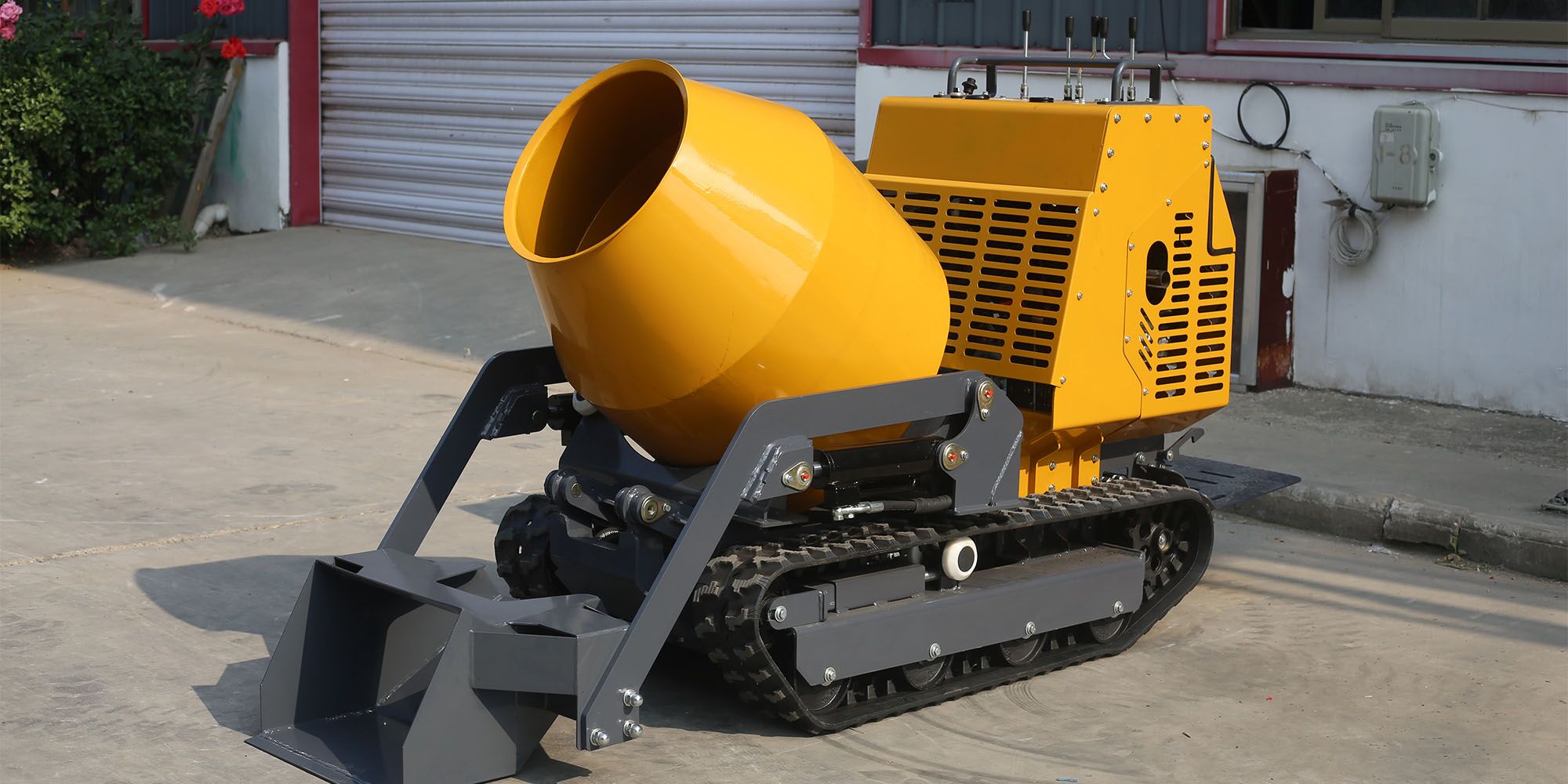
Mini Self-loading Concrete Mixer
Mini self-loading concrete mixers are designed to provide flexible and efficient concrete production solutions for projects where mobility, space limitations, and on-site responsiveness are critical. With a compact structure and strong maneuverability, they can operate effectively in remote areas, urban construction sites, and locations with limited access. These machines help contractors produce fresh concrete directly at the point of use, reducing dependency on external concrete supply and improving workflow continuity.
- Output Capacity:0.2m³
- Drum Rotation:360°
What is a Mini Self-Loading Concrete Mixer
Mini self-loading concrete mixers are all-in-one machines engineered for small-to-mid-sized construction and maintenance projects. They integrate material loading, weighing, batching, transport, and discharge, eliminating the need for support equipment like skid steers, loaders, or transit mixers. A single unit manages the entire concrete batching cycle autonomously.
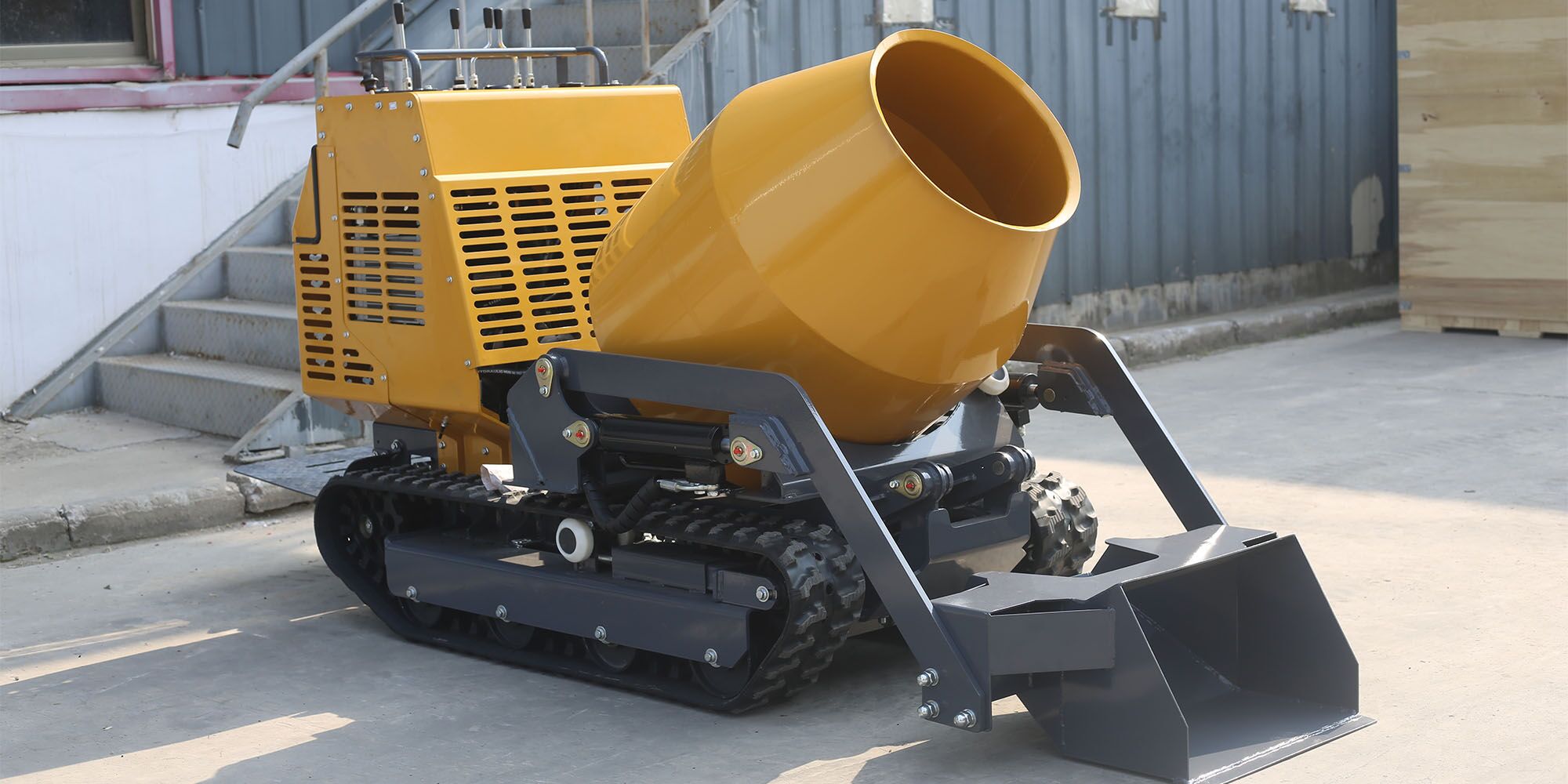
- Mini Self-loading Concrete Mixer
| Model | EP750B |
| Engine Power | 10.07k/13.5hp |
| Engine | Gasoline |
| Emission Standards | EPA4, StageⅤ |
| Load Capacity | 750kg |
| Net Weight | 750kg |
| Mixing Drum Capacity | 300dm³ |
| Overall Dimensions | 2500*900*1500mm |
Core Application Scenarios of Mini Self-Loading Concrete Mixers
Thanks to its compact size, flexible operation, and on-site concrete production capability, the mini self-loading concrete mixer can adapt to a wide range of construction environments. The following sections explain the key reasons why this equipment provides an efficient and cost-effective concrete solution for different applications.

Construction of civil housing
Rural homes, villa construction, and urban renovations are often space-constrained with scattered concrete needs.
Reasons:The machine can be positioned right at the pour site, providing the exact volume needed for footings, grade beams, columns, or floor slabs, while ensuring consistent quality that manual mixing cannot replicate.
Rural road infrastructure
Field roads, village access paths, and rural trails are often remote and far from commercial ready-mix plants.
Reasons:The unit operates directly on-site, performing “mix-and-pour” operations without external support. This slashes logistics costs and accelerates the delivery of critical rural infrastructure.
Mountainous and remote field projects
Projects like slope stabilization, remote forestry infrastructure, and water diversion often involve inaccessible or congested terrain.
Reasons:Leveraging its 4WD off-road capabilities, the unit can navigate complex field environments to deliver concrete, solving the fundamental problem of supply chain logistics in remote areas.
Small-scale municipal and infrastructure projects
Sporadic tasks such as street paving, drainage trench pouring, or bridge repairs require small, frequent batches.
Reasons:The unit is highly mobile and requires minimal setup time, allowing for “plug-and-play” operation across multi-point municipal work zones.
Construction of agricultural facilities
Farm storage pads, livestock foundation work, and irrigation channels are typically remote with minimal site support.
Reasons:With its low-input cost and simple, intuitive controls, this equipment provides cost-effective solution for agricultural infrastructure demands.
Investment Advantages and ROI of Mini Self-Loading Concrete Mixers
For construction contractors, engineering leasing companies and small infrastructure teams, this equipment is not only a construction tool, but also a core equipment that can reduce overall construction costs and increase profits.
Significantly save labor costs
Traditional methods require a crew for loading, mixing, and transporting. This unit streamlines the process to a single operator, cutting on-site labor overhead.
Save high transportation costs
Purchasing commercial concrete for remote or small projects is expensive and prone to material loss. On-site batching eliminates the delivery logistics and the associated costs of transit-mixer idling or concrete wastage.
Comprehensively improve construction efficiency
Integrated operations remove the lag time of waiting for commercial deliveries or coordinating multiple machines. By consolidating these steps, you reduce wait times and material waste to under 25%, drastically boosting job-site throughput.
Under normal conditions, the ROI cycle is driven by usage frequency, local labor costs, and concrete volume. For active contractors and rental fleets, the reduction in transport and labor overhead can contribute to a faster return on investment by reducing labor and transportation costs.
Common Challenges in Small and Medium Construction Projects
Many small-scale, scattered, or rural sites face recurring operational bottlenecks that inflate project costs and drag down productivity.
- Manual concrete mixing operations
Reliance on manual labor to handle cement, aggregates, and water is costly and inefficient. Without precise dosing, achieving consistent concrete mix design and quality is nearly impossible.
- Remote areas away from urban centers
For rural road or mountainous sites far from metro hubs, the logistics of hauling ready-mix concrete are prohibitively expensive. Long transit times also lead to slump loss and concrete segregation, which can affect concrete workability and construction quality.
- Multiple equipment requirements
Small projects often require a fleet of auxiliary machines, increasing capital expenditure, rental costs, and maintenance overhead. Coordinating multiple pieces of equipment on-site requires constant supervision, increasing the risk of bottlenecks and scheduling delays.
- Limited construction space
Urban infill, residential renovations, and narrow-access sites often lack the room to maneuver standard machinery. Limited space and tight turning radii often force contractors to rely on inefficient manual labor, which inevitably pushes back project timelines.
Complete Operation Process of Mini Self-Loading Concrete Mixers
The whole operation process is simple and easy to understand, and the degree of automation is high. Novices can operate it with simple training, and the whole process does not require complex manual intervention.

- Step 1
Automatic loading
The unit features a hydraulic loading bucket that scoops sand, gravel, and cement, fully automating the material feeding process.
- Step 2
Accurate weighing and matching ratio
An onboard intelligent weighing system tracks material weight in real-time. It It provides accurate material measurement to maintain consistent concrete mix proportions.
- Step 3
Stir and shape evenly
The mixing drum, made of high-strength, wear-resistant steel, uses specialized helical blades to ensure a homogeneous mix. The optimized drum design reduces material residue and improves mixing consistency.
- Step 4
Transfer to the nearest place
After mixing, the unit drives directly to the pour point under its own power. This eliminates the need for secondary transport and prevents concrete from setting in the drum.
- Step 5
Accurately unload the material at a fixed point
The drum reverses and discharges via a high-pivot, wide-angle chute. This allows for precision pouring, easily docking with foundation footings, trenches, or slab forms.
Core Advantages of Choosing a Mini Self-Loading Concrete Mixer
- All-in-one concrete production solution
Eliminate the need for additional site machinery. A single unit handles the entire production workflow independently, simplifying site logistics and streamlining the resource management of small-scale projects.
- Produce fresh concrete directly at the job site
Produce fresh, high-quality concrete exactly when you need it. On-site batching ensures that every load maintains optimal workability and performance, satisfying the demands of long-term outdoor construction.
- Compact design for limited access construction sites
Engineered for agility, these mixers feature a compact frame and a tight turning radius. This superior maneuverability allows them to easily navigate narrow rural lanes, crowded urban residential zones, and confined indoor sites.
- 4WD capability for challenging terrain
Equipped with a 4-wheel drive system and a high-clearance chassis, the machine offers exceptional off-road performance. It is designed to navigate complex, unpaved terrain such as muddy or gravel-strewn construction paths.
- Reduce on-site labor requirements
Replacing traditional labor-intensive, multi-machine methods with a single-operator system significantly reduces manpower needs for loading, mixing, and material handling. Over time, these labor savings become a major contributor to project profitability.
- Suitable for various small and medium construction projects
The output capacity and operational cycle are well suited to small-to-mid-sized job demands. It is a versatile asset for equipment rental fleets and independent contracting crews, ensuring high utilization rates with reduced resource waste.
EPDAS Mini Self-loading Concrete Mixer Projects
Mini Self-loading Concrete Mixer FAQs
- What are the advantages of a self-loading concrete mixer compared to traditional mixers?
A self-loading concrete mixer eliminates the need for separate loaders, batching plants, and transport vehicles. This reduces labor costs, saves time, and improves flexibility, making it an ideal solution for small to medium construction projects and remote job sites.
- How do I choose the right self-loading concrete mixer for my project?
When choosing a self-loading concrete mixer, consider mixing capacity, engine power, terrain conditions, and daily concrete output. Smaller models suit residential projects, while larger models are better for infrastructure and commercial construction. EPDAS can help you select the best model.
- What engine and hydraulic systems are used in self-loading concrete mixers?
Self-loading concrete mixer trucks are powered by diesel engines with hydraulic systems that control loading, mixing, steering, and discharging. High-quality hydraulic pumps and valves ensure stable operation, precise control, and long service life even in harsh construction environments.
- Can self-loading concrete mixers work on rough or uneven terrain?
Yes. Most self-loading concrete mixers are equipped with four-wheel drive, high ground clearance, and articulated steering, allowing them to operate efficiently on rough, muddy, or uneven terrain commonly found at construction sites, rural areas, and mining projects.
- What maintenance is required for a self-loading concrete mixer?
Routine maintenance includes checking hydraulic oil, cleaning the mixing drum, inspecting wear parts, lubricating joints, and monitoring engine performance. Proper maintenance ensures stable operation, extends equipment lifespan, and minimizes downtime.
- What is the mixing capacity of a self-loading concrete mixer?
Mixing capacity varies by model, typically ranging from 1.2 m³ to 6.5 m³ per batch. The choice of capacity depends on project size, daily concrete demand, and transportation distance. Larger-capacity self-loading concrete mixers are ideal for medium-scale infrastructure and remote projects.
Related Products
Customize Your Solutions
Contact us now via Email:info@epdas.com, or Whatsapp:+86 188 38115507 , or fill in the form below.
FEW TIPS:
- Please provide your delivery location and purchase plan.
- Please describe your project application and working conditions for the mini self-loading concrete mixer.
- Please specify your required concrete production capacity (e.g., daily output, concrete volume demand, or expected working hours per day).
- Please describe your job site conditions and special requirements.
- If you are interested in becoming our distributor, please let us know.
Service Process:
- Business negotiation
- Solution development
- Manufacturing and commissioning
- Operational production