
Mobile Asphalt Plant
Mobile asphalt plants provide a practical solution for producing high-quality asphalt mixtures with consistent performance at different job sites. Equipped with integrated feeding, heating, mixing and control systems, they help contractors maintain stable production, reduce material delivery delays and improve construction efficiency throughout various road development projects.
- :
- :
What is a Mobile Asphalt Plant?
Mobile asphalt plant is also often referred to as portable asphalt mixing equipment. Such equipment is mainly used for on-site asphalt mixing to produce asphalt materials that meet the construction requirements.
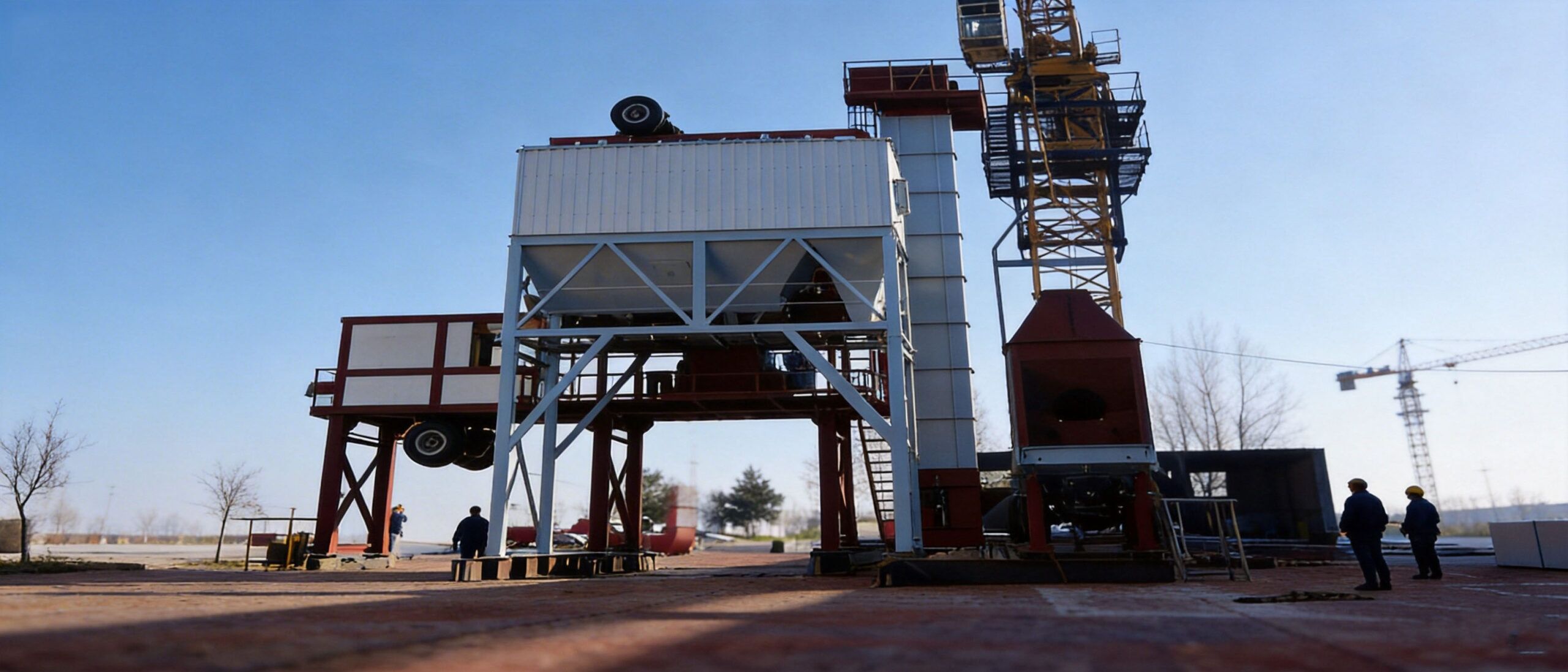
Compared with stationary asphalt plants, the biggest feature of mobile asphalt plants is that they can be relocated, have a short installation cycle and low infrastructure construction requirements. They are more suitable for multi-project construction, temporary road engineering and construction in remote areas.
Mainstream Applications of Mobile Asphalt Plants
The mobile asphalt plant is more suitable for short-term, scattered and remote construction scenarios, and it is also commonly used equipment for small and medium-sized road projects at home and abroad.
- Construction of expressway sections
Expressway projects usually cover long distances and are divided into multiple construction sections. A stationary asphalt plant may not efficiently supply materials for the entire project area. For long-distance road projects, the mobile asphalt plant can adjust the deployment location to reduce the thermal segregation and transportation costs, caused by long-distance transportation of mixed materials.
- Upgrading and transformation of rural roads
The rural construction site is small and the supporting facilities are not perfect. Most of them are scattered projects with a small project volume. The early investment of the traditional mixing station is too high, and The mobile asphalt plant can be quickly transported to the site and easily relocated after project completion.
- All kinds of temporary infrastructure projects
For example, the temporary road of the construction site, the internal road in the park, and the emergency repair of the road surface, the construction period is short, and there is no continuous construction demand after completion. The mobile asphalt plant does not need to occupy the site for a long time, and can be directly demobilized after use.
- Islands, mining areas and deep mountains
The local transportation is inconvenient, the cost of raw material transportation is high, and it is difficult to build a fixed mixing station. Mobile equipment can be directly operated to the work site for on-site production, reducing the challenging associated with long-distance asphalt transportation.
- Daily road maintenance of cities and national highways
Repair points are scattered, and there is not much material in a single time. Mobile asphalt plants can shuttle to various maintenance points for on-demand production, reducing the temperature loss and idle waste of equipment.
Equipment Model and Production Capacity Selection Guide
Model selection is a key step in procurement. Many construction parties are prone to blindly choose large production capacity or blindly reduce the budget, and finally there are problems of insufficient production capacity and idle equipment.
| Production capacity (TPH) | Adapt to the engineering scenario |
| 40 tons | Repair of village and town paths, sporadic road surface repair, new roads in small villages. |
| 60 tons | County urban government road transformation, township main road construction, small park roads. |
| 80 tons | Maintenance of national highways, renovation of provincial highways, auxiliary roads of high-speed. |
| 120 tons | New construction of high-speed main line, large-scale mining roads, long-term infrastructure. |
When choosing a model, you don’t just need to focus on the number of production capacity, but also give priority to the construction period of the project and the amount of asphalt required daily. With scattered small projects all year round, 40-60TPH is more cost-effective, the purchase cost is low, and the transshipment is also light. 80TPH is usually a widely used configuration in medium-sized road projects, achieving a balance between production capacity and transportation flexibility. Undertake large-scale long-term projects for a long time, and then consider 120TPH high-specification models.
If you have projects of different sizes at the same time and are not sure which one to choose, you can communicate with us and get suitable equipment configuration suggestions based on the project location and construction cycle.
Investment Return and Cost-Benefit Analysis
The procurement of engineering equipment should ultimately consider the long-term benefits. The cost-saving advantage of mobile asphalt plants is mainly reflected in all kinds of hidden cost savings and equipment utilization.
- Save a large amount of civil construction expenditure
The stationary asphalt plant requires a permanent concrete foundation and a large area of harden the site, which is very expensive for civil construction.
- Lower early site investment
Every time the site of the stationary asphalt plants changes, the expenses of dismantling, transporting and re-pouring the foundation are very high, and the construction will be stopped and the construction period will be delayed. The mobile asphalt plants can be used by dragging it away, and there is almost no stoppage and waiting loss.
- Decrease the transportation cost of asphalt materials
The equipment can be deployed near the construction site, and the transportation distance of the mixture will be shortened. There will be no problems of long-distance transportation cooling and aggregate separation, which not only ensures the quality of road construction, but also reduces the fuel and transportation costs of trucks.
- Higher equipment utilization rate
The stationary asphalt plants can only be used at a single construction site and will be idle for a long time after the project is over. The mobile asphalt plant can rotate to undertake multiple scattered projects, and the idle time of the equipment is greatly compressed.
- Shorter investment recovery cycle
Under the condition of stable project sources and high equipment utilization, mobile asphalt plants usually have a short investment recovery cycle. The actual return depends on multiple factors, including equipment utilization rate, local asphalt demand, fuel prices, transportation distance, and initial investment cost.
Working Principle and Production Process
Many customers want to understand how a mobile asphalt plant works before making a purchase decision, mainly to confirm whether the whole production process is stable and reliable. The mixing logic of the mobile asphalt plants is the same as that of the stationary asphalt plant, but the overall structure has been compactly transformed into the vehicle, and the whole production process is clear and coherent.
- 01
Cold aggregate feeding and conveying
Different specifications of sand and stone are stored separately in the silo, and the belt is fed at a uniform speed. The silo is equipped with a vibration device to prevent sand and stone from clumping and blocking the material, so as to ensure the stability of the transportation ratio of various aggregates.
- 02
Aggregate drying and heating
The drying system provides heat through the burner, and the drum rotates at a uniform speed to thoroughly dry the water inside the sand and stone to reach the required temperature of asphalt mixing.
- 03
Hot aggregate elevation and screening
The bucket elevator transports hot sand and stone to the upper screening equipment and stores it separately according to the particle size to avoid the mixing of coarse and fine aggregates and ensure the accurate mixing ratio.
- 04
Measurement and mixing of asphalt and mineral powder
The system automatically weighs asphalt, mineral powder and graded hot aggregates, and sends them to the twin-shaft mixer for full mixing at the same time, so that the asphalt can evenly wrap each stone grain, and the performance of each batch of finished products remains uniform. The PLC control system monitors the production process, including aggregate feeding, temperature control and material weighing, helping maintain stable asphalt mixture quality.
- 05
Finished asphalt storage
The mixed asphalt mixture is directly deposited into the finished material warehouse, loaded and transported out at any time. Turn on the dust removal system synchronously throughout the production process to control the dust emission on site.
Core Technical Advantages and Equipment Performance Highlights
- Adaptability to different wrorking conditions
There are supporting adjustment plans for high temperature, dusty, humid and rainy areas and high altitude areas. The plant can be equipped with suitable components for different climates to improve reliability under various working conditions.
- Stable mixing performance
The ratio measurement error is controlled within the industry standard, and the output asphalt mixture can meet the requirements of highway paving at all levels. The optimized hydraulic and transmission system design helps to improve the operation stability of the equipment and reduce the maintenance frequency.
- Simple daily maintenance operation
Each module is separated independently, and the exposed position of consumable parts such as fans, stirring blades and screens is clear. There is no need to disassemble the whole machine in a large area to replace the accessories.
- Fully equipped with environmental protection
The baghouse dust collector helps control dust emissions and can be configured according to local environmental requirements. Additional exhaust gas treatment solutions can also be provided according to specific environmental regulations. Support the addition of RAP (Recycled Asphalt Pavement) system, mixed with old road materials, and reduce the cost of stone procurement.
- Higher project adaptability
The mobile asphalt plant not only has the ability to transfer, but also can flexibly adjust the equipment deployment according to the needs of different projects. Construction enterprises choose appropriate production capacity allocation, and there is no need to build a long-term fixed production base for a single large-scale project.
- Easy Transportation and Installation
The modular trailer design allows flexible equipment deployment according to the requirements of different projects. Each functional unit is equipped with its own towing chassis, enabling road transportation without major dismantling. Construction companies can quickly relocate and install the system with lower lifting and assembly requirements.
EPDAS Mobile Asphalt Plant Projects
Equipment Details Display of Mobile Asphalt Plants
These images demonstrate the mobile asphalt plant’s critical role in efficient road construction: delivering continuous asphalt production, adapting to different job sites, and maintaining stable performance under demanding working conditions. Its integrated modular design enables rapid deployment, reliable operation, and flexible relocation between projects, ensuring consistent asphalt mixture quality, reduced transportation challenges, and improved construction efficiency.
Mobile Asphalt Plant FAQs
- Is there any difference between an asphalt mixing plant and an asphalt batching plant?
There is no essential difference between the two terms. The difference mainly comes from regional naming habits. “Asphalt mixing plant” is the commonly used industry term, while “asphalt batching plant” is used in some regions to describe the same industrial system for producing asphalt mixtures.
- What temperature does an asphalt plant heat aggregates to?
Under normal conditions, an asphalt plant heats aggregates to approximately 150–180°C. This temperature range effectively removes moisture from the aggregates and ensures proper bonding between asphalt binder and aggregates. When warm mix asphalt technology is applied, the aggregate heating temperature can be reduced to around 120°C.
- What is the maximum RAP content that an asphalt plant can use?
A high-quality asphalt recycling plant can incorporate up to 50% RAP (Reclaimed Asphalt Pavement) while maintaining asphalt mixture performance. The actual RAP content depends on factors such as the aging condition of the reclaimed material and the performance requirements of the final pavement.
- How long does it take for an asphalt plant to produce one batch of asphalt mixture?
For batch-type asphalt plants, the mixing time for a single batch is usually around 20 minutes. Including aggregate feeding, weighing and material handling, the complete production cycle typically takes about 30 minutes. The actual cycle time may vary depending on plant capacity and asphalt mixture design.
- Why can warm mix asphalt technology reduce fuel consumption?
Warm mix asphalt technology lowers the production temperature of asphalt mixtures from the conventional 150–180°C range to around 120°C. Since aggregates require less heating, the burner consumes less fuel. In practical applications, warm mix technology can reduce fuel consumption by approximately 25%.
- What are the key maintenance points for an asphalt plant?
The key to asphalt plant maintenance is preventive servicing of major components. Regular inspections should focus on heating systems such as the drying drum and burner, lubrication of moving parts including conveyors and mixers, calibration of temperature and weighing sensors, and cleaning of dust collection systems. For plants operating in cold climates, additional frost protection measures are also required.
Related Products
Customize Your Solutions
Contact us now via Email:info@epdas.com, or Whatsapp:+86 188 38115507 , or fill in the form below.
FEW TIPS:
- Please describe the capacity per hour of the asphalt batching plant (e.g., 80t/h-400t/h).
- Please clarify whether you need a mobile or fixed type of asphalt batching plant.
- Please state the installation site of the asphalt batching plant (specific country/region)
- Please inform the budget range for purchasing the asphalt batching plant and your expected delivery time.
- If you are interested in becoming our distributor, please let us know.
Service Process:
- Business negotiation
- Solution development
- Manufacturing and commissioning
- Operational production