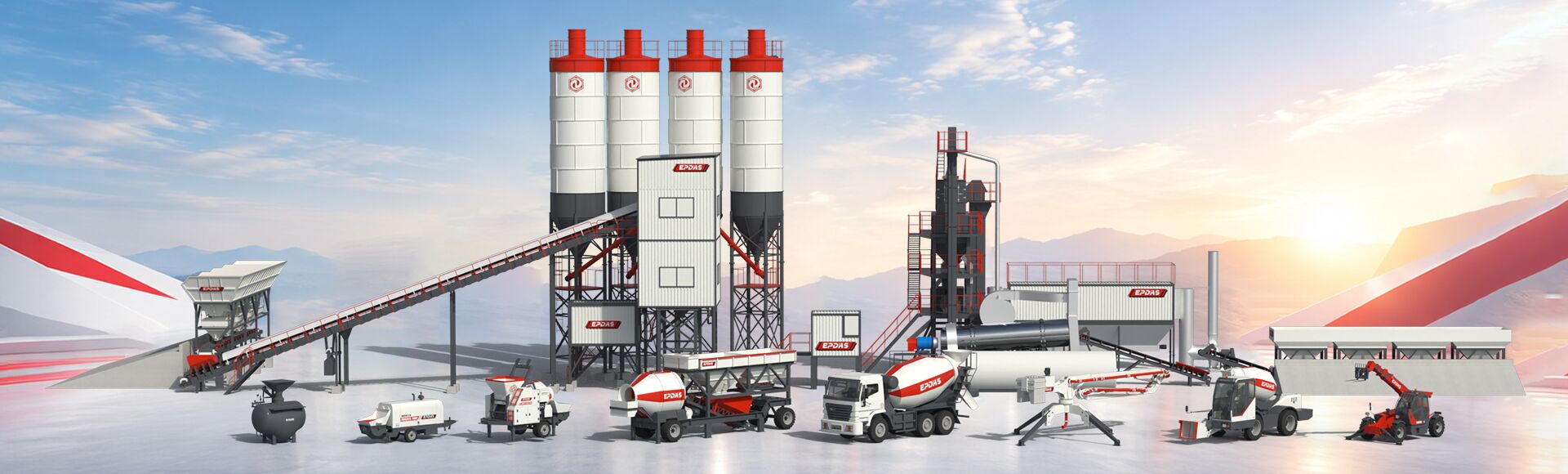
Concrete Batching Plant

  • Q: How do I choose the right concrete batching plant for my project?
    A:To choose the right concrete batching plant, consider factors such as required output capacity, project duration, site size, and budget. Mobile concrete batching plants are suitable for temporary or remote projects, while stationary batching plants are ideal for long-term, high-capacity concrete production. We are a Professional supplier and can help you select the most efficient solution.
  • Q:What types of mixers are used in concrete batching plants?
    A:Concrete batching plants can be equipped with twin-shaft mixers, planetary mixers, pan mixers, or single-shaft mixers. Twin-shaft mixers are widely used in stationary concrete batching plants due to their high output and strong mixing performance, while planetary mixers are ideal for precast concrete and high-quality concrete production. Choosing the right mixer depends on concrete grade, production capacity, and project requirements.
  • Q:Can a concrete batching plant control system be customized?
    A:Yes. The batching plant control system can be fully customized, including PLC brand, interface language, automation level, and data management functions. Advanced options include remote monitoring, automatic reporting, and production data storage, making the concrete mixing plant easier to operate and manage.
  • Q:What power supply standards can concrete batching plants support?
    A:Concrete batching plants can be designed to match different international electrical standards, such as 380V 50Hz, 415V 50Hz, or 440V 60Hz. Electrical components are selected according to local power conditions to ensure safe and stable operation.
  • Q:Can concrete batching plants operate in extreme climates?
    A:Yes. Customized concrete batching plants can be designed for hot, cold, dusty, or humid environments. Options include thermal insulation, heating systems, dust collectors, and corrosion-resistant materials to ensure reliable performance in harsh working conditions.
  • Q:What is the delivery time for a concrete batching plant?
    A:The production time for a concrete batching plant usually ranges from 15 to 45 days, depending on capacity and customization requirements. Shipping time varies by destination. EPDAS can provide clear delivery schedules and export support.
  • Q:What should I do if the weighing is inaccurate and the concrete mix ratio has a large error?
    A:If you notice weighing errors, stop production immediately and do not force the machine to run. Check these common issues first: Calibrate the sensors regularly: Weighing sensors can drift slightly over time. Calibrating them once a month will ensure continuous accuracy. Check for moisture and loose wiring: Inspect the sensors to see if they are damp or if the cables are loose. Fix any wiring issues right away. Prevent material buildup: Avoid overloading the aggregate bins. Leftover material can press against the weighing hopper and ruin the measurement. Clean out the bins daily.
  • Q:What are the wearable parts of the equipment and how often should they be replaced?
    A:The core wearable parts are mainly located in the mixing and conveying systems. These include mixer blades, liners, conveyor belts, seals, and screw conveyor flights. Under normal use and proper daily maintenance, the estimated replacement intervals are as follows: Mixer blades and liners: 6 to 12 months Conveying belts: 1 to 2 years Seals and lubrication components: Inspect and replace every 3 to 6 months The exact lifespan depends on your production frequency and the abrasiveness of your materials. We highly recommend keeping a small stock of these wear parts in advance to prevent unexpected downtime and project delays.
  • Q:How is the mobile concrete batching plant transported?
    A:Transportation is highly convenient and generally split into two types based on the equipment design: Towed (Trailer-mounted) models: These units are built on a heavy-duty chassis with wheels and can be easily towed directly to the job site by a standard truck head. Self-propelled models: These units are equipped with their own driving power system and can move independently around the site or short distances without requiring extra towing vehicles. Both options are engineered for rapid relocation and can be quickly prepared for transport to keep your project moving efficiently.
  • Q:Is a foundation-free concrete batching plant more cost-effective than a traditional one?
    A:Yes, it is definitely more cost-effective for temporary projects or jobs that require frequent relocation. While the initial equipment purchase prices are similar, the foundation-free model eliminates the expensive civil engineering costs of pouring a permanent concrete foundation. The entire setup can be reused at next job sites, which saves a significant amount of money over the long term. On the other hand, if you are running a long-term, fixed-location factory, a traditional batching plant might offer slightly better long-term stability.
  • Q:Can cement silos be used to store materials other than cement?
    A:Yes. You can store any dry, powder-like materials such as fly ash, lime, and slag powder without major modifications. Just make sure to avoid cross-contamination by keeping different materials in separate silos. Note: If storing highly corrosive materials, a specialized anti-corrosion coating is required.
  • Q:Can screw conveyors handle vertical transport?
    A:Yes, but only for short distances. Vertical transport requires short-pitch screw flights and strict feed rate control to prevent material backflow. Because vertical transport consumes much more power, we recommend using an inclined conveyor instead if space permits to reduce energy costs and mechanical wear.
  • Q:What should I do if the screw shaft makes unusual noises?
    A:Stop the machine and check these three main causes to troubleshoot the issue: Blade-to-trough friction: Check the alignment of the screw shaft. Adjust its level and straightness to stop the blades from scraping the trough wall. If blades are unevenly worn, grind or replace them. Damaged bearings: Turn off the power and check the bearings for wear. Replace any damaged bearings immediately and apply fresh lubricant. Material jamming: Clear out any blocked material inside the trough. Control the feeding speed to prevent overloading, and inspect the screw flights for any deformation.
  • Q:What causes the screw conveyor motor to overheat and how do I fix it?
    A:Motor overheating is usually caused by four common issues. Follow these steps to fix them: Overloading: Reduce the feeding speed and clear any jammed material inside the trough. If the conveyor regularly operates under heavy loads, consider upgrading to a motor with higher power. Poor heat dissipation: Clean off any dust and debris from the motor surface to ensure the cooling vents are clear. Avoid running the motor in high-temperature environments for too long. Jammed bearings: Inspect the bearings for wear and tear. Apply fresh grease, and replace them immediately if they are damaged. Wiring faults: Check the electrical connections for loose wiring or aging cables. Repair or replace the damaged wiring right away.
  • Q:What should I do if the screw conveyor leaks material during operation?
    A:Material leakage is usually caused by seal failures or structural wear. Check these three areas to fix it: Damaged seals: Inspect the trough seals and O-rings. Replace any aging or broken sealing components immediately to restore a tight seal. Trough or blade wear: Check for holes or thinned areas on the trough walls and screw flights. Repair or replace the worn sections right away, and set up a regular inspection schedule. Inlet/Outlet leaks: Adjust the sealing mechanisms at both the feeding inlet and discharge outlet. Install extra gaskets or sealing pads to stop materials from escaping.

Concrete Pump

  • Q:What are the main types of concrete pumps available for sale?
    A:The main types of concrete pumps include trailer concrete pumps, stationary concrete pumps, and truck-mounted concrete pump trucks. Trailer concrete pumps are cost-effective and flexible, while pump trucks are ideal for large-scale, high-rise construction. Stationary concrete pumps are commonly used for fixed or long-term projects.
  • Q:How do I choose the right concrete pump for my project?
    A:Choosing the right concrete pump depends on project size, required pumping distance, concrete output, and site conditions. Small to medium projects often use trailer concrete pumps, while large infrastructure projects may require high-capacity concrete pump trucks. EPDAS can help match the right model to your needs.
  • Q:What is the maximum pumping distance of a concrete pump?
    A:The pumping distance depends on the concrete pump model, hydraulic pressure, and pipeline configuration. Trailer concrete pumps can reach horizontal distances of 300–500 meters, while concrete pump trucks may achieve vertical heights of over 150 meters. Proper pipeline diameter and concrete mix design are critical for long-distance pumping performance.
  • Q:What concrete pump capacity do I need?
    A:Concrete pump capacity is measured in cubic meters per hour (m³/h). Small projects may need 30–60 m³/h, while large commercial or infrastructure projects often require 80–120 m³/h or more. Selecting the correct capacity improves efficiency and reduces operating costs.
  • Q:What wear parts require regular replacement in concrete pumps?
    A:Common wear parts in concrete pumps include delivery cylinders, cutting rings, wear plates, S-valves, and rubber hoses. Regular inspection and timely replacement of these components help maintain stable concrete pumping performance and extend the equipment's service life.
  • Q:What hydraulic systems are used in modern concrete pumps?
    A:Modern concrete pumps typically use closed-loop or open-loop hydraulic systems with high-pressure piston pumps. These systems provide stable pumping pressure, precise flow control, and improved energy efficiency. High-quality hydraulic components significantly reduce wear and enhance the durability of concrete pumping machines in demanding job sites.
  • Q:How high can a concrete boom pump truck reach for building construction?
    A:The vertical pumping height depends entirely on the equipment model and boom length: Small models (30-38m): These trucks have a vertical reach within 36 meters. They are perfect for rural self-built houses and low-rise infrastructure projects. Medium models (39-48m): These trucks can cover heights up to around 46 meters. They are the standard choice for regular urban commercial and residential buildings. Large models (50-62m and above): These heavy-duty trucks can exceed a vertical height of 60 meters. They are specifically engineered for high-rise buildings and massive bridge pier concrete pouring.
  • Q:Are your hydraulic and pipeline fittings easy to purchase overseas like in South America or Southeast Asia?
    A:Yes. All hydraulic pipe fittings, seal rings, pipeline clamps, and basic valves on our equipment are strictly built to international DIN and ISO standards.
  • Q:Is the equipment prone to pipeline clogging when handling large aggregate sizes or high-grade (C50/C60) concrete?
    A:We increase the tungsten carbide wear-resistant layer of the core S-valve and wear plate by 2 to 3 mm. At the same time, our engineering team optimizes the anti-clogging switching logic within the full hydraulic control system. This fully utilizes the high pressure of the constant-pressure, large-displacement variable pump to smoothly and forcefully push thick, heavy concrete mixes through without blockages.
  • Q:What is the difference between a spider boom and a regular boom?
    A:The main difference lies in the chassis and outrigger design: Regular boom: These usually feature wheeled chassis, making them bulkier with higher ground pressure. They are designed strictly for operating on flat, hard ground. Spider boom: These utilize a compact crawler track chassis and four flexible outriggers. This setup provides a smaller footprint and extremely low ground pressure, allowing them to work flexibly in tight spaces, on steep slopes, and on delicate indoor or outdoor surfaces.
  • Q:Do you offer OEM services?
    A:Yes. We provide full-scale OEM and industrial customization services. Whether it is custom paint schemes, brand logos, or specific component interfaces, our engineering team can deeply customize the equipment to perfectly fit your local market and special operational requirements.
  • Q:How should daily maintenance be performed on the equipment?
    A:The core of daily maintenance involves regularly checking hydraulic oil levels, cleaning air filters, verifying track tension, and lubricating key moving parts. To make this easy for your team, every machine comes with a detailed preventive maintenance manual.
  • Q:How can I judge the quality of a trailer concrete pump?
    A:You can ignore surface cosmetics like premium paint finishes or fancy housing designs. Instead, focus entirely on the core mechanical and hydraulic components. High-quality trailer pumps are strictly built with industry-recognized, global-brand components.
  • Q:What basic cleaning is required for a trailer pump after each construction session?
    A:You must thoroughly flush the hopper and delivery pipelines with water immediately after every pour. If concrete residue is allowed to dry and harden inside, it will severely accelerate the wear on the pistons and wear plates.
  • Q:Which systems of a trailer pump require regular inspection and maintenance? Are there any special requirements for summer?
    A:A: Regular maintenance should focus on three core areas, with extra attention paid during high-temperature seasons: Centralized lubrication system: Check this system regularly to ensure continuous and proper oil supply to all mechanical friction points and bearings. Hydraulic system: Change the hydraulic oil strictly based on the equipment operating hours to maintain system pressure and protect internal valves. Special summer maintenance: During hot summer months, you must frequently clean dust and debris off the radiator surface to ensure maximum heat dissipation. This simple step prevents high-temperature system shutdowns and stops the hydraulic oil from thinning out under extreme heat.

Self-loading Concrete Mixer

  • Q:What are the advantages of a self-loading concrete mixer compared to traditional mixers?
    A:A self-loading concrete mixer eliminates the need for separate loaders, batching plants, and transport vehicles. This reduces labor costs, saves time, and improves flexibility, making it an ideal solution for small to medium construction projects and remote job sites.
  • Q:How do I choose the right self-loading concrete mixer for my project?
    A:When choosing a self-loading concrete mixer, consider mixing capacity, engine power, terrain conditions, and daily concrete output. Smaller models suit residential projects, while larger models are better for infrastructure and commercial construction. EPDAS can help you select the best model.
  • Q:What engine and hydraulic systems are used in self-loading concrete mixers?
    A:Self-loading concrete mixer trucks are powered by diesel engines with hydraulic systems that control loading, mixing, steering, and discharging. High-quality hydraulic pumps and valves ensure stable operation, precise control, and long service life even in harsh construction environments.
  • Q:Can self-loading concrete mixers work on rough or uneven terrain?
    A:Yes. Most self-loading concrete mixers are equipped with four-wheel drive, high ground clearance, and articulated steering, allowing them to operate efficiently on rough, muddy, or uneven terrain commonly found at construction sites, rural areas, and mining projects.
  • Q:What maintenance is required for a self-loading concrete mixer?
    A:Routine maintenance includes checking hydraulic oil, cleaning the mixing drum, inspecting wear parts, lubricating joints, and monitoring engine performance. Proper maintenance ensures stable operation, extends equipment lifespan, and minimizes downtime.
  • Q:What is the mixing capacity of a self-loading concrete mixer?
    A:Mixing capacity varies by model, typically ranging from 1.2 m³ to 6.5 m³ per batch. The choice of capacity depends on project size, daily concrete demand, and transportation distance. Larger-capacity self-loading concrete mixers are ideal for medium-scale infrastructure and remote projects.

Telehandler

  • Q:What is the difference between a telescopic handler and a forklift?
    A:Unlike a standard forklift, a telescopic handler provides extended reach and greater lifting height. Telehandler forklifts are better suited for construction sites where materials need to be placed at height or over obstacles, while forklifts are mainly used for warehouse operations.
  • Q:How do I choose the right telescopic handler for my project?
    A:Choosing the right telescopic handler depends on lifting capacity, maximum height, terrain conditions, and attachment requirements. Compact telehandlers suit tight spaces, while heavy-duty models are ideal for large construction and industrial projects.
  • Q:What drive and steering systems are used in telescopic handlers?
    A:Most telescopic handlers are equipped with four-wheel drive and multiple steering modes, including front-wheel steering, four-wheel steering, and crab steering. These features improve maneuverability on tight or uneven construction sites and enhance overall operational efficiency.
  • Q:What lifting height and reach can a telescopic handler achieve?
    A:Lifting height and forward reach depend on the model. Standard telescopic handlers offer lifting heights from 6 to over 18 meters, with forward reach capabilities of up to 10 meters. Selecting the right telehandler forklift ensures safe load placement at the required working height.
  • Q:What attachments can be used with a telescopic handler?
    A:Telescopic handlers support a wide range of attachments, including forks, buckets, lifting hooks, work platforms, and bale clamps. Quick-attach systems allow operators to switch tools easily, increasing machine versatility across construction, agriculture, and industrial tasks.
  • Q:What safety systems are built into modern telescopic handlers?
    A:Modern telescopic handlers include load moment indicators, overload protection, emergency braking systems, and stability control. These safety features help prevent tipping and ensure safe operation during lifting and material handling tasks.
  • Q:What is the difference between a telescopic wheel loader and a telehandler?
    A:Telescopic Loader: This machine focuses on scooping, loading, and ground-level material handling. It offers a moderate lift height and excellent agility. Telehandler: This machine is engineered specifically for high-altitude material placement and equipment installation.

Concrete Mixer

  • Q:Are concrete mixers and cement mixers the same equipment?
    A:Yes, they are different terms for the same piece of equipment. In daily construction, concrete mixers are often referred to as cement mixers. Their core function is to blend aggregates, cement and water into concrete mixture, with no essential difference between them.
  • Q: Can portable concrete mixers be used for large-scale commercial projects?
    A:Not recommended. Portable mixers feature small mixing capacity and low efficiency, only meeting the demand for small-batch concrete. Using portable mixers will severely delay the construction progress. Continuous mixers or concrete batching plants should be adopted instead.
  • Q:What is the maximum holding time of concrete in a mixer drum?
    A:It should not exceed 90 minutes at most, and the optimal pouring time is within 60 minutes after water is added for mixing. Concrete begins to initially set once water is added. If the time exceeds 90 minutes, its workability and strength will drop drastically, leading to potential quality issues after pouring.
  • Q:Do all concrete mixers come with a water tank?
    A:Not all of them. Small portable mixers are generally not equipped with an independent water tank, and water needs to be measured and added manually in advance. Modern mobile concrete mixers are basically fitted with an independent water tank, which allows water addition during transportation to extend the initial setting time of concrete.
  • Q:What are the key tasks for the daily maintenance of concrete mixers?
    A:Inspect and replace wear parts. Check mixing/screw blade wear and replace damaged ones timely. Lubricate transmission components regularly and clear drum residual concrete to avoid hardening/caking.
  • Q:What should I do if the pipeline gets clogged during concrete pumping?
    A:Optimize the concrete mix: Adjust the water-cement ratio to improve workability and flowability before pumping. Match the pipe diameter: Always use the correct delivery pipe size that matches your specific concrete aggregate grading. Keep pipelines clean: Flush and wash the pipelines thoroughly after every session to prevent old residue buildup. Emergency troubleshooting: In case of an immediate blockage, try using the reverse pumping function to break the clog, or use a specialized pipeline clean-out tool to clear the pipe safely.
  • Q:Is it more cost-effective to buy or rent the equipment?
    A:The best choice depends entirely on your project timeline, workload, and financial strategy: Buying: This is ideal for long-term, high-volume projects. Owning the equipment delivers a much higher long-term ROI and ensures 100% equipment availability whenever you need it. Renting: This is perfect for short-term projects, temporary jobs, or testing out a new machine. It significantly minimizes your upfront capital investment and gives you excellent cash flow flexibility.
  • Q:How safe is the Concrete Mixer Pump during operation?
    A:Highly safe, provided operators follow these three baseline rules: Wear PPE: Ensure the team always wears standard safety gear. No overloading: Never pump beyond the rated capacity or height limits. Daily checks: Verify hydraulic pressure, pipe couplings, and outrigger stability before starting.
  • Q:What types of concrete can a twin-shaft concrete mixer handle?
    A:It handles almost all concrete types and construction mixes on the market, including: Standard mixes: Commercial ready-mix concrete and precast concrete. Specialty concrete: Dry-hard concrete, roller-compacted concrete (RCC), high-strength concrete, and self-consolidating concrete (SCC). Other materials: Various types of mortar and construction powder blends.
  • Q:What is the standard mixing cycle time for twin-shaft concrete mixer?
    A:The standard mixing cycle for regular materials takes only 30 to 60 seconds. You can slightly adjust this timing based on your specific concrete mix design, aggregate size, and hardness.

Engineering Vehicle

Asphalt Mixing Plant

  • Q:Is there any difference between an asphalt mixing plant and an asphalt batching plant?
    A:There is no essential difference between the two terms. The difference mainly comes from regional naming habits. “Asphalt mixing plant” is the commonly used industry term, while “asphalt batching plant” is used in some regions to describe the same industrial system for producing asphalt mixtures.
  • Q:What temperature does an asphalt plant heat aggregates to?
    A:Under normal conditions, an asphalt plant heats aggregates to approximately 150–180°C. This temperature range effectively removes moisture from the aggregates and ensures proper bonding between asphalt binder and aggregates. When warm mix asphalt technology is applied, the aggregate heating temperature can be reduced to around 120°C.
  • Q:What is the maximum RAP content that an asphalt plant can use?
    A:A high-quality asphalt recycling plant can incorporate up to 50% RAP (Reclaimed Asphalt Pavement) while maintaining asphalt mixture performance. The actual RAP content depends on factors such as the aging condition of the reclaimed material and the performance requirements of the final pavement.
  • Q:How long does it take for an asphalt plant to produce one batch of asphalt mixture?
    A:For batch-type asphalt plants, the mixing time for a single batch is usually around 20 minutes. Including aggregate feeding, weighing and material handling, the complete production cycle typically takes about 30 minutes. The actual cycle time may vary depending on plant capacity and asphalt mixture design.
  • Q:Why can warm mix asphalt technology reduce fuel consumption?
    A:Warm mix asphalt technology lowers the production temperature of asphalt mixtures from the conventional 150–180°C range to around 120°C. Since aggregates require less heating, the burner consumes less fuel. In practical applications, warm mix technology can reduce fuel consumption by approximately 25%.
  • Q:What are the key maintenance points for an asphalt plant?
    A:The key to asphalt plant maintenance is preventive servicing of major components. Regular inspections should focus on heating systems such as the drying drum and burner, lubrication of moving parts including conveyors and mixers, calibration of temperature and weighing sensors, and cleaning of dust collection systems. For plants operating in cold climates, additional frost protection measures are also required.

Optional Equipment

  • Q:
    A:

Request A Quote

You can contact us via message or email

+86 188 38115507 (Whatsapp)

info@epdas.com (E-mail)

Tips:

We would appreciate it if your inquiry includes the required equipment model, project type, destination country and budget range, so we can provide you with the most accurate quotation!

Service Process:

  • Business negotiation
  • Solution development
  • Manufacturing and commissioning
  • Operational production