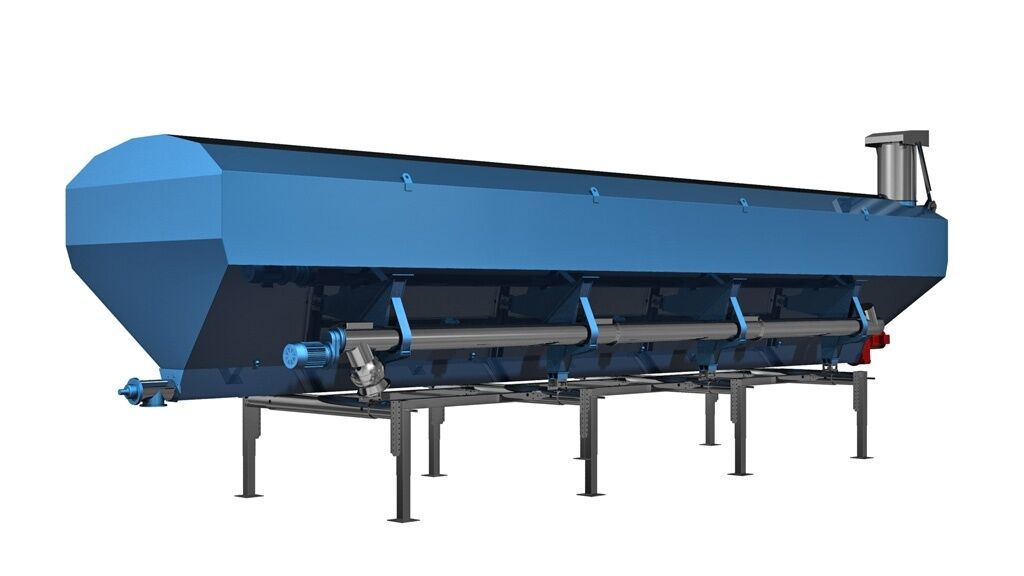
This guide explains the key foundation requirements for stationary concrete batching plants, covering bearing capacity, stability, vibration control, drainage, and durability. It also examines foundation requirements for different equipment areas, the impact of soil and groundwater conditions, critical checks before concrete pouring, common construction defects, and practical solutions for soft soil sites.
Blog
- 2026-08-14
- 2026-08-13
Discover the key principles and practical strategies for stationary concrete batching plant layout design. This article explains how to organize production flow, divide functional areas, plan maintenance space, and arrange core equipment. It also compares linear, compact, and tower-style layouts, while highlighting common planning mistakes and effective traffic routes to improve operational efficiency, safety, and long-term maintenance.
- Stationary Concrete Batching Plant Control System: How Closed-loop Control Ensures Batch Consistency2026-08-11
This article explains how the control system of a stationary concrete batching plant uses closed-loop control technology to coordinate equipment operation, maintain accurate material weighing, and ensure consistent concrete quality. It introduces the working principle, data feedback process, PLC logic control, sequence management, and error correction methods behind automated concrete production.
- 2026-08-07
Load cells are key components of the concrete batching plant weighing system. Installed between the weighing hopper and support structure, they accurately detect material weight changes and transmit real-time signals to the control system. High-quality load cells ensure stable measurement accuracy, reduce batching errors, and help maintain consistent concrete quality during long-term operation.
- Stationary Concrete Batching Plant Buying Guide: Selection, Cost, Installation, and Project Planning2026-08-05
A stationary concrete batching plant is an automatic complete set of equipment integrating aggregate batching, cement metering, material mixing and finished product discharging, suitable for the large-scale production of commercial concrete in construction, road & bridge, municipal and other engineering projects, with the core advantages of accurate metering, stable efficiency and standardized operation.
-
- 2026-04-29
As demand for telescopic handlers grows across construction, agriculture, and logistics, many buyers still feel unsure about choosing the right machine. Do you really need one, which model fits your work, and how do you find a reliable manufacturer? This guide walks through these key questions to help you make a more informed decision, control costs, and avoid common mistakes.
- 2026-04-29
Struggling with inefficient concrete mixing and rising costs? A self-loading concrete mixer can simplify the job by handling loading, mixing, and transport in one machine, without the need for a separate batching plant. In this guide, we’ll look at how it improves efficiency, lowers costs, and how to choose the right model for your project.
- 2026-04-29
This guide breaks down the key differences between telehandlers and standard forklifts in a practical way. It covers real-world performance, costs, and typical use cases, so you can quickly decide which machine fits your needs. FAQs are also included to clear up common doubts.
- 2026-04-29
In this blog, it breaks down the key points of concrete batching plants in a practical way. It covers real-world pricing factors, mobile vs stationary types, and selection criteria, so you can quickly decide which equipment fits your project needs. FAQs are also included to clear up common doubts.