
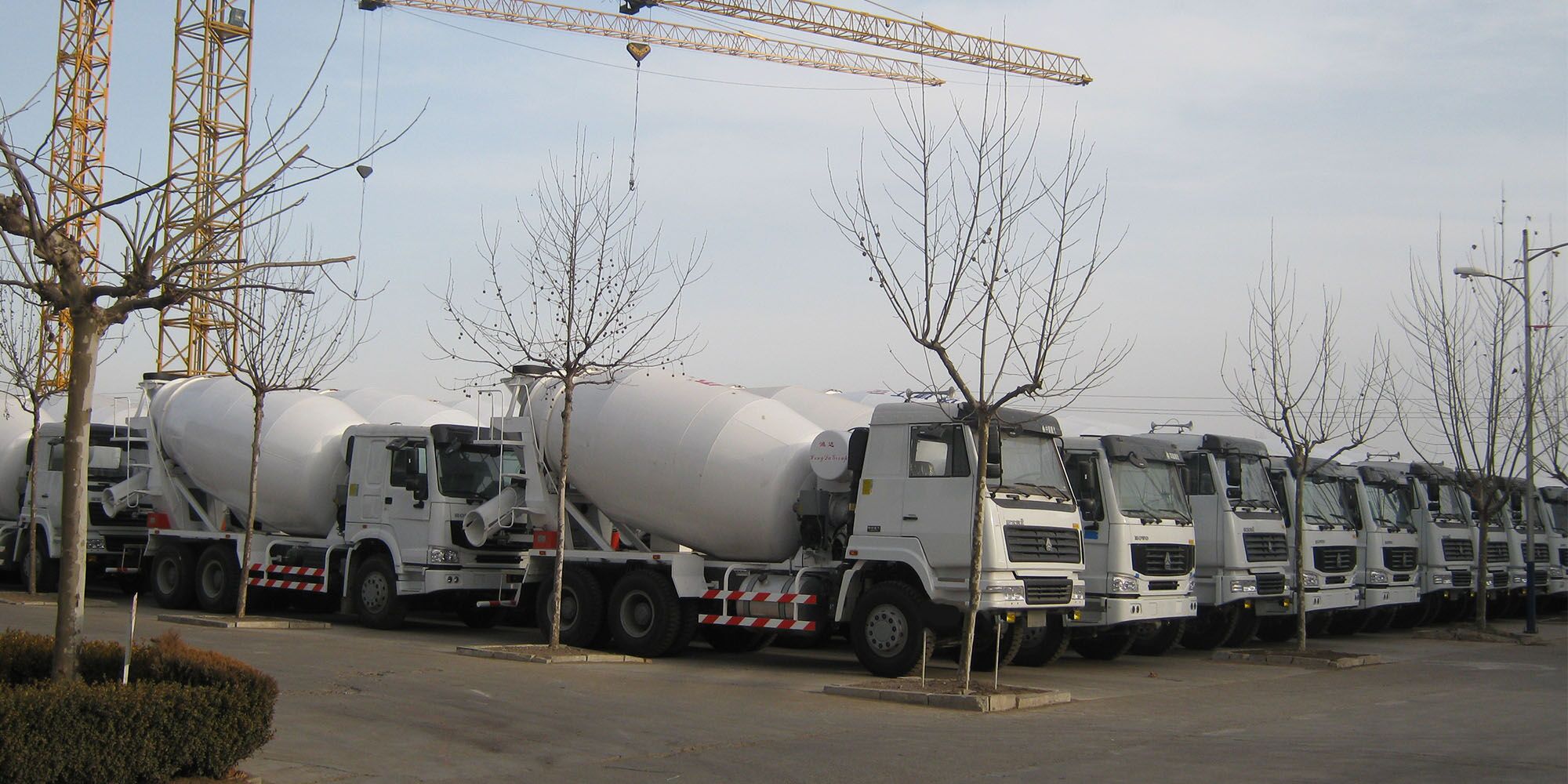
Concrete Mixer Truck
A concrete mixer truck is a heavy-duty construction vehicle designed to transport fresh concrete from the batching plant to the construction site while maintaining its uniform condition. It uses a rotating drum to keep the material in continuous motion, ensuring consistent workability during transit. It combines mobility and mixing functions in one unit and is widely used in infrastructure projects requiring continuous concrete supply.
- Mixing Capacity:3~12m³
- Hydraulic System:China Brand/PMH/ARK
What is Concrete Mixer Truck
A concrete mixer truck is always are misunderstood as a ‘cement truck,’ but it has a basic difference from definition to function. The concrete mixer truck is a construction specialty vehicle and is engineered for transporting and mixing concrete during the transportation. It is not the truck that only can transport cement. It is not so much a transport truck as a portable mixing equipment.
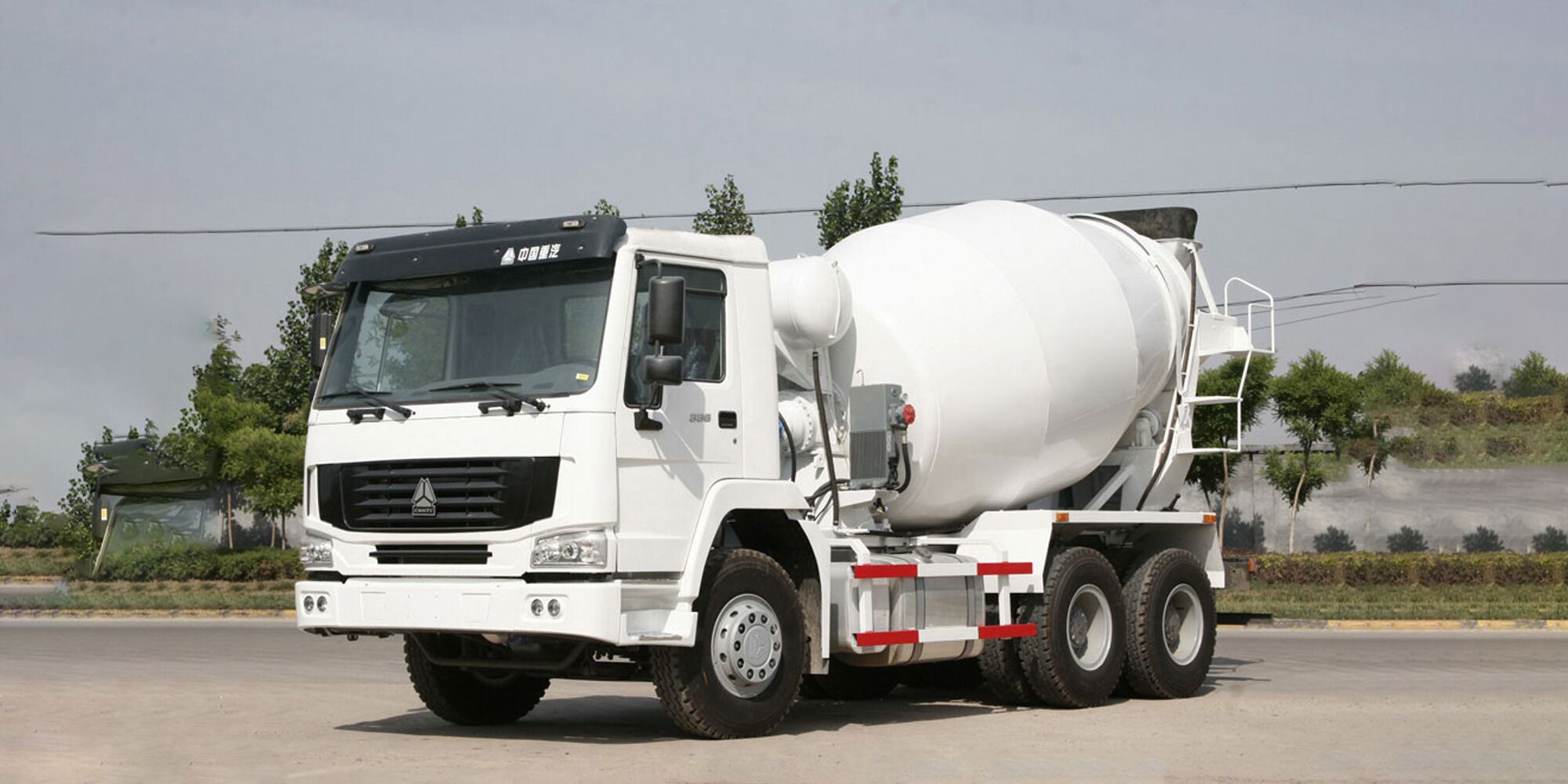
- Concrete Mixer Truck【3m³-6m³】
- Concrete Mixer Truck【8m³-12m³】
They are compact and highly maneuverable, ideal for narrow urban roads, small construction sites, and short-distance delivery. They offer lower fuel consumption, easier maintenance, and flexible operation for small-to-medium projects requiring frequent movement.
| Vehicle Model | CMT3 | CMT4 | CMT5 | CMT6 |
| Fuel Type | Diesel oil | |||
| Engine Power (hp) | 116 | 116 | 130 | 180 |
| Chassis Engine | Euro-IV, L4, 4-Strokes supper charged medium cold diesel engine | |||
| Brake System | Air-pressure braking | |||
| Transmission | Manual transmission | |||
| Steering System | Recirculating ball steering,Front-wheel steering | |||
| Max. Speed (km/h) | 85 | 80 | 85 | 80 |
| Mixing Tank Volume | 5.05 m³ | 6.15 m³ | 7.25 m³ | 8.75 m³ |
| Max. Mixing Volume | 3 m³ | 4 m³ | 5 m³ | 6 m³ |
| Concrete Feeding Speed | ≥2 m3/min | |||
| Concrete Unloading Speed | ≥1.5 m3/min | |||
| Unloading Residue Rate | ≤0.8% | |||
| Water Supply System | Pneumatic water supply (150L water tank) | |||
| Heat Radiator | 12L | |||
| Mixer Truck Chassis (Left-hand driving, 4*2) | ||||
| Manufacturer brand | AUMAN/ DFAC/ T·KING | |||
| Wheel Base (mm) | 3100 | 3400 | 3400 | 3900 |
| Tread F/R (mm) | 1650/1610 | 1790/1725 | 1774/1669 | 1940/1870 |
| Mixing Tank Size (mm) | 3380*φ1670 | 3520*φ1800 | 3520*φ1950 | 3860*φ2100 |
| Overall Size (mm) | 6300*2300*3300 (L*W*H) | 6460*2300*3450 (L*W*H) | 6460*2255*3300 (L*W*H) | 7398*2490*3650 (L*W*H) |
These are designed for higher-volume batching and long-distance transport, improving overall project efficiency. They reduce trip frequency, lower unit cost per cubic meter, and suit large-scale construction such as infrastructure, commercial buildings, and ready-mix plants.
| Vehicle Model | CMT8 | CMT9 | CMT10 | CMT12 |
| Fuel Type | Diesel oil | |||
| Engine Power (hp) | 350 | 350 | 336 | 336 |
| Chassis Engine | Stage-VI, L6, Water-cooling, 4-Strokes supper charged medium cold diesel engine | |||
| Brake System | Dual-circuit Air-pressure braking | |||
| Transmission | Manual transmission | |||
| Steering System | Imported ZF8098 hydraulic steering,Front-wheel steering | |||
| Mixing Tank Volume | 13.3 m³ | 14.7 m³ | 15.8 m³ | 19.6 m³ |
| Max. Mixing Volume | 8 m³ | 9 m³ | 10 m³ | 12 m³ |
| Concrete Feeding Speed | ≥3.5 m3/min | |||
| Concrete Unloading Speed | ≥2.5 m3/min | |||
| Unloading Residue Rate | ≤0.5% | |||
| Hydraulic Pump | PMH P90, Italy | PMH P90, Italy | ARK pump, Italy | ARK pump, Italy |
| Hydraulic Motor | PMH M90, Italy | PMH M90, Italy | ARK motor, Italy | ARK motor, Italy |
| Reducer | PMB6.5sp, Italy | PMB6.5sp, Italy | PMB7.1sp, Italy | PMB7.1sp, Italy |
| Water Supply System | Pneumatic water supply (450L water tank) | |||
| Heat Radiator | 18L | |||
| Mixer Truck Chassis (Left-hand driving, 6*4) | ||||
| Manufacturer brand | FOTON/SHACMAN/SINOTRUK/DONGFENG/FAW/JAC/HINO/MITSUBISHI/ISUZU | |||
| Wheel Base (mm) | 3575+1350 | 3575+1350 | 3825+1350 | 4025+1350 |
| Tread F/R (mm) | 2010/1860 | 2010/1860 | 2022/1830 | 2022/1830 |
| Max. Speed (km/h) | 80 | 80 | 78 | 78 |
| Mixing Tank Size (mm) | 4720*φ2300 | 4990*φ2300 | 5370*φ2300 | 5790*φ2300 |
| Overall Size (mm) | 9020*2495*3850 (L*W*H) | 9020*2495*3850 (L*W*H) | 9580*2500*3920 (L*W*H) | 9870*2500*3990 (L*W*H) |
The Core Components of the Concrete Mixer Truck
A machine with stable performance has a clear overall structure and well-defined division of labor and its every component has a large effect on concrete quality and the equipment’s service lifespan.

- Chassis
It serves as the load-bearing foundation of the vehicle, built on heavy-duty, multi-axle chassis to offer superior load-bearing capacity. It is also matched with optimized engine and drivetrain configuration.
- Mixing structure
This part is the core working component. The tank adopts a double-cone or pear-shaped structure, with helical wear-resistant blades welded inside. When operating, the blades continuously lift and turn the concrete to avoid material sedimentation and caking.
- Hydraulic system
It is composed of a hydraulic pump, motor and gearbox and its main function is to convert engine power into drum rotation power ensuring stable mixing rotating speed. Premium hydraulic system can operate stably with low failure rates, adapting to long-term working.
- Water supply system
The water supply system is made up of water tank, water pump and pipeline and has two purposes. When in transportation, it can add water to concrete according to its status, adjusting concrete slump. After working, it can be used for flushing the inner tank and discharging components to prevent residual concrete from hardening.
- Discharging system
It consists of a charging hopper, discharge hopper and discharge chute. The whole system design is designed for field operations, convenient charging and discharging without residual concrete.
How to Choose the Right Concrete Mixer Truck
When purchasing, many construction project managers are confused about which one is better. In fact, different types of this equipment are suitable for different applications and projects. Choosing a wrong model may waste the raw materials or an inconsistent material supply disrupts construction schedules. The following guide outlines how to align equipment specifications with your project’s demands from an engineering perspective.

Optimizing mixer capacity by project scale
4-6m³ concrete mixer truck
Applications: residential builds, interior renovations, localized community repairs, and municipal maintenance tasks.
Advantages: compact body, highly maneuverable, ideal for narrow sites. Without waste of concrete, reducing daily costs.
8m³ concrete mixer truck [Top-market share]
Applications: residential homes, small-scale commercial sites, municipal sidewalks, community infrastructure, and urban renovation projects.
Advantages: excellent balance between capacity and machine size, satisfying daily construction requirements.
10-12m³ concrete mixer truck
Applications: expressway construction, long-distance tunneling, bridge projects, and commercial complex developments.
Advantages: high-intensity operation, industrial-grade reliability, significantly reducing transport cycles.
_______________________________________________________________________________________________________________________________________________________________________________
Selecting discharge methods by site constraints
Spacious construction sites
For this application, the common rear-discharge mixer truck is enough. This machine has simple structure and its spare parts are widely available. The only limitation is requiring reversing for alignment.
Sites with restricted reversing access
A side-discharge mixer truck is a good solution. It eliminates complex maneuvering. Features side-discharge for instant positioning and superior site adaptability.
Low-rise roof pouring and short-range precision casting for bridge components
A front-discharge mixer truck is ideal for these applications. The unit aligns with the pouring zone. Its forward-discharge design enables precise pouring, bypassing the need for complex truck realignment.
The Working Principle of the Concrete Mixer Truck
The working principle of the concrete mixer truck is simple and scientific. There are three parts, loading, transit mixing and discharge, ensuring the concrete final quality.
- Loading
Once the equipment is positioned, concrete plant loads the pre-mixed cement, sand, gravel, and water directly into the drum. The tank keeps rotating at a low speed and turning materials to avoid segregation.
- Transit mixing
During transit, the mixing drum rotates clockwise at a constant speed of 2–6 rpm. The inner mixing blades ensure a homogeneous mix of aggregates and mortar via mixing. If the materials become stiff and flow ability decreases, it can add water by the on-board water supply system.
- Discharge
The operator reverses the drum rotation to counter-clockwise. The internal blades then act to convey the concrete toward the discharge opening, guided to the target area via the discharge chute. According to the on-site speed, the speed of discharge and rotating can be adjusted flexibly.
- After discharge
There is a mandatory step to clean the tank timely. Flush the mixing drum, charging hopper, and discharge chute, using the on-board water supply to clear all material residues. It can prevent residual concrete from wearing the tank and blades, reducing the equipment service life.
Concrete Transportation and Quality Control Mechanisms
Conventional mixers only provide basic rotation. The professional concrete mixer is equipped with a standardized dynamic material management system, which can adapt to long-distance transit and complex construction site logistics, ensuring the stable performance of the concrete.
- 01
Preventing material segregation
The equipment is equipped with a specialized hydraulic speed control structure, which stably locks the drum speed at 2 to 6 rpm. During transit, the system automatically adjusts pressure and speed, and controls speed fluctuations in an extremely low range. Continuous uniform agitation ensures the full integration of aggregate and mortar, effectively preventing the problem of aggregate settling and mortar stratification, and ensures the structural integrity and surface uniformity.
- 02
Stabilizing material state during Idle
Time Construction site waiting times and temporary road congestion are routine conditions. Initial hydration (set) will gradually occur when the newly mixed concrete is stored. This model is equipped with a low-speed standby mixing program. When the vehicle is parked, the system can maintain the workability of the material.
- 03
Adapting to seasonal construction
Environments The equipment has been adapted and optimized for diverse climatic conditions, and can adapt to the temperature difference of the four seasons. In a high-temperature environment, the initial set of the material can be delayed through uniform-speed stirring and controlled water addition; in a low-temperature environment, it can be continuously stirred dynamically to avoid material freezing. This mechanism can reduce the interference of weather factors and smoothly cope with seasonal fluctuations in working conditions.
- 04
Unifying discharge quality
This mechanism can ensure that the discharge fluidity and viscosity are consistent, so that the discharge state is uniform every time. The surface of the structure after pouring and forming is flat and dense, which reduces surface defects such as voids and honeycombing, and maintains high-standard engineering quality.
Benefits of Choosing EPDAS Combination Solutions
- Consistent Concrete Quality and Integrity
Based on the standard mix proportioning and continuous uniform agitation in transit, this eliminates segregation, bleeding and clumping. It can effectively avoid material inconsistency in concrete often leading to common defects such as surface dusting, cracking, and failure to meet structural strength requirements.
- Optimized Cycle Times for Faster Execution
Eliminate time-consuming on-site tasks like batching, stockpiling, and equipment cleanup. The equipment can continuously support non-stop pouring, ensuring a tighter project schedule and helping you complete work on time or ahead of schedule.
- Reduced Labor and Footprint Requirements
Reduce labor costs by eliminating the need for dedicated batching and cleaning labor. Only a small team is required for discharge. It also eliminates the need to use construction space for mixing equipment, freeing up more room for work and avoiding problems like moisture, loss, and contamination to raw materials.
- Universal Adaptability Across All Job Sites
With different volumes and discharge designs, our trucks fit all kinds of projects like urban infrastructure, road construction, bridge engineering, tunnel projects, housing, and city repairs. Contractors don’t need to buy different machines for different jobs. One truck can handle multiple projects, which greatly increases equipment usage.
- Custom-Engineered Configuration Solutions
We offer custom options for the chassis, engine, tank thickness, and tire specifications. This ensures the equipment matches local road conditions, voltage, regulations, and import requirements in different countries. You will avoid problems like registration failure, equipment that doesn't fit the site, or customs delays, improving equipment compatibility.
- Enhanced Reliability with Minimal Maintenance
The concrete mixer truck uses wear-resistant steel for the tank and a proven, stable hydraulic system. Key components are durable and tough. Daily maintenance only needs simple washing and routine checks. Your construction schedule stays on track, ensuring the project moves forward smoothly and speeds up your return on investment and cash flow.
EPDAS Concrete Mixer Truck Projects
Equipment Details Display of Concrete Mixer Truck
These images illustrate the concrete mixer truck’s critical role in modern construction logistics: ensuring continuous transportation of fresh concrete while maintaining uniform consistency from batching plant to construction site. Through its rotating drum system, the vehicle keeps materials in constant motion during transit, preventing segregation and preserving workability under varying road and weather conditions. Its robust chassis, hydraulic drive system, and wear-resistant mixing blades work together to support stable performance, enabling reliable on-site discharge and efficient, uninterrupted concrete supply for demanding infrastructure and building projects.
Concrete Mixer Truck FAQs
- Are concrete mixers and cement mixers the same equipment?
Yes, they are different terms for the same piece of equipment. In daily construction, concrete mixers are often referred to as cement mixers. Their core function is to blend aggregates, cement and water into concrete mixture, with no essential difference between them.
- Can portable concrete mixers be used for large-scale commercial projects?
Not recommended. Portable mixers feature small mixing capacity and low efficiency, only meeting the demand for small-batch concrete. Using portable mixers will severely delay the construction progress. Continuous mixers or concrete batching plants should be adopted instead.
- What is the maximum holding time of concrete in a mixer drum?
It should not exceed 90 minutes at most, and the optimal pouring time is within 60 minutes after water is added for mixing. Concrete begins to initially set once water is added. If the time exceeds 90 minutes, its workability and strength will drop drastically, leading to potential quality issues after pouring.
- Do all concrete mixers come with a water tank?
Not all of them. Small portable mixers are generally not equipped with an independent water tank, and water needs to be measured and added manually in advance. Modern mobile concrete mixers are basically fitted with an independent water tank, which allows water addition during transportation to extend the initial setting time of concrete.
- What are the key tasks for the daily maintenance of concrete mixers?
Inspect and replace wear parts. Check mixing/screw blade wear and replace damaged ones timely. Lubricate transmission components regularly and clear drum residual concrete to avoid hardening/caking.
- What should I do if the pipeline gets clogged during concrete pumping?
Optimize the concrete mix: Adjust the water-cement ratio to improve workability and flowability before pumping. Match the pipe diameter: Always use the correct delivery pipe size that matches your specific concrete aggregate grading. Keep pipelines clean: Flush and wash the pipelines thoroughly after every session to prevent old residue buildup. Emergency troubleshooting: In case of an immediate blockage, try using the reverse pumping function to break the clog, or use a specialized pipeline clean-out tool to clear the pipe safely.
- Is it more cost-effective to buy or rent the equipment?
The best choice depends entirely on your project timeline, workload, and financial strategy: Buying: This is ideal for long-term, high-volume projects. Owning the equipment delivers a much higher long-term ROI and ensures 100% equipment availability whenever you need it. Renting: This is perfect for short-term projects, temporary jobs, or testing out a new machine. It significantly minimizes your upfront capital investment and gives you excellent cash flow flexibility.
- How safe is the Concrete Mixer Pump during operation?
Highly safe, provided operators follow these three baseline rules: Wear PPE: Ensure the team always wears standard safety gear. No overloading: Never pump beyond the rated capacity or height limits. Daily checks: Verify hydraulic pressure, pipe couplings, and outrigger stability before starting.
- What types of concrete can a twin-shaft concrete mixer handle?
It handles almost all concrete types and construction mixes on the market, including: Standard mixes: Commercial ready-mix concrete and precast concrete. Specialty concrete: Dry-hard concrete, roller-compacted concrete (RCC), high-strength concrete, and self-consolidating concrete (SCC). Other materials: Various types of mortar and construction powder blends.
- What is the standard mixing cycle time for twin-shaft concrete mixer?
The standard mixing cycle for regular materials takes only 30 to 60 seconds. You can slightly adjust this timing based on your specific concrete mix design, aggregate size, and hardness.
Customize Your Solutions
Contact us now via Email:info@epdas.com, or Whatsapp:+86 188 38115507 , or fill in the form below.
FEW TIPS:
- Please specify the required drum mixing capacity (e.g., 4m³ / 6m³ / 8m³ / 10m³ / 12m³) based on your project scale.
- Please select your preferred drive system configuration for drum rotation control.
- Please indicate your required engine type and power source according to local operating conditions.
- Please confirm your preferred discharge system type (rear discharge / side discharge / front discharge) and control method (manual / hydraulic / remote control).
- If you are interested in becoming our distributor, please let us know.
Service Process:
- Business negotiation
- Solution development
- Manufacturing and commissioning
- Operational production