
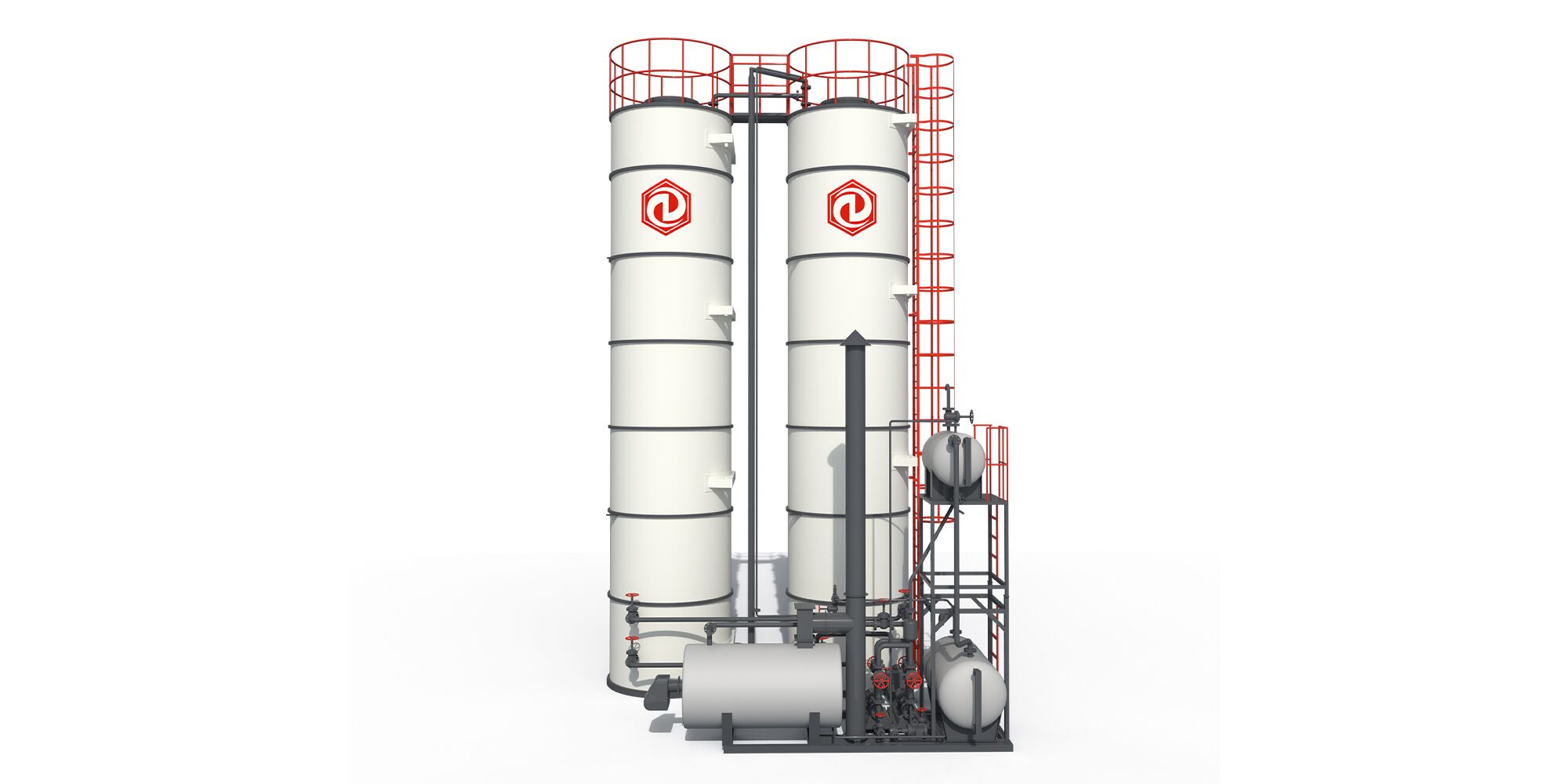
Asphalt Drum Mix Plant
The asphalt drum mix plant features efficient continuous production, simple operation, and reliable performance. Its streamlined design reduces maintenance requirements and operating costs while ensuring consistent asphalt quality. Available in mobile and stationary configurations, it provides a flexible and cost-effective solution for road construction, maintenance projects, and commercial asphalt production.
- :
- :
What is an Asphalt Drum Mix Plant
The asphalt drum mix plant is an integrated, continuous-flow Hot Mix Asphalt (HMA) production plant. Its core feature is to integrate aggregate drying, heating, asphalt metering, and coating into one drum, which differs from traditional batch-type (intermittent) mixing equipment.
Core Compositions of Asphalt Drum Mix Plant
The plant’s engineering design is simple and practical, without unnecessary complex components. The core is composed of eight major systems, each of which has its own functions to ensure the operational reliability of the production process and reduce the difficulty of preventive maintenance.
- Cold aggregate batching system
This is the raw material intake core of the equipment, which is mainly used to store sand and stone aggregates of different particle sizes. Manufacturers are generally equipped with 3-6 silos, which can be flexibly selected according to the aggregate gradation requirements.
- Asphalt supply system
It is mainly composed of asphalt storage tanks, heating devices, and metering pumps. The core function is to store and heat asphalt so that asphalt can maintain a specified viscosity and flow rate.
- Combustion heating system
As the core of the thermal energy source of the equipment, the burner supports the three mainstream fuels of diesel, coal, and natural gas, and adapts to the fuel supply conditions and construction budgets in different regions.
- Drying mixing drum (Core Parts)
The rotary drum is the core working part of the whole set of equipment, and it is also the key to distinguish it from other mixing equipment. The drum is in a tilted installation state and rotates continuously while working.
After the aggregate enters the front end of the drum, the drying and heating processes will be completed under the action of high-temperature convective hot air. As the drum rotates, the aggregate slowly moves to the rear end. At the same time, it is fully mixed and coated with the metered asphalt and mineral filler, and the two processes of drying and mixing are completed at one time. - Finished product lifting and storage system
The asphalt mixture is transported to the finished material silo through the high-strength plate-chain elevator. The elevator is equipped with a wear-resistant and noise-reducing structure, which is stable in operation and not easy to get stuck or experience material spillage.
- Dust removal system
It is mainly used to treat the particulate matter (PM) generated in the production process to meet the requirements of environmental protection construction on the site. Conventional wet-type scrubbers are cost-effective and suitable for the environmental protection standards of most ordinary construction sites.
- Filler supply system
It is composed of a powder elevator, storage silo, and screw conveyor, which is responsible for the storage and transportation of limestone powder, mineral powder, and other fillers. The filler is accurately metered into the drum according to the construction mix ratio to improve the bitumen adhesion and the durability of the road surface.
- Electronic control operating system
It includes the operation console, control cabinet, and PID temperature control system, and supports semi-automatic operation. The operator can unify the whole process of material feeding, thermal regulation, mixing, and discharge in the control room. At the same time, it can monitor the real-time operational telemetry of the equipment and identify abnormal fault codes in time.
Asphalt Drum Mix Plant vs Batch Asphalt Plant: Key Differences
Many customers are most entangled in the choice of two types of equipment when purchasing. There is no absolute superiority or inferiority between the two, but the application scenarios are different. Next, from the actual perspective of construction, the core differences are clearly compared, which is convenient for everyone to choose according to their needs.
Ratio and accuracy of raw materials
drum mix plants usually adopt continuous production methods, and the proportioning system is relatively simplified. Compared with batch asphalt plants, there are differences in formula adjustment flexibility and high-precision gradation control.
The batch asphalt plant needs to be matched with three raw materials: mineral powder, aggregate, and asphalt, and is equipped with an independent and accurate weigh-batching system. The material proportioning error of each batch is extremely small, the quality of the mixture is higher, and it is suitable for high-standard road construction.
Production mode and efficiency
The drum type is continuous production, with no stoppage throughout the whole process, and the discharge is stable and uniform. It is suitable for asphalt production with a long and large-scale uniform mix design.
batch asphalt plant production is batch-cycle production. Each batch repeats the process after completing the ingredients, mixing, and discharge. There are intervals in production, but the mixture formula can be dynamically adjusted.
Finished product quality and applicable scenarios
The asphalt mixture of drum-type mixing is of stable quality, which can meet the regular scenarios of rural highways, municipal ordinary roads, road surface maintenance, and so on.
The finished products of batch asphalt plant have higher gradation accuracy and binder stability, which is specially used for high-grade and high-standard infrastructure projects such as highways, airport runways, and bridge pavements.
Differences between cost and operation and maintenance
The initial capital expenditure (CAPEX), installation fee, energy consumption, and maintenance cost of drum equipment are lower, and the structure is simple, which is suitable for small and medium-sized projects with strict cost control.
batch asphalt plant has a complex structure, many accessories, and a high degree of automation. The initial investment and later operation and maintenance (O&M) costs are higher, but the construction accuracy and adaptation scenarios are wider.
Selection Guide for Different Production Capacity Models
Equipment rated production capacity is the core basis for selection. The construction scenarios and project scales corresponding to different production capacities vary greatly. Combined with many years of experience in equipment sales and engineering implementation, it can be divided into three tiers.
- Small production capacity: 20-40 tons/hour
It is suitable for small construction teams and scattered projects in local townships. It is mainly used for the construction of rural highways, the repair of village roads, the hardening of the road surface of small factories, and other projects.
- Medium-sized production capacity: 60-80 tons/hour
It belongs to the mainstream general-purpose model in the market, which is suitable for municipal road transformation, ordinary highway maintenance, and small and medium-sized highway new construction projects. It is also suitable for small asphalt suppliers to supply third-party clients. This capacity range provides a balanced solution between production efficiency and operating cost, making it suitable for most municipal and commercial asphalt projects.
- Large-scale production capacity: 100-120 tons/hour
For large-scale infrastructure projects, such as provincial highway paving, airport auxiliary roads, large-area municipal road network transformation, and other projects. It can be continuously produced at full-rated capacity for a long time to meet the demand for large quantities of asphalt materials. It is suitable for large engineering companies and professional asphalt production enterprises. Designed for large infrastructure projects requiring continuous and high-volume asphalt production.
Why Choose Our Asphalt Drum Mix Plant
Choosing an asphalt plant supplier is not only about equipment performance but also about manufacturing quality assurance, installation support, and long-term service. We provide complete solutions covering production, testing, installation, and after-sales support to help customers achieve stable operation throughout the entire equipment service life.
- 01
Mature factory manufacturing capacity
We have a standardized production workshop, and the welding, assembly, and finishing processes of the whole set of mixing equipment are completed independently in the factory. All core structural parts such as chassis frames, rotary drums, elevators, etc. are processed with thickened, high-tensile steel. Ensure consistent manufacturing quality and reliable performance specifications before shipment.
- 02
Complete Factory Testing Before Shipment
After the equipment is assembled, it will not be packaged and shipped directly. We will carry out no-load trial operation to test whether the equipment is running smoothly, whether there are abnormal noises, mechanical binding, oil leakage, and other problems to ensure that the equipment can be quickly commissioned and put into production after arriving at the construction site.
- 03
Guidance on the whole process of installation
For overseas customers and construction teams who purchase for the first time, we provide one-on-one installation and commissioning services. Technical personnel can go to the construction site according to the needs to guide the equipment positioning, pipeline integration, commissioning, and operation, and personnel training.
- 04
24/7 remote technical support
After the equipment is put into use, we provide long-term remote technical diagnostics. When encountering common problems, the technical team can remotely troubleshoot, guide, and debug through video connection without waiting for on-site field engineer.
- 05
Stable supply of original factory accessories
In long-term construction, the wear and tear of parts is an inevitable problem. We have a full set of original spare parts, which can be shipped and replenished quickly. The unified original accessories can ensure the dimensional matching and technical compatibility of equipment, avoid the problems of poor adaptability, high failure rate, and shortening equipment life of general accessories, and reduce the difficulty of long-term operation and maintenance.
- 06
Flexible production capacity customization service
Not limited to the standard fixed model, we can customize the rated production capacity according to the customer's project usage, construction time, and site conditions. Whether it is a small model for rural maintenance, a regular model for municipal and highway projects, or a high-volume production equipment for large-scale infrastructure, the configuration can be adjusted as needed.
Core Advantages of Asphalt Drum Mix Plants
- Continuous production for stable output
The asphalt drum mix plant adopts the full continuous production process, and the feeding, drying, mixing, and unloading are carried out synchronously, and there is no process cycle-time pause. There will be no material supply disruptions, which effectively avoids the delay in the construction period.
- Lower foundation and installation requirements
The overall mechanical structure of the equipment is simple and compact, and the layout of parts is streamlined. It has extremely low requirements for the civil work of the construction site. There is no need to pour a reinforced concrete foundation. Ordinary flat and hardened sites can be installed and used. It greatly saves the time and capital cost of site preparation and equipment installation.
- Flexible mobility for multiple job sites
The mobile drum mixing station adopts an integrated modular design. The whole machine is small in size, the disassembly process is simple, and the site-to-site transfer is very convenient. After completing a single site operation, the equipment can be quickly decommissioned and transported to the next construction site without spending a lot of manpower and material resources to do complex re-installation and calibration.
- Simplified operation and reduced labor requirements
The equipment is equipped with a lightweight semi-automatic control system, and the operation interface is simple and intuitive. Reduce the complexity of operation and reduce the dependence on highly skilled plant operators. Ordinary construction personnel can also complete the whole process operation after training.
- Lower long-term operating costs
The daily repair and maintenance (R&M) process is simple. The integrated drying and mixing structure reduces the thermal energy transfer loss, and the consumption of fuel and electricity is more economical. The production energy consumption per ton of asphalt mixture is stable and controllable, and long-term mass production can continuously reduce OPEX (Operational Expenditure).
- Consistent asphalt mixture quality
It can stably produce hot asphalt mixtures with consistent aggregate-binder homogeneity. Although the plant is mainly designed for standard and medium-scale road construction applications, the stable mixing process can effectively avoid problems such as aggregate segregation, dry mixes, and improper bitumen-to-aggregate ratios.
EPDAS Asphalt Drum Mix Plant Projects
Asphalt Drum Mix Plant FAQs
- Is there any difference between an asphalt mixing plant and an asphalt batching plant?
There is no essential difference between the two terms. The difference mainly comes from regional naming habits. “Asphalt mixing plant” is the commonly used industry term, while “asphalt batching plant” is used in some regions to describe the same industrial system for producing asphalt mixtures.
- What temperature does an asphalt plant heat aggregates to?
Under normal conditions, an asphalt plant heats aggregates to approximately 150–180°C. This temperature range effectively removes moisture from the aggregates and ensures proper bonding between asphalt binder and aggregates. When warm mix asphalt technology is applied, the aggregate heating temperature can be reduced to around 120°C.
- What is the maximum RAP content that an asphalt plant can use?
A high-quality asphalt recycling plant can incorporate up to 50% RAP (Reclaimed Asphalt Pavement) while maintaining asphalt mixture performance. The actual RAP content depends on factors such as the aging condition of the reclaimed material and the performance requirements of the final pavement.
- How long does it take for an asphalt plant to produce one batch of asphalt mixture?
For batch-type asphalt plants, the mixing time for a single batch is usually around 20 minutes. Including aggregate feeding, weighing and material handling, the complete production cycle typically takes about 30 minutes. The actual cycle time may vary depending on plant capacity and asphalt mixture design.
- Why can warm mix asphalt technology reduce fuel consumption?
Warm mix asphalt technology lowers the production temperature of asphalt mixtures from the conventional 150–180°C range to around 120°C. Since aggregates require less heating, the burner consumes less fuel. In practical applications, warm mix technology can reduce fuel consumption by approximately 25%.
- What are the key maintenance points for an asphalt plant?
The key to asphalt plant maintenance is preventive servicing of major components. Regular inspections should focus on heating systems such as the drying drum and burner, lubrication of moving parts including conveyors and mixers, calibration of temperature and weighing sensors, and cleaning of dust collection systems. For plants operating in cold climates, additional frost protection measures are also required.
Related Products
Customize Your Solutions
Contact us now via Email:info@epdas.com, or Whatsapp:+86 188 38115507 , or fill in the form below.
FEW TIPS:
- Please describe the capacity per hour of the equipment (e.g., 80t/h-400t/h).
- Please clarify the main application of your asphalt drum mix plant.
- Please state the installation site of the asphalt batching plant (specific country/region)
- Please inform the budget range for purchasing the asphalt batching plant and your expected delivery time.
- If you are interested in becoming our distributor, please let us know.
Service Process:
- Business negotiation
- Solution development
- Manufacturing and commissioning
- Operational production