
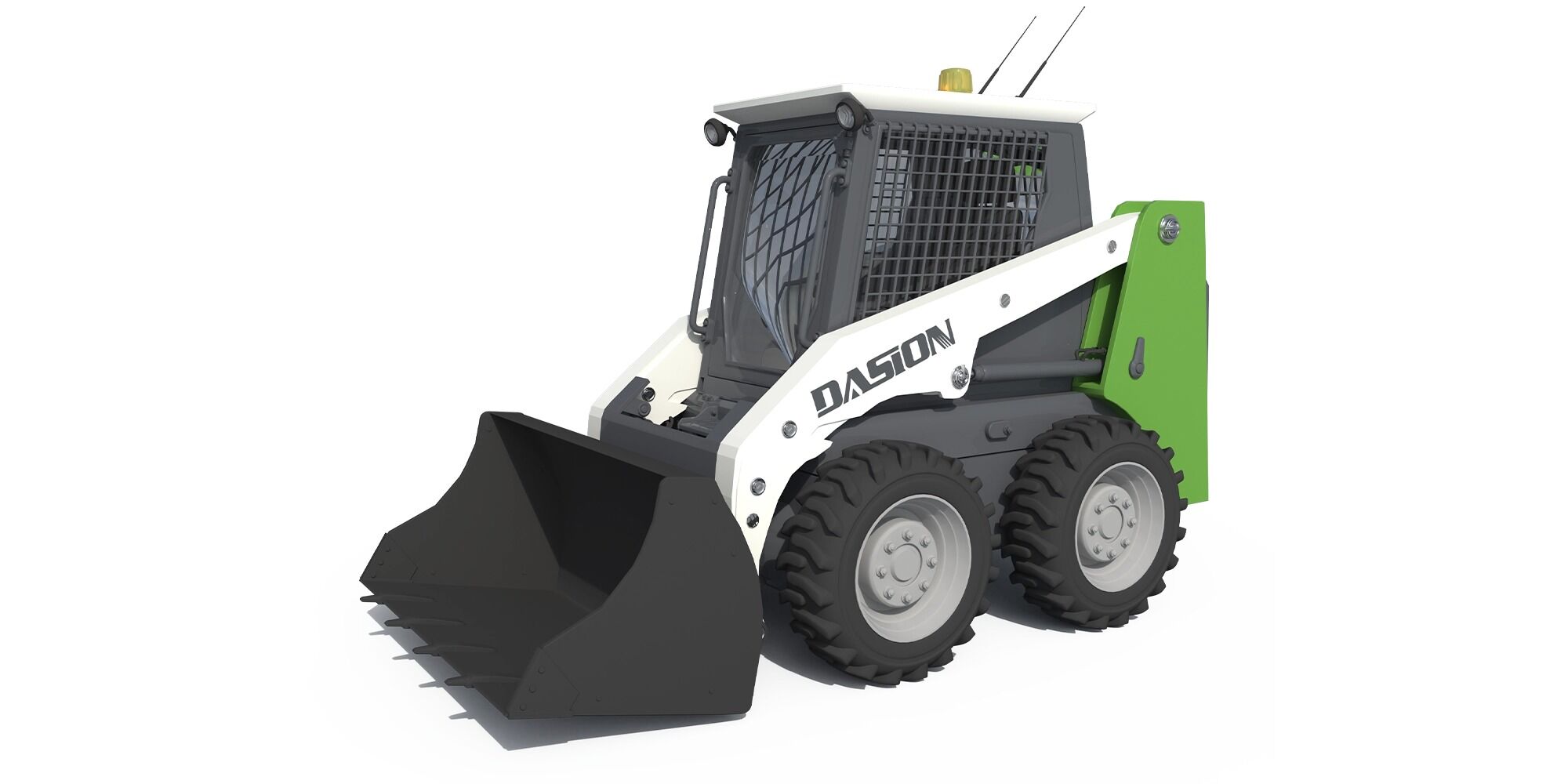
Skid Steer Loader
Skid steer loaders are compact, versatile machines designed for earthmoving, material handling, landscaping, construction, agriculture, and maintenance work. Their compact size, tight turning radius, and quick-change attachment system allow operators to work efficiently in confined spaces. Available in different rated operating capacities and power configurations, they can handle tasks ranging from grading and loading to drilling, breaking, and snow removal.
- Travel Type:Wheeled / Tracked
- Control Type:Open Seat/Rear Standing Platform
What is a Skid Steer Loader
Skid steer loaders have been used in a wide range of applications such as project construction, landscaping work and agricultural production thanks to their compact body and ability to easily change different attachments. As a manufacturer, EPDAS provides a full range of models from light-duty to heavy-duty, covering different rated operating capacities and power configurations to meet various construction site needs.
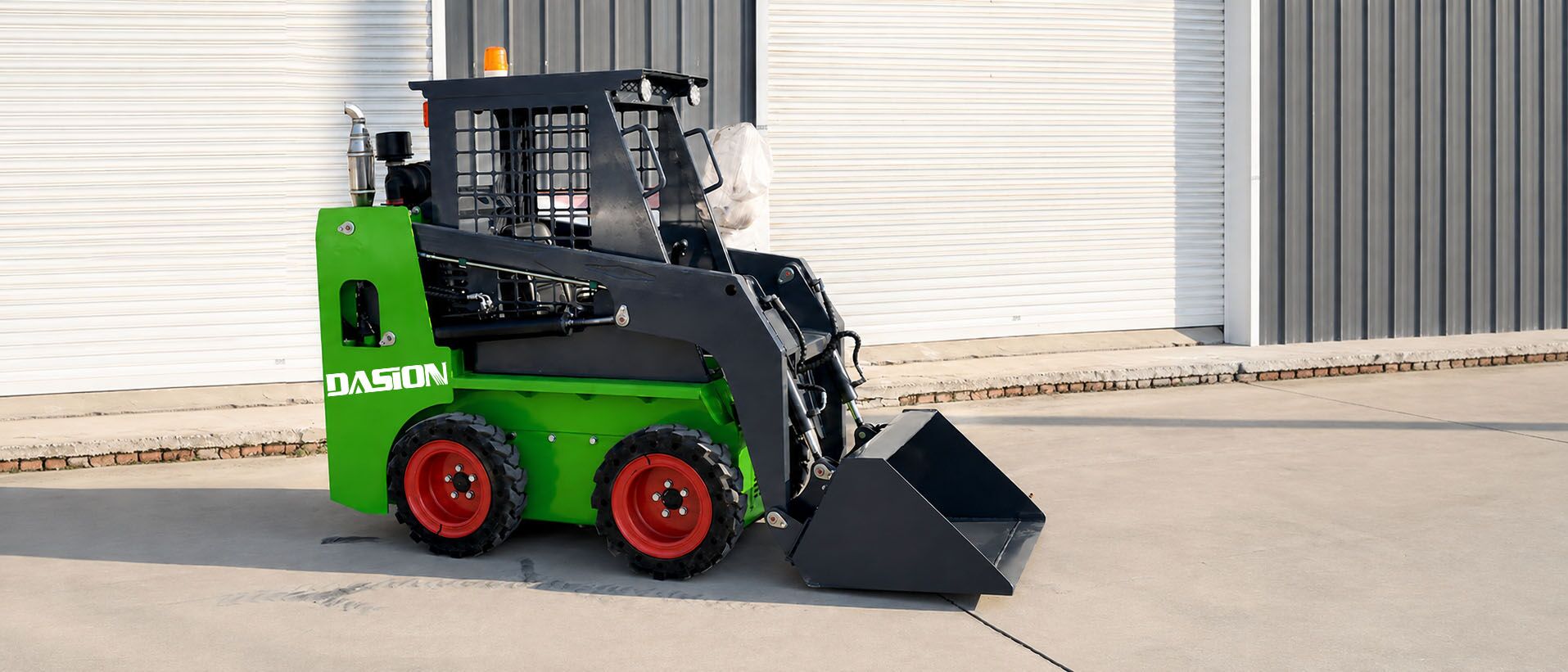
Whatever it is material handling in narrow spaces, grading, breaking, drilling or snow removal, you can find suitable models from EPDAS.
- Skid Steer Loader
Compact and versatile handling with a small footprint and flexible attachment options, ideal for landscaping, construction, and site preparation projects where space is limited and multiple tasks need to be completed with one machine.
| Model | SL25 | SL300 | SL380 | SL430 | SL380B |
| Max. Loading | 500kg | 300kg | 380kg | 430kg | 380kg |
| Operating Weight | 1550kg/1640kg | 780kg/850kg | 820kg/910kg | 950kg/1030kg | 710kg/780kg |
| Engine Power | 18.6kw/25hp | 10.1kw/13.5hp | 17.2kw/23hp | 17.2kw/23hp | 10.1kw/13.5hp |
| Travel Type
| Wheeled / Tracked | ||||
| Emission Standard | EPA4, Stage Ⅴ | ||||
| Control Type | Seat | Open Seat | Rear Standing Platform | Rear Standing Platform | Rear Standing Platform |
| Overall Dimensions | 2650/1000/1950mm | 2680/1000/2100mm | 2500/1200/1350mm | 2600/1200/1350mm | 2500/1200/1350mm |
Common Applications of Skid Steer Loaders
Many buyers do not know which equipment type they need, but they choose one based on their project. For example, I need equipment for landscaping and site preparation, which one should I choose? Therefore, this can quickly narrow down the selection range according to the working conditions.

Construction Projects
Usage: Earthwork excavation, site grading, construction debris cleanup, and material loading and unloading.
Advantages: Skid steer loader can replace part of the work of a larger loader for short-distance material handling, especially in limited working spaces or when frequent relocation is required.
Landscaping
Usage: Soil handling, terrain grading, tree transplanting, material transport and yard renovation.
Advantages: Garden projects often involve operations between narrow lanes and green belts, and the overall machine width is an indicator that needs to be checked when selecting models.
Agricultural Applications
Usage: Feed handling, manure cleanup, and farm material handling.
Advantages: The ground conditions of the farm environment are changeable. Some farm access roads are narrow, and the machine size should not be too large. At the same time, the forks and grabs can be replaced to handle straw and bundled materials.
Road Maintenance
Usage: Road maintenance, shoulder finishing, road surface repair preparation, and roadside material handling.
Advantages: Municipal road operations often need to be carried out next to open road sections. The equipment requires little turning space, and the characteristics of skid steering can be useful in these conditions.
Demolition and Cleanup
Usage: Demolition and cleanup work, construction waste handling, with a hydraulic breaker attachment to complete small-scale demolition work.
Advantages: This kind of working condition has certain requirements for hydraulic output capacity. If you want to use the hydraulic breaker for a long time, you need to confirm whether the machine supports high-flow hydraulic output.
Why is Skid Steer Loaders Worth Choosing
There are many types of earth-moving equipment on the market, and skid steer loaders can be widely used, which comes from several practical operational advantages.
Easy to Operate
Relying on the independent control of the drive wheels on both sides to achieve skid steering, you can complete the U-turn in place without requiring a large turning space.
Multi-Function
Relying on quick-change couplers, a machine can switch to different attachments, and can handle a range of digging, material handling, crushing and sweeping tasks without purchasing multiple pieces of equipment at the same time.
Flexible
The weight of the whole machine is relatively manageable, and the transfer between different construction sites can be completed with a flatbed trailer, which is more convenient for cross-project relocation.
Commonly Used Attachments of Skid Steer Loaders
A large part of the practical value of the skid steer loader comes from the wide range of replaceable attachments. With a quick-change system, changing attachments can change the purpose of the machine.
- General Bucket
Loading and handling of earthwork, sand and stone, and construction waste, which is a standard attachment.
- Hydraulic Fork
Used for handling palletized goods, stone and precast components, replacing small forklifts used on the construction site.
- Hydraulic Breaker
Used for breaking concrete and rock, and it is necessary to confirm that the hydraulic flow of the machine meets the requirements of the attachment.
- Auger
Used for drilling tree pits, foundation holes, garden and fence construction.
- Grapple
Used to grab wood, stones and construction waste, and handle irregularly shaped materials.
- Trencher
Used to dig shallow trenches for pipeline construction and municipal pipeline laying projects.
- Sweeper
Used for cleaning site dust, gravel, factory areas, and roads.
Key Points of Configuration Selection of Skid Steer Loaders
You don’t need to read a thick technical manual or confirm the 4 key points, and you can basically find the right machine.

Step 1: Sort Out Your Working Scenario
First, sort out what the machine is mainly used for. Is it light preparation work in a garden, or the continuous earthwork on the construction site, or the need to frequently use a hydraulic breaker for breaking operations? Different working conditions have different requirements for rated operating capacity and hydraulic systems.
Step 2: Determine the Required Rated Operating Capacity
Select the corresponding rated operating capacity according to the weight of the materials frequently handled. Do not take the maximum tipping load advertised by the machine as the basis for selection. The rated operating capacity is the upper limit of daily operation safety. If you choose a machine that is too small, the heavy-duty machine will not reach the operating capacity; if you blindly choose an oversized model, the cost of equipment procurement and transportation will be unnecessarily increased.
Step 3: Check Whether the Hydraulic Output Matches the Attachments
If it is just shoveling soil and carrying pallets, the standard-flow hydraulic configuration is sufficient. When planning to use hydraulic breakers, trenchers, and milling equipment for a long time, check the flow requirement marked on the nameplate. The required flow cannot exceed the auxiliary hydraulic flow that the machine can output, otherwise the attachment performance will be insufficient, which will also accelerate equipment wear.
Step 4: Check the Space Limits of the Work Site
Measure the actual width of the entrances and exits and passages at the construction site. The passage of some old-city renovation and courtyard projects is very narrow, and if the width of the overall machine exceeds the available passage, the equipment cannot enter the site at all. At the same time, we should also pay attention to the height limit of the work site, such as indoor areas and low sheds, and it is necessary to check the overall machine height.
If you are not sure how to match the machine, you can tell us your operation scenario, the weight of the materials to be carried, and what attachments you are going to use, and our engineers will give you configuration suggestions.
Production, Manufacturing and Quality Control of Skid Steer Loaders
- Frame Welding Processing
After the steel plate cutting and unloading are completed, the whole machine frame adopts full-welding technology, and the key areas where stress is concentrated are reinforced to cope with the load brought by the high-intensity operation of the construction site.
- Hydraulic System Assembly
Hydraulic pipes and fittings are assembled according to export equipment standards, which reduces the probability of oil leakage after the equipment is put into use and reduces on-site failures and downtime.
- Machine Function Cycle Testing
Complete the hydraulic system pressure and flow verification, and repeatedly perform the full-stroke actions of lifting and turning the bucket. Fully test the travel, skid steering, and quick-change coupler functions to confirm the smooth operation of all mechanisms.
- Test the Working Condition of the Machine
After each machine is assembled, the engine no-load and loaded operation tests are carried out to test the stability of the power output.
- Export Compliance Information Support
We can provide a complete set of export technical documents, supporting relevant CE certification information, and provide equipment operation manuals and parts catalogs, which is convenient for overseas users to operate and maintain.
- Packaging Service
Support coordination of shipment and loading, adapt to container transportation requirements, assist with loading planning, and ensure the integrity of the equipment during the shipping process.
EPDAS Skid Steer Loader Projects
Skid Steer Loader FAQs
- What is a mini lifting dumper used for?
A mini lifting dumper is designed to transport and unload materials in confined construction sites, landscaping projects, agricultural work, and other areas with limited access. Its lifting function allows materials to be discharged at a higher level or into containers and trucks.
- How much can a mini lifting dumper carry?
The payload depends on the specific model. Mini lifting dumpers are generally designed for small to medium material-handling tasks, with capacity selected according to the project requirements, site conditions, and required lifting height.
- How high can a mini lifting dumper lift and dump materials?
The maximum lifting and dumping height depends on the model and lifting system. Before choosing a machine, check the required discharge height to make sure it can reach the target truck, container, or working area.
- Can a mini lifting dumper work on uneven terrain?
Yes. Many mini lifting dumpers are designed for outdoor work and can operate on uneven terrain. However, the actual working capability depends on the machine's ground clearance, drivetrain, tires, load, and site conditions.
- Is a mini lifting dumper suitable for narrow or confined job sites?
Yes. Its compact dimensions make a mini lifting dumper suitable for narrow construction sites, landscaping areas, renovation projects, and other locations where larger dumpers have limited access.
- What is a mini road roller used for?
A mini road roller is mainly used to compact soil, asphalt, gravel, and other construction materials. It is commonly used for roads, sidewalks, driveways, parking areas, landscaping, and small construction projects.
- Can a mini road roller compact asphalt?
Yes. A mini road roller can be used to compact asphalt on small roads, driveways, parking areas, and other paving projects. The suitable roller type and operating parameters depend on the asphalt mix and project requirements.
- Can a mini road roller be used for soil compaction?
Yes. Mini road rollers are commonly used for compacting soil, gravel, sand, and other granular materials. They are particularly useful for small construction areas where a larger roller may be difficult to operate.
- What is the compaction width of a mini road roller?
The compaction width depends on the drum size and model. A wider drum covers more area per pass, while a narrower drum provides better access in confined spaces. Choose the width according to the site size and working area.
- What is the difference between a single drum and double drum road roller?
A single-drum roller has one vibrating drum and is commonly used for soil and granular material compaction. A double-drum roller has two drums and provides more uniform compaction, making it particularly suitable for asphalt and other paved surfaces.
- What is a skid steer loader used for?
A skid steer loader is a compact, versatile machine used for material loading, excavation, grading, site preparation, landscaping, and debris removal. With different attachments, it can perform a wide range of tasks.
- How much can a skid steer loader lift?
The lifting capacity depends on the model's rated operating capacity (ROC), tipping load, hydraulic system, and attachment. Choose a machine based on the weight and type of materials you need to handle.
- What is rated operating capacity (ROC) on a skid steer loader?
Rated operating capacity (ROC) is the maximum recommended operating load for a skid steer loader under specified conditions. It is an important reference when choosing a loader for safe and stable material handling.
- What attachments can be used with a skid steer loader?
Common skid steer attachments include buckets, pallet forks, augers, grapples, breakers, trenchers, and brush cutters. The available attachments depend on the loader's hydraulic flow, attachment interface, and intended application.
- What is the difference between standard-flow and high-flow hydraulics?
Standard-flow hydraulics provide enough hydraulic power for common attachments such as buckets and forks. High-flow hydraulics provide greater hydraulic flow for demanding attachments such as breakers, brush cutters, and cold planers.
Related Products
Customize Your Solutions
Contact us now via Email:info@epdas.com, or Whatsapp:+86 188 38115507 , or fill in the form below.
FEW TIPS:
Service Process:
- Business negotiation
- Solution development
- Manufacturing and commissioning
- Operational production