
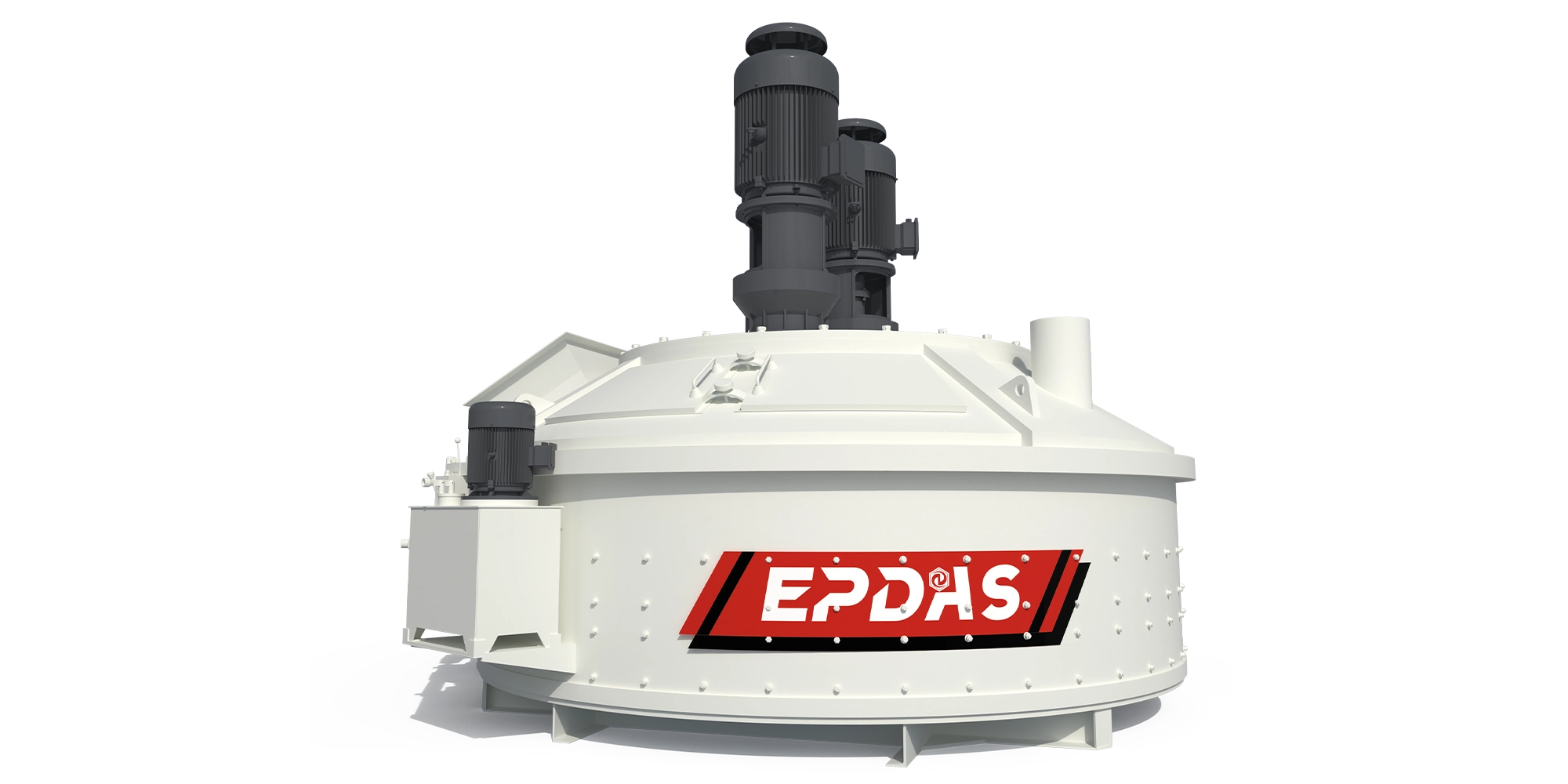
Vertical Shafts Concrete Mixer
This vertical shaft mixer is engineered for high-precision manufacturing, prioritizing superior mixing uniformity, and exceptional wear resistance over high-volume output. It serves as the indispensable core equipment for specialty production lines, including dry-mix mortar, refractory materials, and architectural precast.
- :
- :
What is a Vertical Shafts Concrete Mixer
A vertical shafts concrete mixer is designed for mixing fine powders, high-viscosity materials, as well as high-hardness and abrasive materials. Rather than focusing on high hourly capacity, it prioritizes mixing uniformity, batch-to-batch consistency, and equipment wear resistance.
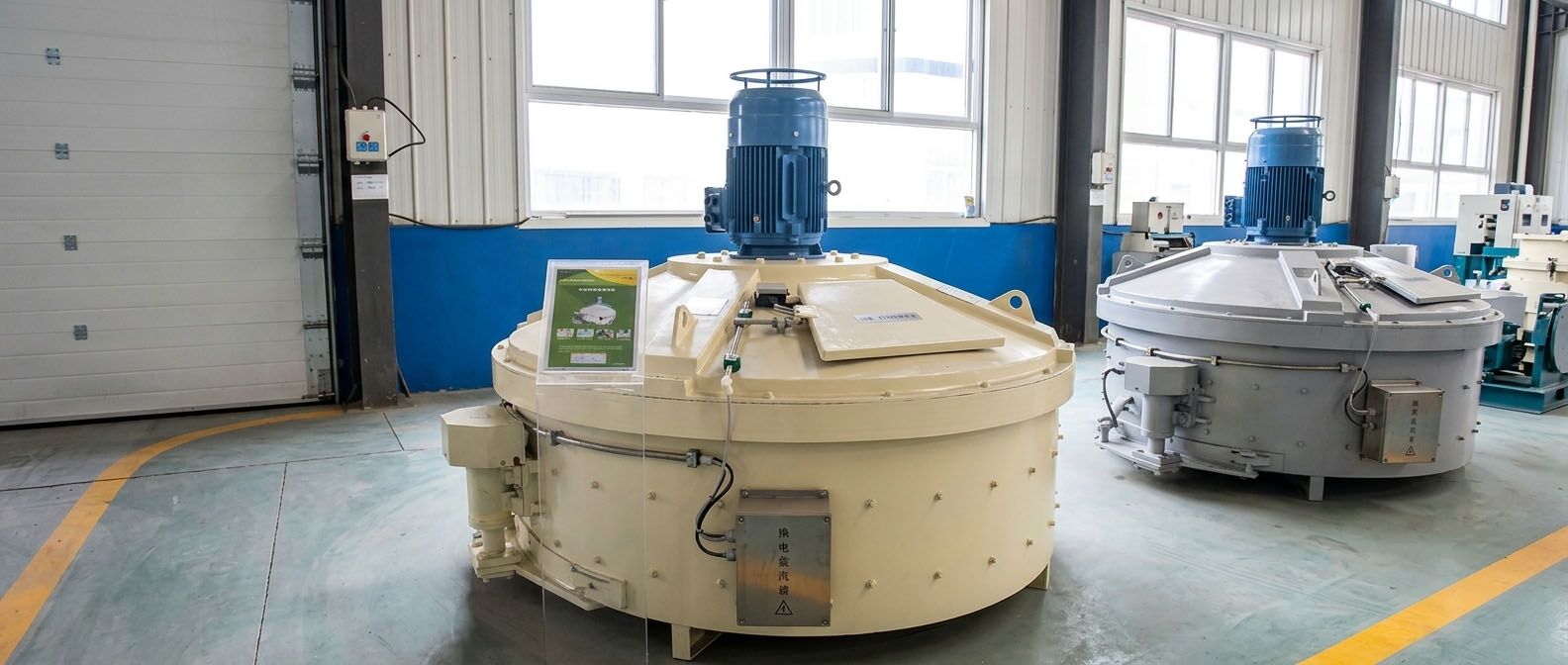
For this reason, the vertical shafts mixer is ideally suited for precision manufacturing scenarios such as precast components, dry-mix mortar, and refractory materials. It serves as core matching mixing equipment in production lines for specialty building materials.
Working Principle of Vertical Shafts Concrete Mixer
The mixing process of a vertical shafts concrete mixer relies on purely mechanical, compulsory mixing without complex auxiliary structures, and its working principle is simple and stable.

- When working
The motor and gearbox deliver consistent power, driving the vertical main shaft to rotate at a constant speed, and the mixing arms attached to the main shaft and blades operate synchronously. It exerts continuous power on materials inside the mixing chamber. Whether it is agglomerated powders or composite materials blended with fibers and fine sand, all can be sufficiently dispersed to effectively prevent localized poor mixing.
- During mixing
The materials form a complete vertical three-dimensional circulating flow profile in the chamber. The bottom materials are driven upward by the blades, and the upper materials sink due to gravity and mixing force. There are no mixing dead zones throughout the entire process, ensuring all materials can be mixed evenly.
- Conclusion
This continuous circulation of dispersion and recombination promotes the rapid integration of aggregates, powders, and additives, which effectively mitigates some common issues such as aggregate segregation, material stratification, and finished product discoloration. The vertical shafts concrete mixer has a stable mixing efficiency, meeting the requirements of continuous production lines under standard operating conditions.
Why Buy a Vertical Shafts Concrete Mixer
Many building material manufacturers often have common misconceptions when purchasing equipment. They pay close attention to large capacity and standard models but overlook the quality and maintenance cost of material adaptability. For dry-mix mortar, refractory materials, and specialized precast concrete, a vertical shaft concrete mixer is an essential equipment.
Eliminate inefficient mixing & substandard output
Traditional drum mixers depend on material dead weight to achieve mixing, but they only satisfy the basic demands of concrete mixing. On the contrary, the vertical shaft concrete mixer can produce high-quality concrete stably by its forced three-dimensional mixing mode, avoiding the limitation of tumbling mixing.
Solve poor material adaptation & high wear costs
Twin shafts concrete mixers are designed for yielding large-capacity and commercial concrete. Their advantage is volume, not precision. Though the vertical shaft concrete mixer capacity is less than the twin shaft one, its quality stability and operation cost in specialized materials are superior.
Balance quality & cost-efficiency
Planetary mixers deliver superior mixing precision, but they are expensive, the structure is complex, and the later maintenance expenditure is high. For small and medium-sized production lines, this leads to over-investment. Compared with it, the price of the vertical shaft concrete mixer and its spare parts are more affordable. It is more cost-effective if you do not have extremely high demands for precision.
Stabilize capacity & avoid risks
Simple, low-cost mixers on the market suffer from crude structures, lack of wear-resistant protection, and poor sealing. Their inconsistent mixing quality often leads to customer dissatisfaction. In contrast, professional concrete mixers feature industrially optimized structures. With robust wear resistance, reliable sealing, and mature transmission systems, they support long-term, continuous operation. For your production cycle, it will be more stress-free and economical.
| Category | Suitable | Unsuitable | Must Select |
| Material Type | Dry mortar, refractory materials, precast components, powder-rich mixes | Commercial concrete with large aggregates (aggregate >25mm), large-scale ready-mix plants | Materials prone to clumping / layering / segregation |
| Production Demand | Small to medium-sized, continuous production | Ultra-high capacity plants (≥100–150 m³/h) | High stability, zero tolerance for rework |
| Precision Requirements | High consistency, color/strength sensitive | Basic concrete | Quality directly impacts product grade/acceptance |
| Wear Level | High silica sand, refractory materials, | Low-wear ordinary sand/gravel | Frequent replacements cause excessive costs |
| Investment Budget | Medium (ROI-focused) | Low-cost/price-only | Planetary too expensive, twin-shaft lacks precision |
| Production Mode | Industrialized continuous production | Temporary/mobile site | Long-term stable production lines |
In conclusion, if your materials are fine and high-wear, the vertical shafts concrete mixer would be your best suitable equipment that balance mixing quality, durability and production stability.
Suitable Materials and Applications of Vertical Shafts Concrete Mixer
Equipment adaptability is the most vital element that users consider. The equipment is not a universal, high-yield mixing machine. Its advantages are particularly evident in the mixing industry for special, fine, and highly abrasive materials.

- Dry-mix mortar
It is the most common mixing material. Using a vertical shaft concrete mixer can avoid agglomeration and non-uniform blending of dry powders and ensure every batch has a consistent mortar mix ratio.
- Various precast concrete, colored concrete and fiber-reinforced concrete
It can resolve problems such as color variance of colored concrete aggregates and poor fiber distribution.
- Refractory materials
Refractory materials are always characterized by high-hardness and high abrasiveness. Ordinary mixers cannot mix them thoroughly and cause significant wear to the machine, whereas the vertical shaft concrete mixer meets their needs through its wear-resistant structure and high-shear capability.
- Highly challenging target materials
For materials like high-silica sand, high-hardness wear-resistant aggregates, and powder-rich formulations that are difficult to mix, the advantages of the vertical mixer will be more pronounced. Relying on its advanced anti-abrasive engineering and vertical three-dimensional circulating flow profile, the equipment has outstanding performance in homogeneous blending.
- Limitation of application and exclusions
It should be noted that this machine is not suitable for large-scale commercial concrete plants. It is engineered as a precision mixing equipment, rather than a mass-capacity mixer. Using it in the right application can maximize the value profile of vertical shaft concrete mixers.
Equipment Investment: Balancing Initial Price with Long-Term Value
While the initial investment is often the primary focus during procurement, it is crucial to recognize that the true value of a vertical shafts concrete mixer extends far beyond its upfront cost. A low purchase price often masks significant “hidden” expenses that emerge during daily production. By analyzing the structural and material differences that drive price variations, we can better make a right choice of buying the equipment.
- 01
Price Differences Driven by Material Selection
Some low-price equipment may utilize ordinary steel plates, liners, and non-standard motors to save cost, which cannot support long-term operation. A standard concrete mixer has strong stability and durability due to robust material selection such as high-chrome alloy wear-resistant liners and standard copper-wound motors.
- 02
Impact of Customization Requirements on Costs
For customized models for high-viscosity materials, high-abrasion applications, non-standard voltage requirements, and specific plant dimensions, the manufacturer need to redesign the structure and adjust the components, which has a significant effect on price.
- 03
Energy Consumption Costs
Many off-brand machines feature poor power matching, leading to longer mixing times and higher energy consumption. Energy costs accumulate along with continuous operation.
- 04
Downtime and Maintenance Costs
Low-quality equipment has poor sealing and an unstable structure. Frequent maintenance interrupts the production line and delays delivery schedules. The cost incurred by downtime and rework is much higher than the initial price gap.
Core Structure and Benefits of Vertical Shafts Concrete Mixer
- Zero-dead-zone precision mixing
Depending on its vertical mixing structure, materials can form a complete vertical circulating flow in the chamber, which contributes to formulation integrity and effectively prevents various production problems related to color and uniformity.
- Superb wear resistance, Tailored for wear matrices
The mixing chamber consists of high-strength structural steel, and its internal chamber incorporates high-chromium alloy wear plates. The mixing blades also adopt a strategic thickening design.
- Stable power output, jamming-free
The equipment matches with specialized industrial motors and hardened gearboxes, and it has abundant torque reserves with smooth and linear power transmission. It delivers excellent performance when tackling high-density and highly viscous materials. Even in long-term operation, it can still maintain stable output.
- Clean and rapid discharge, minimizing material waste
There are three ways to discharge: pneumatic, hydraulic, and manual actuation to adapt to different automated production lines. Because of its optimized chamber structure design, it has lower material residue. This not only minimizes material loss, but also reduces the labor cost of equipment internal cleaning.
- Reliable sealing performance, low downtime rates
Considering industry common problems like shaft-end slurry leakage, the ingress of abrasive dust, and premature bearing failure, the equipment utilizes targeted seal optimization treatment to avoid dust accumulation, component corrosion, and fluid leakage faults.
- Easy to maintenance, low total cost
The whole structure of the equipment is compact and reasonable without complex drive and mixing systems, so it has fewer points of failure. The vertical shaft concrete mixer’s wear parts are standard spare parts that can be purchased conveniently and cheaply. For daily maintenance, it only needs simple cleaning of the chamber and regular lubrication.
EPDAS Vertical Shafts Concrete Mixer Projects
Equipment Details Display of Vertical Shafts Concrete Mixer
These images highlight the vertical shafts concrete mixer’s critical role in specialized production: delivering superior material homogeneity, processing highly abrasive aggregates, and ensuring consistent performance in demanding applications. Its robust vertical structure and high-shear mixing geometry allow for precise control over complex formulations, preventing material segregation.
Vertical Shafts Concrete Mixer FAQs
- Are concrete mixers and cement mixers the same equipment?
Yes, they are different terms for the same piece of equipment. In daily construction, concrete mixers are often referred to as cement mixers. Their core function is to blend aggregates, cement and water into concrete mixture, with no essential difference between them.
- Can portable concrete mixers be used for large-scale commercial projects?
Not recommended. Portable mixers feature small mixing capacity and low efficiency, only meeting the demand for small-batch concrete. Using portable mixers will severely delay the construction progress. Continuous mixers or concrete batching plants should be adopted instead.
- What is the maximum holding time of concrete in a mixer drum?
It should not exceed 90 minutes at most, and the optimal pouring time is within 60 minutes after water is added for mixing. Concrete begins to initially set once water is added. If the time exceeds 90 minutes, its workability and strength will drop drastically, leading to potential quality issues after pouring.
- Do all concrete mixers come with a water tank?
Not all of them. Small portable mixers are generally not equipped with an independent water tank, and water needs to be measured and added manually in advance. Modern mobile concrete mixers are basically fitted with an independent water tank, which allows water addition during transportation to extend the initial setting time of concrete.
- What are the key tasks for the daily maintenance of concrete mixers?
Inspect and replace wear parts. Check mixing/screw blade wear and replace damaged ones timely. Lubricate transmission components regularly and clear drum residual concrete to avoid hardening/caking.
- What should I do if the pipeline gets clogged during concrete pumping?
Optimize the concrete mix: Adjust the water-cement ratio to improve workability and flowability before pumping. Match the pipe diameter: Always use the correct delivery pipe size that matches your specific concrete aggregate grading. Keep pipelines clean: Flush and wash the pipelines thoroughly after every session to prevent old residue buildup. Emergency troubleshooting: In case of an immediate blockage, try using the reverse pumping function to break the clog, or use a specialized pipeline clean-out tool to clear the pipe safely.
- Is it more cost-effective to buy or rent the equipment?
The best choice depends entirely on your project timeline, workload, and financial strategy: Buying: This is ideal for long-term, high-volume projects. Owning the equipment delivers a much higher long-term ROI and ensures 100% equipment availability whenever you need it. Renting: This is perfect for short-term projects, temporary jobs, or testing out a new machine. It significantly minimizes your upfront capital investment and gives you excellent cash flow flexibility.
- How safe is the Concrete Mixer Pump during operation?
Highly safe, provided operators follow these three baseline rules: Wear PPE: Ensure the team always wears standard safety gear. No overloading: Never pump beyond the rated capacity or height limits. Daily checks: Verify hydraulic pressure, pipe couplings, and outrigger stability before starting.
- What types of concrete can a twin-shaft concrete mixer handle?
It handles almost all concrete types and construction mixes on the market, including: Standard mixes: Commercial ready-mix concrete and precast concrete. Specialty concrete: Dry-hard concrete, roller-compacted concrete (RCC), high-strength concrete, and self-consolidating concrete (SCC). Other materials: Various types of mortar and construction powder blends.
- What is the standard mixing cycle time for twin-shaft concrete mixer?
The standard mixing cycle for regular materials takes only 30 to 60 seconds. You can slightly adjust this timing based on your specific concrete mix design, aggregate size, and hardness.
Customize Your Solutions
Contact us now via Email:info@epdas.com, or Whatsapp:+86 188 38115507 , or fill in the form below.
FEW TIPS:
- Please detail the characteristics of your raw materials, especially the maximum aggregate size.
- Please outline the primary challenges or pain points with your current production process.
- Please outline the primary challenges or pain points with your current production process.
- Please describe the intensity and environment of your daily operations.
- If you are interested in becoming our distributor, please let us know.
Service Process:
- Business negotiation
- Solution development
- Manufacturing and commissioning
- Operational production