
Outer Diameter: Ø 140~407mm
Length: 2~15m
Conveying Angle: 0~50º
EPDAS provides integrated cement handling solutions, including cement silos, screw conveyors, cement feeders, and bucket cement feeders, designed to improve cement storage, conveying efficiency, and feeding accuracy.
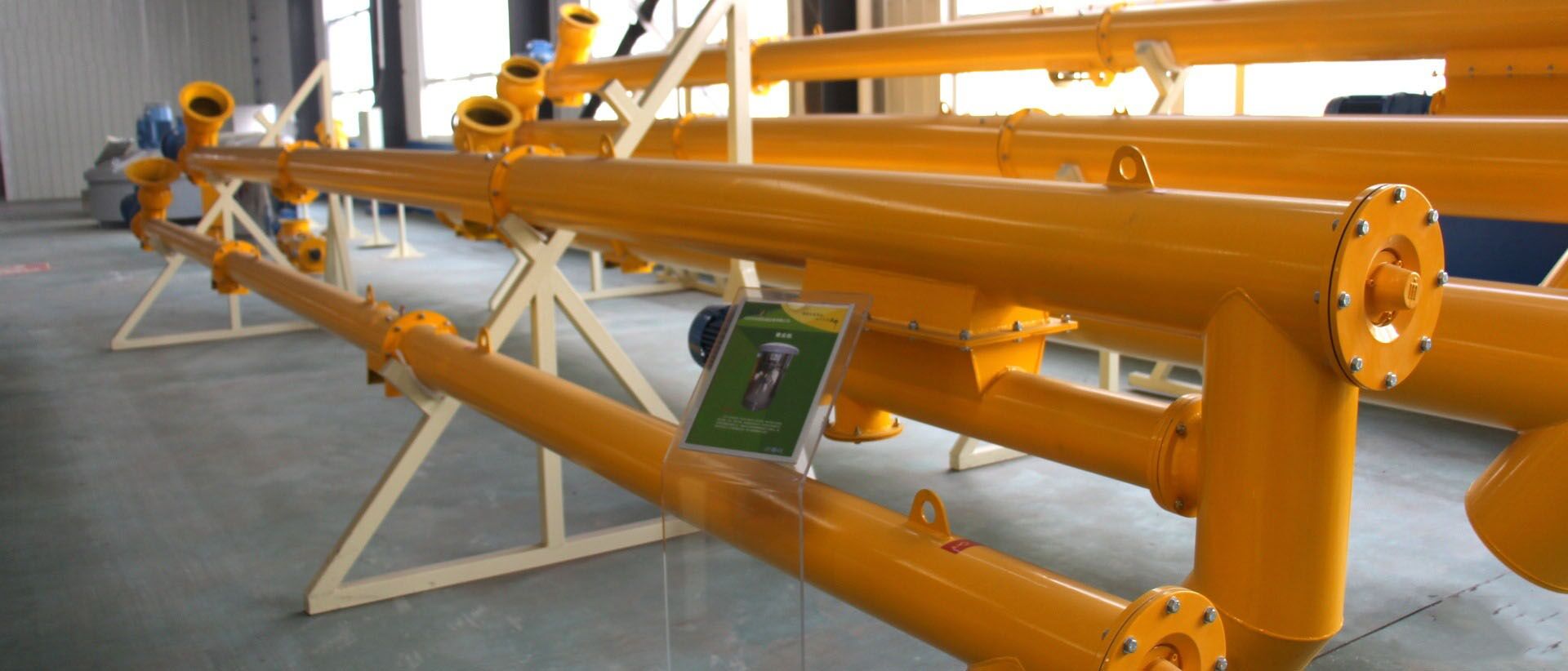
Cement is the core cementitious material in applications such as concrete production, precast concrete manufacturing, and dry mortar production. Its stability determines the operating status of the entire production line. Common problems—such as production interruptions, material waste and fluctuations in finished product quality—often do not originate in the concrete batching plant itself, but rather from improper equipment configuration in downstream cement handling processes.
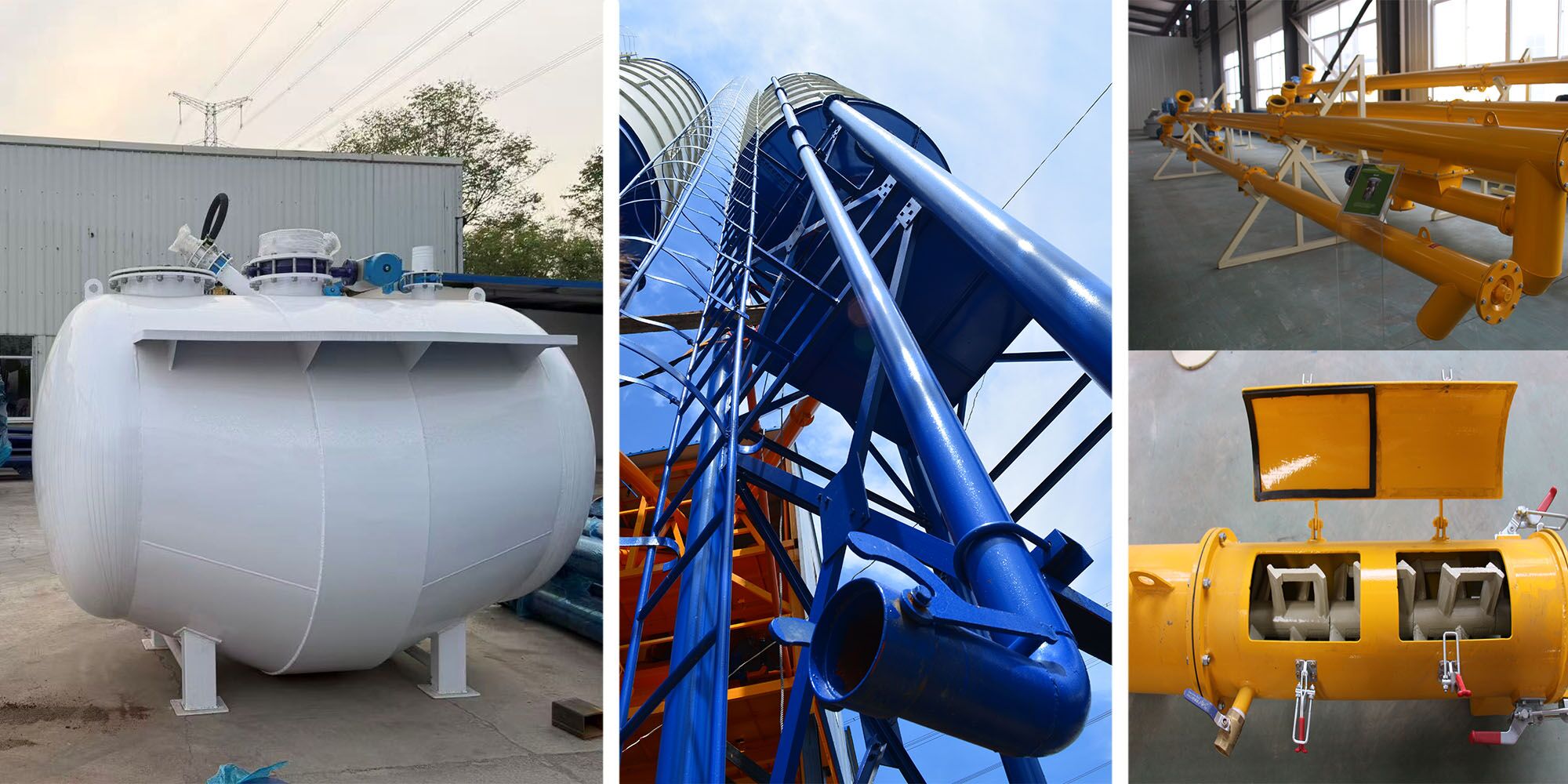
Suitable cement handling equipment can reduce the frequency of operational downtime, avoid material deterioration, and maintain cement quality and dosing precision.
Many construction and manufacturing companies face daily operational challenges concentrated in three key steps: cement storage, material conveying and precise feeding. These seemingly minor operational issues can accumulate over time, directly increasing production costs and slowing down project progress.

Traditional storage methods suffer from poor sealing performance. Moisture in the air can easily penetrate the stored material, which causes clumping and poor flowability of the cement. This not only affects the subsequent batching process, but also decreases the stability of the finished concrete.
When storage capacity is insufficient, the project must rely on frequent bulk cement truck deliveries. Once a delivery is delayed, the entire production line must shut down, seriously affecting the construction schedule and continuous production.
Open transfers and rudimentary pipeline conveying easily cause cement dust leakage, material blockage, and uneven conveying. Dust leakage not only wastes raw materials, but also has a significant negative effect on the factory environment. Material blockages require frequent equipment shutdowns for inspection and maintenance, resulting in significant labor and time costs.
Existing older plants, urban construction projects, and small-scale precast workshops often have limited working space. Traditional horizontal conveyors and long-distance conveying systems are frequently difficult to install in such restricted applications.
There are other common issues such as poor adaptability, complex installation and inability to integrate new and existing equipment. When manufacturers purchase storage equipment in isolation, the equipment models are incompatible and other expenditure like additional site and pipeline modifications.
Outer Diameter: Ø 140~407mm
Length: 2~15m
Conveying Angle: 0~50º
Storage Volume: 30~500t
Structure Type: Vertical/Horizontal
Foundation Type: Stationary/Mobile
Function: Pumping cement/powder into silo
Pumping Capacity: 3~8m³/min
Tank Volume: 3.9~6.5t
A mature cement handling system complies with standard material flow logic. Each component performs a specific function and works seamlessly with other equipment, forming a fully automated, closed-loop material handling system that requires minimal manual intervention and integrates easily into various automated production lines.
Step 1: cement storage
Bulk cement is pneumatically conveyed via dedicated feeding pipelines within a fully enclosed system and stored inside the cement silo. The sealing structure, dust collection system, and fluidizing device will work simultaneously to isolate external moisture and dust and keep the stored cement dry. Equipped with a level monitoring device, operators can have real-time visibility into the remaining material level.
Step 2: Precise material control process
The bottom of the cement silo is connected to a cement feeder so that the equipment can evenly and consistently discharge cement according to the batching demands of the production line. Compared with manual batching, automatic feeder dosing has high stability to ensure the precise dosing of every batch of material.
Step 3: Conveying process
The metered, discharged cement is conveyed by a screw conveyor horizontally or at an incline. The internal screw flights rotate at a uniform speed without clogging or feed interruption.
Given that some construction sites are narrow or feature elevated inlets on the batching plant, using the bucket cement feeder completes the vertical conveying process. It features a small footprint and can lift cement to elevated mixing equipment, making it ideal for any limited sites.
Finally, the materials are conveyed precisely to the concrete batching plant, completing the entire process. Each component operates in coordination, effectively eliminating the low efficiency and faults associated with labor.

The cement silo is the foundational equipment of the entire handling system. Its core function is to store bulk cement, fly ash, lime, and other powdery building materials to replace the rudimentary storage method of traditional bag stacking. The equipment adopts a fully enclosed steel structure design, which has excellent moisture-proof and dust-proof performance, and can maintain the dry state of raw materials for a long time.
The vibrators, aeration pads and dust removal devices installed on the silo can solve common problems such as material clumps, bridging, and silo blockage. The level indicator can monitor the remaining material level in the warehouse in real time, preventing spillage or running empty, and ensuring the stability and order of the material storage link.
The screw conveyor is the core equipment for the transportation of powdery materials, which is specially designed for the horizontal or small-angle inclined conveying of cement, fly ash, dry sand, and other bulk materials. The equipment structure is compact, and the entire assembly is designed as a closed tube. There is no dust leakage during operation, and the operating environment is clean.
The equipment relies on a motor to drive the spiral screw flights to rotate at a uniform speed, and the axial thrust of the flights drives the material forward. The conveying process is continuous and uniform, and there will be no problem of material spilling or surging. For highly fluid powdery materials, it can be designed with a short pitch structure to effectively prevent material flushing and adapt to inclined conveying conditions.
The cement feeder is mainly responsible for the quantitative control of materials. It is installed at the outlet of the cement silo and is a key equipment to ensure the accuracy of the concrete mix design. It can accurately adjust the discharge speed and feed rate of the material, so that the cement feeding rhythm exactly matches the operating cycle of the mixing equipment.
In the automated production process, the feeder can cooperate with the control system to realize the continuous feeding at a uniform speed, which completely solves the problem of manual feeding rate inconsistencies and inaccurate dosing. The stable flow of material can keep the mix ratio of each batch of concrete consistent and effectively reduce the quality fluctuation of the finished product.
Choosing a cement handling equipment does not mean need to pursue high specifications or large capacity blindly. Instead, the equipment should fit the production scale, site conditions, and material needs to find the most suitable equipment that has practicability and cost-effectiveness.
Determine the cement silo capacity based on the daily production volume
Considering conveying distance and site layout
Reasons: High stability, convenient maintenance, and high cost-effectiveness.
Fine-tune the equipment configuration based on material characteristics
EPDAS supports customized solutions. We adjust equipment size, configuration, or installation method according to customers’ factory layout, capacity demands, and site constraints to resolve installation challenges such as incompatibility between new and existing equipment and site limitations.
All equipment undergoes multiple inspections such as raw material inspection, welding quality inspection, complete machine assembly testing, and factory trial operation before delivery. The core equipment like screw conveyors and cement silos adopt wear-resistant and corrosion-resistant materials to be used for high-frequency working.
EPDAS provides preliminary site layout planning, equipment installation guidance, and on-site commissioning services. After equipment commissioning, EPDAS offers long-term spare parts supply and technical support to ensure worry-free maintenance and maximize the uptime of customers’ production lines.
A cement feeder is used to continuously feed cement or other powder materials into a batching or mixing system.
A cement feeder controls the flow of powder materials to provide a stable and adjustable feeding rate.
You should choose the capacity based on the plant output, material consumption, and feeding distance.
A cement feeder can handle cement, fly ash, mineral powder, and other dry powder materials, depending on its design.
You should consider the feeding capacity, material type, feeding distance, layout, and equipment compatibility.
A cement silo is used to store bulk cement and other dry powder materials for batching and mixing systems.
Cement is commonly loaded from a bulk cement truck into the silo through a pneumatic conveying system.
A cement silo should have safety features such as a dust collector, pressure relief valve, and material level indicator.
A screw conveyor is used to continuously transport cement, fly ash, and other powder materials between different pieces of equipment.
The required size depends on the conveying capacity, material characteristics, conveying distance, and installation conditions.
A screw conveyor can transport cement, fly ash, mineral powder, and other dry bulk materials.
Service Process: