
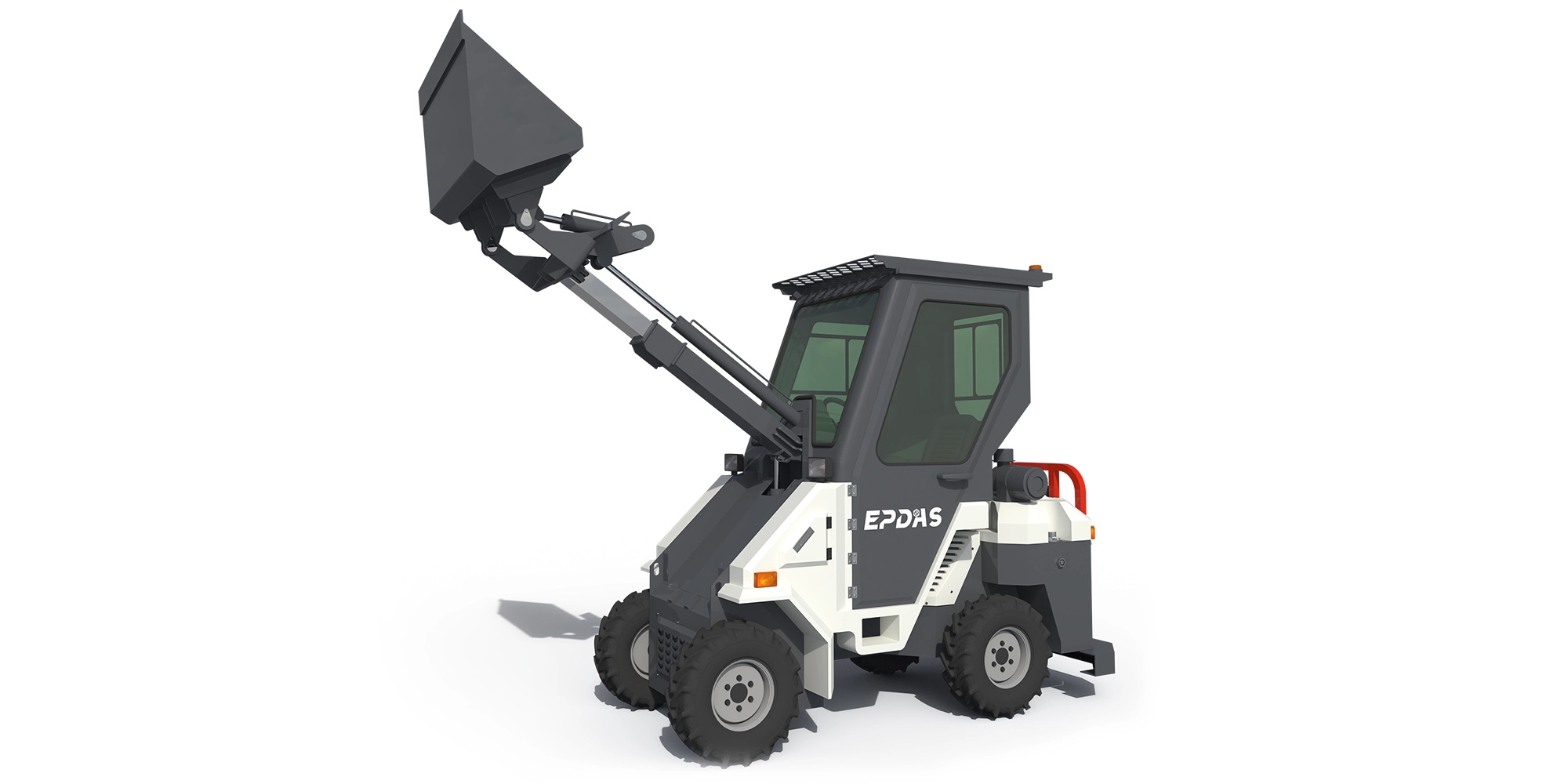
Telescopic Loader
Telescopic Loader features extendable boom design, flexible operation and strong lifting capacity. Widely used in construction, agriculture and material handling. High efficiency, durable structure and easy maintenance meet various working site demands.
- Working Capacity:0.5t
- Max. Reach:3.35m
What is a Telescopic Loader
Telescopic Loader, to put it bluntly, is an ordinary wheel loader with an extendable boom that can stretch and shrink. The boom of an ordinary loader is fixed, but this machine is different. It is equipped with reinforced extendable booms that can move telescopically. With such core structural upgrades, the equipment delivers a wider operating range.
To be honest, the machine features a robust chassis and reliable engine. I have seen such units operating continuously on construction sites all day with stable engine performance. It adapts to heavy-duty working conditions and copes with uneven terrain on small and medium job sites.
From Efficiency to Safety: Design Logic and Practical Performance
When selecting loading machinery, operational efficiency cannot be judged merely by official parameter specifications. Similar to vehicle selection, horsepower data cannot represent overall performance. Practical field testing is essential. The superior performance of telescopic loaders stems from targeted optimization for common construction site pain points.
Every optimization of mechanical linkage structure and cab human-machine interaction balances structural rigidity and effective operating range.
- Mechanical structure
Shoveling efficiency largely depends on the machine’s material holding capacity. Telescopic loaders adopt a mature Z-bar linkage structure to optimize breakout force. When the bucket penetrates hard or cohesive materials, it generates powerful digging force for fast, clean material dumping.
When fitted with fork attachments, this structural design maintains horizontal load stability throughout lifting and lowering cycles, greatly enhancing operational safety in confined working spaces.
To reduce operator fatigue, the machine is equipped with a load assist system. This intelligent module enables automatic repositioning and minimizes repetitive fine-tuning operations. - Control logic
For operators working in confined spaces, stability and precision take priority over operating speed. The micro-motion control system optimizes conventional power transmission structures, maintaining sensitive hydraulic boom response via stable engine output while enabling precise travel speed regulation through accelerator fine-tuning.
In addition, the center articulation structure improves terrain adaptability on uneven ground, ensuring full four-wheel contact to prevent tire slippage and power waste. The customized low-profile cab adapts to warehouses and low-clearance sites, eliminating operational blind spots and accessing restricted working areas unavailable for standard large machinery. - Professional Care
The service life of construction machinery is closely related to operator working conditions, as operator fatigue is a major cause of operational errors.
In terms of vision, the four-column panoramic cab and narrow pillar design expand the viewing range. Combined with the peripheral monitoring system, operating blind areas are greatly reduced. The cab strictly complies with ROPS & FOPS standards, providing reliable protection under harsh working conditions.
In terms of operating experience, the highly integrated multifunctional joystick and touch screen support one-touch control of gear shifting, steering and attachment switching. Equipped with suspended damping seats and independent air conditioning systems, the cab effectively isolates noise and dust, alleviating long-term operational fatigue and sustaining stable and accurate manipulation.
Difference Between Telescopic Loaders, Ordinary Wheel Loaders and Telehandlers
Many buyers confuse these three types of machines. Though similar in naming, they differ greatly in design philosophy and application scenarios. Improper model selection leads to equipment idleness and low operational efficiency.
Ordinary wheel loaders
Ordinary wheel loaders are core equipment for bulk material handling. The overall structure and power system are designed for shoveling, dozing and loading bulk materials. Thanks to powerful traction, they excel in ground-based bulk material operations. However, fixed boom structures limit working height, making them incapable of high-level stacking.
Telescopic Loader
It is modified based on conventional wheel loaders, with added telescopic boom functionality. Featuring a mid-mounted cab and front boom layout consistent with traditional loaders, the machine is optimized for shoveling and rapid loading and unloading. Its maximum lifting height ranges from 4 to 6 meters, sufficient for truck loading and medium-scale stacking tasks. My personal experience is that the operation joystick delivers outstanding flexibility and versatility.
Telehandler
It differs significantly from the above two machines, adopting a side boom and offset cab design dedicated to high-lift operations. High-spec models offer a lifting height of 14 to 18 meters, perfectly suited for elevated loading, scaffolding material handling and high-altitude equipment installation. However, it is inferior to wheel loaders in flat-ground shoveling and digging performance.
Therefore, most construction teams deploy both types of equipment on job sites. Telehandlers handle complex high-altitude operations, while telescopic loaders undertake on-site shoveling and material handling, covering all conventional working scenarios.
Maintenance and Long-term Use Costs of Telescopic Loader
For rental companies, construction teams and farmers, maintenance convenience and operating costs are more important than equipment purchase price. Poor maintainability will directly delay construction progress.
- Lower maintenance costs
The side-mounted engine and streamlined internal component layout centralize all routine maintenance parts at the machine rear. Operators can complete daily inspection and servicing in a standing posture without climbing or bending, lowering operational maintenance thresholds.
- Easy to operate maintenance
The flip-up engine hood allows direct access to the oil dipstick, hydraulic oil tank, coolant tank and air filter. Daily inspection and routine maintenance require no professional tools for quick completion.
- Automatic centralized lubrication system
The factory-preinstalled automatic centralized lubrication system automatically lubricates core articulated and swinging moving parts, reducing manual maintenance frequency, minimizing component dry friction wear and extending the service life of mechanical accessories.
- Lower tire abrasion
Compared with skid steer loaders, telescopic loaders feature lower tire abrasion and minimal damage to lawns, asphalt and cement pavements. With reduced fuel consumption and an extended wheelbase for superior driving stability, the machine supports multi-shift and long-duration continuous operation with lower overall operational costs and higher cost performance.
- Hydraulic quick hitch system
The equipped hydraulic quick hitch system enables one-touch attachment replacement, eliminating tedious bolt and pipeline disassembly procedures, greatly reducing equipment downtime and debugging cycles to improve working efficiency
Full-scene Operation Solution of Telescopic Loader
At the beginning of the design, telescopic loaders were developed to break the operation limitations of traditional loaders. With compact chassis and telescopic boom performance, they improve operational flexibility and optimize labor allocation in multiple industries.
- 01
Modern agriculture and pasture operation
In agricultural and animal husbandry scenarios, telescopic loaders serve as versatile on-site logistics equipment. They efficiently complete daily tasks including straw stacking, organic fertilizer spreading and high-level silage pit filling via telescopic boom advantages. Optional attachments such as road sweepers support yard cleaning and site leveling, helping farms reduce equipment procurement quantity and operational costs.
- 02
Compact building conditions and urban renewal
Modern urban construction and interior renovation feature compact working spaces that demand high machinery flexibility. Telescopic loaders operate flexibly within scaffolding gaps to transport bricks, pipelines and other construction materials. Low-profile models adapt to basements, low-rise buildings and tunnel working conditions, completing waste clearance and material supply in height-restricted spaces inaccessible to standard large loaders.
- 03
Industrial warehousing and logistics center
Indoor logistics and factory operation require high operating precision and space utilization. Featuring a small turning radius, the machine supports accurate pallet stacking and narrow-platform loading. Its ground-protective tires cause minimal damage to epoxy and asphalt floors, ideal for frequent bulk material turnover in warehouse scenarios.
- 04
Renewable resource recovery and waste management
Renewable resource recycling is characterized by high-intensity, mixed-type round-the-clock operations. Fitted with material grapples and large-capacity buckets, the machine efficiently sorts and transfers scrap steel, waste paper, waste plastic and other recyclables. Stable power output and low failure rates sustain continuous high-load operation, improving recycling efficiency and on-site tidiness.
Multi-functional Attachments of Telescopic Loader
- Multi-functional four-in-one bucket
Integrates shoveling, leveling, grabbing and dumping for complex working conditions.
- Low-profile bucket & light-duty bucket
Low-profile design for narrow spaces; large-capacity light-duty bucket for grain, feed and wood shavings to improve single-cycle handling volume.
- Bulldozing & leveling attachments
For road leveling and slag cleaning, suitable for factory and site preliminary construction.
- Material grapple
Specially designed for agricultural straw, hay bale and farm waste handling with stable clamping and anti-spill performance on rough roads.
- Hydraulic breaker
For pavement breaking and indoor demolition with stable hydraulic output.
- Adjustable fork
For high-level and barrier-crossing pallet stacking and precise handling.
EPDAS Telescopic Loader Projects
Telescopic Loader FAQs
- What is the difference between a telescopic handler and a forklift?
Unlike a standard forklift, a telescopic handler provides extended reach and greater lifting height. Telehandler forklifts are better suited for construction sites where materials need to be placed at height or over obstacles, while forklifts are mainly used for warehouse operations.
- How do I choose the right telescopic handler for my project?
Choosing the right telescopic handler depends on lifting capacity, maximum height, terrain conditions, and attachment requirements. Compact telehandlers suit tight spaces, while heavy-duty models are ideal for large construction and industrial projects.
- What drive and steering systems are used in telescopic handlers?
Most telescopic handlers are equipped with four-wheel drive and multiple steering modes, including front-wheel steering, four-wheel steering, and crab steering. These features improve maneuverability on tight or uneven construction sites and enhance overall operational efficiency.
- What lifting height and reach can a telescopic handler achieve?
Lifting height and forward reach depend on the model. Standard telescopic handlers offer lifting heights from 6 to over 18 meters, with forward reach capabilities of up to 10 meters. Selecting the right telehandler forklift ensures safe load placement at the required working height.
- What attachments can be used with a telescopic handler?
Telescopic handlers support a wide range of attachments, including forks, buckets, lifting hooks, work platforms, and bale clamps. Quick-attach systems allow operators to switch tools easily, increasing machine versatility across construction, agriculture, and industrial tasks.
- What safety systems are built into modern telescopic handlers?
Modern telescopic handlers include load moment indicators, overload protection, emergency braking systems, and stability control. These safety features help prevent tipping and ensure safe operation during lifting and material handling tasks.
- What is the difference between a telescopic wheel loader and a telehandler?
Telescopic Loader: This machine focuses on scooping, loading, and ground-level material handling. It offers a moderate lift height and excellent agility. Telehandler: This machine is engineered specifically for high-altitude material placement and equipment installation.
Related Products
Customize Your Solutions
Contact us now via Email:info@epdas.com, or Whatsapp:+86 188 38115507 , or fill in the form below.
FEW TIPS:
- Please confirm the rated lifting weight and lifting height of the telescopic loader (e.g., 3ton-10ton).
- Please clarify the main application and working condition of the machine (e.g., construction, farm, rough ground).
- Please state the required configuration and attachment demands (e.g., cabin, fork, bucket, tire type).
- Please provide your purchase quantity and expected delivery time (e.g., 1 unit, 30 working days).
- If you are interested in becoming our distributor, please let us know.
Service Process:
- Business negotiation
- Solution development
- Manufacturing and commissioning
- Operational production