
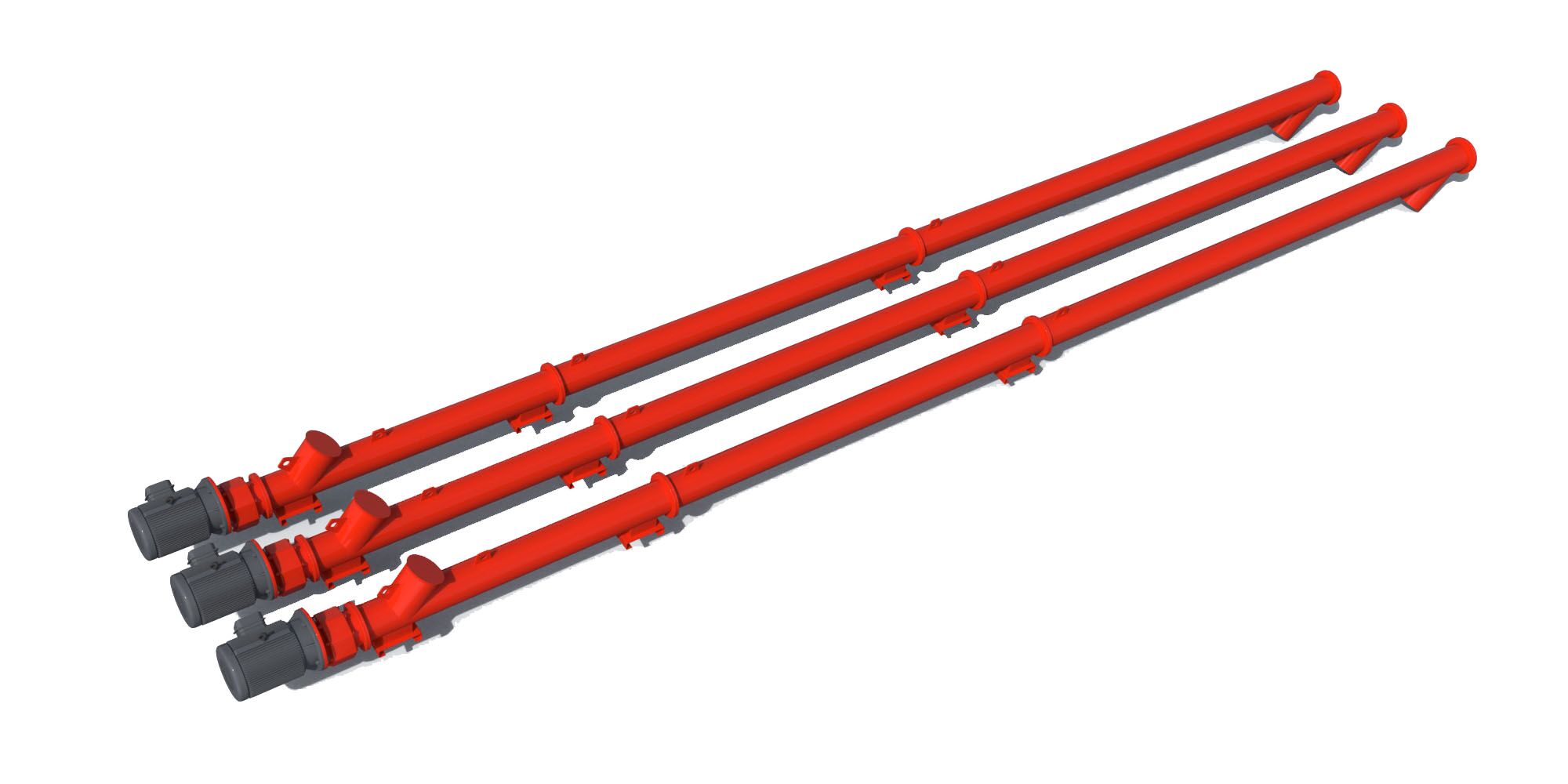
Screw Conveyor
A screw conveyor is a complete industrial conveying device. It is assembled from core parts like screw blades, troughs/tubes, drive units, bearings and discharge ports, and can independently realize efficient bulk material conveying.
- Diameter of Outer Pipe:140mm-407mm
- Conveying Capacity:24-170 t/h
What is a Screw Conveyor
When it comes to moving bulk materials in a controlled and predictable way, a screw conveyor is often one of the first options engineers consider. It’s not flashy, but it gets the job done, reliably and at a reasonable cost. Whether the layout requires horizontal transfer, a slight incline, or even a short vertical lift, this type of equipment can usually be adapted without much trouble.
- Screw Conveyor
Screw Conveyor (LSY140/168/219/273/323/407)
High-efficiency screw conveyor with compact structure, stable operation, easy operation and low maintenance.
| Diameter of outer pipe | Diameter of inlet flange (mm) | Height of inlet (H1) | Height of outlet (H2) | ||||||
| 0-20º | >20-40º | >40-50º | 0-20º | >20-40º | >40-50º | ||||
| A | B | C | H1 | H1 | H1 | H2 | H2 | H2 | |
| Ø 140mm | 200 | 250 | 280 | 400 | 450 | 500 | 250 | 300 | 350 |
| Ø 168mm | 200 | 250 | 280 | 400 | 450 | 500 | 250 | 300 | 350 |
| Ø 219mm | 300 | 350 | 380 | 500 | 550 | 600 | 300 | 400 | 450 |
| Ø 273mm | 300 | 350 | 380 | 500 | 600 | 700 | 350 | 450 | 500 |
| Ø 323mm | 300 | 350 | 380 | 550 | 700 | 800 | 400 | 500 | 600 |
| Ø 407mm | 470 | 470 | 530 | 750 | 900 | 1000 | 450 | 600 | 700 |
| Length | Ø168mm | Ø219mm | Ø273mm | Ø323mm | Ø407mm |
| 24t/h | 40t/h | 80t/h | 110t/h | 170t/h | |
| 2m | 1500-5-28-4 | 1500-5-28-4 | 2000-7-38-5.5 | 2000-7-38-7.5 | 3000-10-42-15 |
| 3m | 1500-5-28-4 | 1500-5-28-4 | 2000-7-38-7.5 | 2000-7-38-7.5 | 3000-10-42-15 |
| 4m | 1500-5-28-4 | 1500-5-38-5.5 | 2000-7-38-7.5 | 2000-7-42-11 | 3000-10-42-15 |
| 5m | 1500-5-28-4 | 1500-5-38-5.5 | 2000-7-42-11 | 2000-7-42-11 | 3000-10-42-15 |
| 6m | 1500-5-38-5.5 | 1500-5-38-7.5 | 2000-7-42-11 | 3000-10-42-15 | 3000-10-48-18.5 |
| 7m | 1500-5-38-5.5 | 1500-5-38-7.5 | 2000-7-42-15 | 3000-10-48-18.5 | 3000-10-48-18.5 |
| 8m | 1500-5-38-7.5 | 1500-5-42-11 | 2000-7-42-15 | 3000-10-48-18.5 | 3000-10-48-22 |
| 9m | 1500-5-38-7.5 | 1500-5-42-11 | 2000-7-42-15 | 3000-10-48-22 | 3000-10-48-22 |
| 10m | 1500-5-38-7.5 | 1500-5-42-11 | 2000-7-42-15 | 3000-10-48-22 | 3000-40-48-30 |
| 11m | 1500-5-38-7.5 | 1500-5-42-11 | 3000-7-48-18.5 | 3000-10-48-22 | 3000-40-48-30 |
| 12m | 1500-5-38-7.5 | 1500-5-42-11 | 3000-7-48-18.5 | 3000-10-48-22 | 3000-40-48-30 |
| 13m | 1500-5-38-7.5 | 1500-5-42-15 | 3000-7-48-18.5 | 3000-10-48-30 | 3000-40-48-30 |
| 14m | 1500-5-38-7.5 | 1500-5-42-15 | 3000-7-48-18.5 | 3000-10-48-30 | |
| 15m | 1500-5-38-7.5 | 1500-5-42-15 | 3000-7-48-18.5 | 3000-10-48-30 |
Core Components of a Screw Conveyor
A screw conveyor’s efficient operation relies on the coordinated work of several key core components, each with a specific function that ensures the smooth, continuous transportation of bulk materials. The following sections detail the structure, specifications, and application characteristics of these essential components.

- Screw Shaft
If you strip the system down to its essentials, the screw shaft is what holds everything together. It carries the load and keeps the entire conveying process stable. In real projects, its design is rarely standard. Typical shaft diameters range from 89 mm to 323 mm, with wall thickness usually between 6-16 mm depending on torque requirements.
- Trough
The trough is essentially the working space where material is contained and transported. In practice, the choice usually comes down to two designs: U-shaped or tubular.
U-shaped troughs are easier to access. Typical plate thickness is 3–6 mm, making them suitable for standard industrial use where frequent inspection is required.
Tubular troughs, by contrast, are fully enclosed and often designed with IP55–IP65 sealing levels, especially in dust-sensitive environments such as cement or powder handling plants. - Screw Flight
The screw flight is the part that actually pushes the material forward. It wraps around the shaft in a helical form, and its geometry has a direct impact on performance.
Standard flight thickness ranges from 3 mm to 10 mm, depending on wear conditions. Pitch ratios typically follow 0.5D / 0.8D / 1D, with 1D used for free-flowing materials and smaller pitches used for sticky or vertical conveying conditions.
In abrasive environments, service life of flights is usually between 6–24 months, depending on throughput and material hardness.
Application Scenarios of Screw Conveyors
In food processing, screw conveyors are commonly used for flour, sugar, and grains, where hygiene is critical. Typical conveying capacity ranges from 5–60 t/h depending on system size.
In agriculture, they help move and store feed or harvested crops more efficiently, often handling grain densities around 0.6–0.8 t/m³.
Mining operations rely on them to handle ore and coal powder under abrasive conditions where material hardness can exceed Mohs 5–7.
In construction, they keep materials like cement and sand flowing steadily, with cement conveying capacities typically around 20–80 t/h.
Pharmaceutical applications require controlled low-capacity systems, usually below 10 t/h, with stainless steel SS316 construction.
In some cement plants, operators intentionally choose screw conveyors over belts for short sections because dust reduction efficiency can improve by up to 90% in enclosed systems.
Working Principle of a Screw Conveyor
Screw conveyors rely on a simple yet robust mechanical design to achieve continuous material handling, with the motor-driven helical flight assembly serving as the core working component. This design leverages the synergistic effects of mechanical rotation, frictional contact, and structural geometry to propel bulk materials along a fixed trough, making it a staple for horizontal, inclined, or short vertical material transfer in industrial settings.
- Motor Drive and Rotation
Once the motor starts, it drives the rotation of both the screw shaft and the flights. Typical operating speeds range from 60 to 120 rpm, depending on diameter and material type.
Inside the trough, the material naturally settles against the surface due to its bulk density ,creating enough friction for movement. - Material Propulsion Mechanism
As the screw rotates, the interaction between the material and the flight surface generates axial movement. In simple terms, the material is pushed along the axis of the conveyor. Gravity plays a supporting role here, helping maintain a continuous and stable flow.
- Role of Pitch
Pitch refers to the axial distance between two adjacent flight crests. Typical pitch values range from 50% to 100% of screw diameter. Each full rotation of the screw moves the material forward by roughly one pitch length, meaning conveying speed is directly proportional to RPM and pitch size.
- Operational Features
From an operational standpoint, screw conveyors are relatively easy to manage. There is no need for complex control systems in most cases. As long as the motor runs steadily and the feed rate stays within design limits (typically 70-90% of rated capacity for stable operation), the system operates smoothly.
Screw Conveyor Sizing Guide
The key point of selecting a screw conveyor model is to ensure it aligns with actual on-site conditions and real operational requirements. At the same time, the equipment should meet essential expectations such as stable performance, efficient conveying, and controllable overall cost. The selection process can be guided by the following considerations to help you identify the most suitable model for your application.
- 01
Material Characteristics
Material flowability is usually the first factor to consider. Free-flowing, dry materials can be handled with standard pitch designs. However, for sticky or high-moisture materials, the pitch is often reduced to prevent buildup and make sure the material moves forward instead of simply rotating with the shaft.
- 02
Conveying Distance
The conveying distance directly determines the structural requirements of the equipment. Short runs are typically handled by standard-duty configurations. As the distance increases, the torsional strength of the screw shaft becomes more critical, often requiring reinforced materials. For very long runs, multi-section designs are used to maintain stability and prevent sagging.
- 03
Inclination
The conveyor angle has a significant impact on performance. As the incline becomes steeper, gravity works against the material flow, causing it to slide backward and reducing actual throughput. To compensate, the flight design is adjusted and a more powerful drive system is usually required to handle the additional load.
- 04
Capacity Requirements
Production requirements determine the key design parameters, including screw diameter, pitch, and rotational speed. These variables need to be balanced carefully—if the speed is too high, it can lead to excessive wear; if the diameter is too small, the system may become overloaded.
- 05
Environmental Conditions
Working conditions should not be overlooked. Dusty or hazardous materials require fully enclosed tubular systems to ensure safe operation. In food and pharmaceutical applications, hygiene is the top priority, which usually means using stainless steel construction and specialized sealing to prevent contamination.
Advantages and Disadvantages of Screw Conveyors
- 01 Advantage
One reason screw conveyors remain so widely used is simply because they are straightforward. Fewer components mean fewer things that can go wrong, and maintenance does not usually require highly specialized technicians. For many small and medium-sized operations, that alone is a big advantage.
- 02 Advantage
Dust control efficiency in enclosed systems can reduce emissions by 70-95% compared with open conveying systems, which is particularly important in cement, grain, and powder industries.
- 03 Advantage
Another practical benefit is sealing. In enclosed designs, dust leakage is significantly reduced, which makes a noticeable difference in workshop cleanliness.
- 01 Disadvantage
Screw conveyors tend to consume more energy, typically 15-40% higher power consumption compared to belt systems under similar capacity.
- 02 Disadvantage
Material handling is another limitation. Fragile particles may experience 5-15% breakage rate increase, depending on material hardness and screw speed.
- 03 Disadvantage
Vertical conveying is technically possible, but energy consumption increases by approximately 30-60% compared with horizontal conveying, which limits its practical use.
EPDAS Screw Conveyor Projects
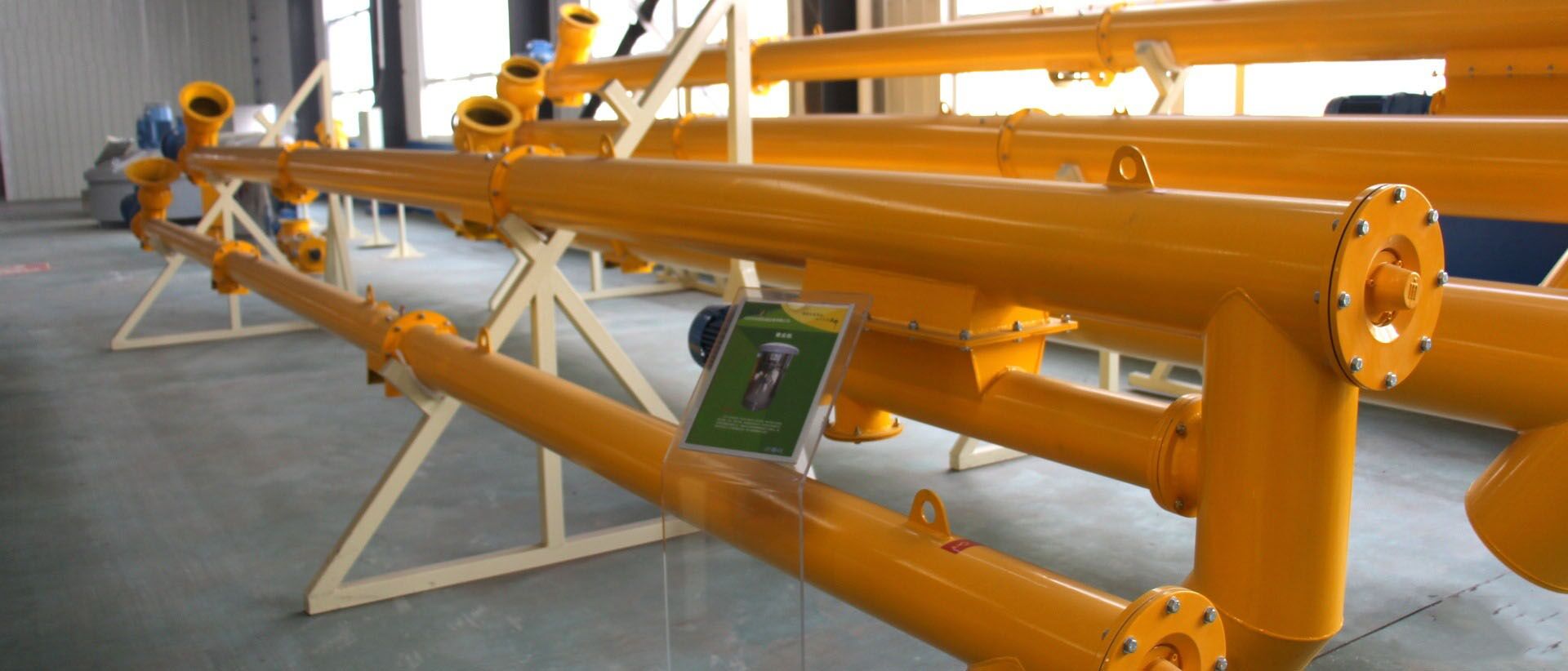
Equipment Details Display
Screw conveyors need no complex installation, only simple positioning on flat ground, with easy operation, flexible deployment and stable performance, ideal for temporary construction, road & bridge engineering and small-to-medium sized concrete batching projects.
Screw Conveyor FAQs
- What is a cement feeder used for?
A cement feeder is used to continuously feed cement or other powder materials into a batching or mixing system.
- How does a cement feeder work?
A cement feeder controls the flow of powder materials to provide a stable and adjustable feeding rate.
- How do I choose the right cement feeder capacity?
You should choose the capacity based on the plant output, material consumption, and feeding distance.
- What materials can a cement feeder handle?
A cement feeder can handle cement, fly ash, mineral powder, and other dry powder materials, depending on its design.
- What should I consider when choosing a cement feeder?
You should consider the feeding capacity, material type, feeding distance, layout, and equipment compatibility.
- What is a cement silo used for?
A cement silo is used to store bulk cement and other dry powder materials for batching and mixing systems.
- How is cement loaded into a cement silo?
Cement is commonly loaded from a bulk cement truck into the silo through a pneumatic conveying system.
- What safety features does a cement silo need?
A cement silo should have safety features such as a dust collector, pressure relief valve, and material level indicator.
- What is a screw conveyor used for?
A screw conveyor is used to continuously transport cement, fly ash, and other powder materials between different pieces of equipment.
- What size screw conveyor do I need?
The required size depends on the conveying capacity, material characteristics, conveying distance, and installation conditions.
- What materials can a screw conveyor transport?
A screw conveyor can transport cement, fly ash, mineral powder, and other dry bulk materials.
Related Products
Customize Your Solutions
Contact us now via Email:info@epdas.com, or Whatsapp:+86 188 38115507 , or fill in the form below.
FEW TIPS:
- Please describe the conveying speed per minute of the screw conveyor (e.g., 15r/min-90r/min).
- Please describe the maximum conveying angle of the screw conveyor (e.g., 0°-45°).
- Please describe the screw diameter of the screw conveyor (e.g., 100mm-800mm).
- Please describe the effective conveying length of the screw conveyor (e.g., 2m-30m).
- If you are interested in becoming our distributor, please let us know.
Service Process:
- Business negotiation
- Solution development
- Manufacturing and commissioning
- Operational production