
Stationary Concrete Batching Plant Control System: How Closed-loop Control Ensures Batch Consistency
2026-08-11 15:28:15
A stationary concrete batching plant integrates multiple systems, including aggregate storage, material conveying, weighing, and mixing units. These systems must operate in a coordinated sequence to ensure continuous and accurate concrete production. The automatic control system acts as the link between these units, coordinating their operation throughout the production process.
I. Basic Working Principle of Closed-loop Control in a Stationary Concrete Batching Plant
The whole control of the mixing station follows the industrial general closed-loop control process, and the complete link is divided into five layers:
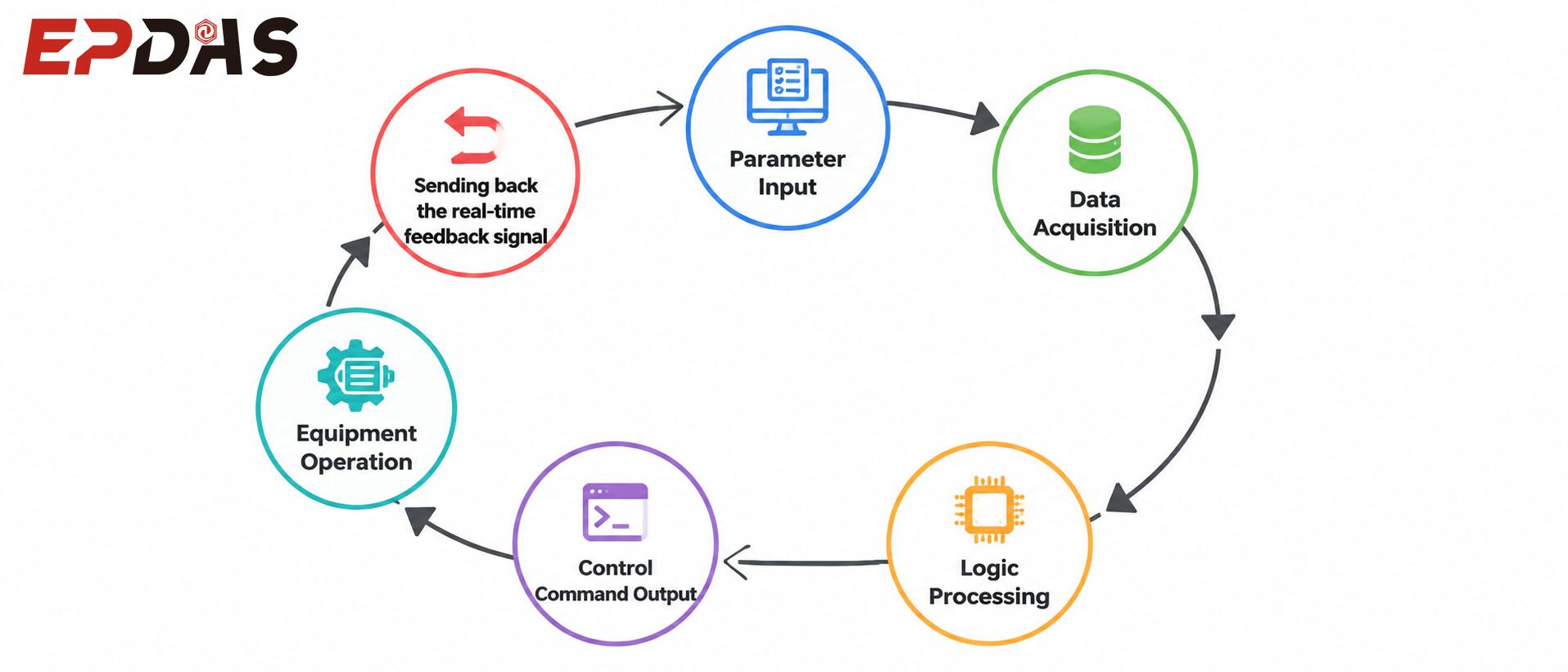
In a closed-loop control system, the controller continuously compares the actual operation data of the equipment with the production parameters set in advance, and automatically corrects the equipment action according to the difference between the two. There is no need for manual real-time intervention in the whole process.
II. On-site Data Collection: The Way to Obtain the Working Conditions of the Control System
The control system cannot directly observe the status of on-site materials and equipment. All information relies on the feedback signals sent back by on-site components that monitor operating conditions. It mainly relies on two types of feedback signals: weight data and equipment status information.
Weight feedback is mainly provided by weighing sensors. During the weighing process, sensors continuously transmit real-time weight values of aggregates, cement, water, and admixtures to the control system. The controller compares the actual weight with the preset value and determines whether additional feeding is required.
Equipment status feedback is collected from various field devices, including the motor start-stop signal, the opening and closing position of the pneumatic valve, the operating status of the belt conveyor, etc. If any equipment is down, stuck, and the valve is not closed tightly, the signal will be uploaded to the controller as soon as possible to block the subsequent process.
III. Logic Processing: The Decision-making Process of the Controller
All the collected on-site signals are summarized to the PLC controller, and the equipment completes the operation and judgment according to the preset program written in advance. The ratio parameters, feeding judgment rules, and timing standards are all predefined in the program.
Take aggregate weighing as an example: the formula sets the target weight of aggregate to 2000kg, and the weighing hopper sends back the 1950kg signal in real time. The controller recognizes the weight deviation and continues to issue the material feeding command; when the measured value reaches the preset value, the program immediately outputs the stop feeding instruction. The whole set of judgments is executed by fixed control algorithms, and there are clear execution standards for each feeding and start-stop action.
IV. Instruction Output: The Signal Drives the On-site Equipment to Perform Actions
After the controller completes the logical judgment, it outputs electrical signals to drive various execution components on the site.
Control signals are used to start or stop motors, operate pneumatic valves, and adjust conveying speed. This link is only responsible for passing and executing commands, and the judgment of mix proportion and process order is all completed by the previous control logic.
V. Sequence Control: Ensure the Standard Production Order of Concrete
There is a strict timing of concrete mixing. Once the process is disordered, it will directly cause the mixing ratio to fail and mixing unevenly.
The standard process follows a fixed order: after all the material weighing is completed and all the materials enter the mixing unit, the mixing process can be started; when the mixing time reaches the program setting standard, the system will allow the discharge process to start. The timing control logic will lock the front and rear processes. When the previous step is not completed, the next step cannot be started to avoid material mixing mistakes.

VI. Feedback Correction and Error Handling
It is difficult to achieve zero error in actual production. The fluctuation of aggregate unloading flow rate, slight sensor drift, and valve opening and closing delay will all bring numerical deviation.
Closed-loop control will continue to compare the set value with the actual collected data. After the deviation occurs, the three-step action of detection, comparison and correction will be automatically completed. A small deviation will be compensated by fine-tuning the unloading time. If the threshold is exceeded, the feed will be suspended and the abnormality will be reported to stabilize the weighing and production accuracy.
VII. Communication Methods of Various Components in the Station
The mixing station controller, weighing system, mixing unit and various sensors belong to different units, relying on industrial communication lines and electrical signals to complete data interoperability.
Real-time two-way data transmission between PLC and powder weighing hopper, aggregate belt and mixing unit, the weighing system uploads the weight, and the controller issues start-stop instructions. The data of each unit is interoperable to realize the coordinated operation of the whole production line, and there is no need to manually operate a single equipment.
VIII. The Core Value of Control Logic to Concrete Production
The effectiveness of the control system is reflected in three key areas: production consistency, operational stability, and data traceability. The performance of concrete in different production batches can be maintained uniformly. There will be human differences in the feeding time and mixing time in manual operation. The automated program implements the standards uniformly to eliminate the fluctuations caused by human operation.
The whole production process is stable, the probability of equipment linkage failure is reduced, and the mid-term downtime adjustment is reduced. All the data of feeding weight, equipment start-stop time, and mixing time are automatically retained, and the production parameters of each batch of concrete can be traced back to meet the data retention requirements of engineering quality acceptance.
