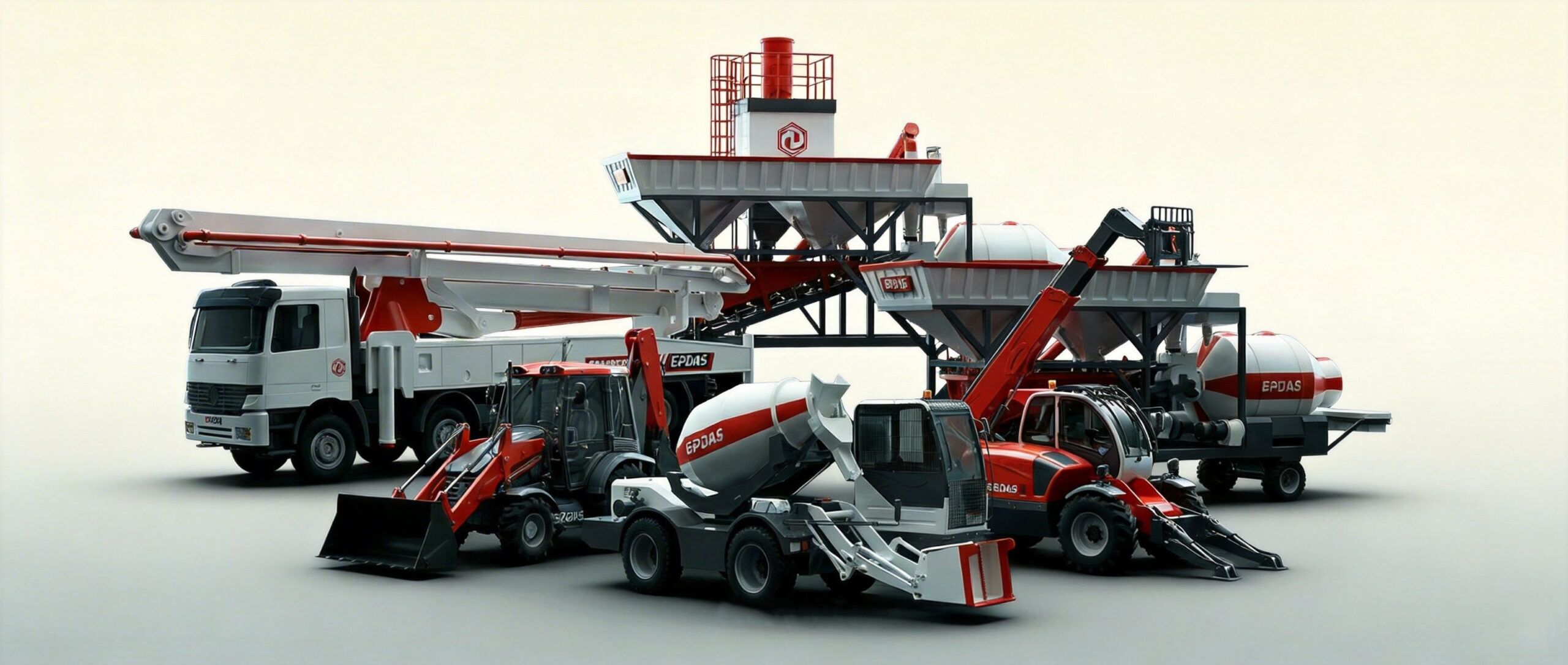
Concrete Batching Plant

  • Q: How do I choose the right concrete batching plant for my project?
    A:To choose the right concrete batching plant, consider factors such as required output capacity, project duration, site size, and budget. Mobile concrete batching plants are suitable for temporary or remote projects, while stationary batching plants are ideal for long-term, high-capacity concrete production. We are a Professional supplier and can help you select the most efficient solution.
  • Q:What types of mixers are used in concrete batching plants?
    A:Concrete batching plants can be equipped with twin-shaft mixers, planetary mixers, pan mixers, or single-shaft mixers. Twin-shaft mixers are widely used in stationary concrete batching plants due to their high output and strong mixing performance, while planetary mixers are ideal for precast concrete and high-quality concrete production. Choosing the right mixer depends on concrete grade, production capacity, and project requirements.
  • Q:Can a concrete batching plant control system be customized?
    A:Yes. The batching plant control system can be fully customized, including PLC brand, interface language, automation level, and data management functions. Advanced options include remote monitoring, automatic reporting, and production data storage, making the concrete mixing plant easier to operate and manage.
  • Q:What power supply standards can concrete batching plants support?
    A:Concrete batching plants can be designed to match different international electrical standards, such as 380V 50Hz, 415V 50Hz, or 440V 60Hz. Electrical components are selected according to local power conditions to ensure safe and stable operation.
  • Q:Can concrete batching plants operate in extreme climates?
    A:Yes. Customized concrete batching plants can be designed for hot, cold, dusty, or humid environments. Options include thermal insulation, heating systems, dust collectors, and corrosion-resistant materials to ensure reliable performance in harsh working conditions.
  • Q:What is the delivery time for a concrete batching plant?
    A:The production time for a concrete batching plant usually ranges from 15 to 45 days, depending on capacity and customization requirements. Shipping time varies by destination. EPDAS can provide clear delivery schedules and export support.

Concrete Pump

  • Q:What are the main types of concrete pumps available for sale?
    A:The main types of concrete pumps include trailer concrete pumps, stationary concrete pumps, and truck-mounted concrete pump trucks. Trailer concrete pumps are cost-effective and flexible, while pump trucks are ideal for large-scale, high-rise construction. Stationary concrete pumps are commonly used for fixed or long-term projects.
  • Q:How do I choose the right concrete pump for my project?
    A:Choosing the right concrete pump depends on project size, required pumping distance, concrete output, and site conditions. Small to medium projects often use trailer concrete pumps, while large infrastructure projects may require high-capacity concrete pump trucks. EPDAS can help match the right model to your needs.
  • Q:What is the maximum pumping distance of a concrete pump?
    A:The pumping distance depends on the concrete pump model, hydraulic pressure, and pipeline configuration. Trailer concrete pumps can reach horizontal distances of 300–500 meters, while concrete pump trucks may achieve vertical heights of over 150 meters. Proper pipeline diameter and concrete mix design are critical for long-distance pumping performance.
  • Q:What concrete pump capacity do I need?
    A:Concrete pump capacity is measured in cubic meters per hour (m³/h). Small projects may need 30–60 m³/h, while large commercial or infrastructure projects often require 80–120 m³/h or more. Selecting the correct capacity improves efficiency and reduces operating costs.
  • Q:What wear parts require regular replacement in concrete pumps?
    A:Common wear parts in concrete pumps include delivery cylinders, cutting rings, wear plates, S-valves, and rubber hoses. Regular inspection and timely replacement of these components help maintain stable concrete pumping performance and extend the equipment's service life.
  • Q:What hydraulic systems are used in modern concrete pumps?
    A:Modern concrete pumps typically use closed-loop or open-loop hydraulic systems with high-pressure piston pumps. These systems provide stable pumping pressure, precise flow control, and improved energy efficiency. High-quality hydraulic components significantly reduce wear and enhance the durability of concrete pumping machines in demanding job sites.

Self-loading Concrete Mixer

  • Q:What are the advantages of a self-loading concrete mixer compared to traditional mixers?
    A:A self-loading concrete mixer eliminates the need for separate loaders, batching plants, and transport vehicles. This reduces labor costs, saves time, and improves flexibility, making it an ideal solution for small to medium construction projects and remote job sites.
  • Q:How do I choose the right self-loading concrete mixer for my project?
    A:When choosing a self-loading concrete mixer, consider mixing capacity, engine power, terrain conditions, and daily concrete output. Smaller models suit residential projects, while larger models are better for infrastructure and commercial construction. EPDAS can help you select the best model.
  • Q:What engine and hydraulic systems are used in self-loading concrete mixers?
    A:Self-loading concrete mixer trucks are powered by diesel engines with hydraulic systems that control loading, mixing, steering, and discharging. High-quality hydraulic pumps and valves ensure stable operation, precise control, and long service life even in harsh construction environments.
  • Q:Can self-loading concrete mixers work on rough or uneven terrain?
    A:Yes. Most self-loading concrete mixers are equipped with four-wheel drive, high ground clearance, and articulated steering, allowing them to operate efficiently on rough, muddy, or uneven terrain commonly found at construction sites, rural areas, and mining projects.
  • Q:What maintenance is required for a self-loading concrete mixer?
    A:Routine maintenance includes checking hydraulic oil, cleaning the mixing drum, inspecting wear parts, lubricating joints, and monitoring engine performance. Proper maintenance ensures stable operation, extends equipment lifespan, and minimizes downtime.
  • Q:What is the mixing capacity of a self-loading concrete mixer?
    A:Mixing capacity varies by model, typically ranging from 1.2 m³ to 6.5 m³ per batch. The choice of capacity depends on project size, daily concrete demand, and transportation distance. Larger-capacity self-loading concrete mixers are ideal for medium-scale infrastructure and remote projects.

Telehandler

  • Q:What is the difference between a telescopic handler and a forklift?
    A:Unlike a standard forklift, a telescopic handler provides extended reach and greater lifting height. Telehandler forklifts are better suited for construction sites where materials need to be placed at height or over obstacles, while forklifts are mainly used for warehouse operations.
  • Q:How do I choose the right telescopic handler for my project?
    A:Choosing the right telescopic handler depends on lifting capacity, maximum height, terrain conditions, and attachment requirements. Compact telehandlers suit tight spaces, while heavy-duty models are ideal for large construction and industrial projects.
  • Q:What drive and steering systems are used in telescopic handlers?
    A:Most telescopic handlers are equipped with four-wheel drive and multiple steering modes, including front-wheel steering, four-wheel steering, and crab steering. These features improve maneuverability on tight or uneven construction sites and enhance overall operational efficiency.
  • Q:What lifting height and reach can a telescopic handler achieve?
    A:Lifting height and forward reach depend on the model. Standard telescopic handlers offer lifting heights from 6 to over 18 meters, with forward reach capabilities of up to 10 meters. Selecting the right telehandler forklift ensures safe load placement at the required working height.
  • Q:What attachments can be used with a telescopic handler?
    A:Telescopic handlers support a wide range of attachments, including forks, buckets, lifting hooks, work platforms, and bale clamps. Quick-attach systems allow operators to switch tools easily, increasing machine versatility across construction, agriculture, and industrial tasks.
  • Q:What safety systems are built into modern telescopic handlers?
    A:Modern telescopic handlers include load moment indicators, overload protection, emergency braking systems, and stability control. These safety features help prevent tipping and ensure safe operation during lifting and material handling tasks.

Concrete Mixer

  • Q:Are concrete mixers and cement mixers the same equipment?
    A:Yes, they are different terms for the same piece of equipment. In daily construction, concrete mixers are often referred to as cement mixers. Their core function is to blend aggregates, cement and water into concrete mixture, with no essential difference between them.
  • Q: Can portable concrete mixers be used for large-scale commercial projects?
    A:Not recommended. Portable mixers feature small mixing capacity and low efficiency, only meeting the demand for small-batch concrete. Using portable mixers will severely delay the construction progress. Continuous mixers or concrete batching plants should be adopted instead.
  • Q:What is the maximum holding time of concrete in a mixer drum?
    A:It should not exceed 90 minutes at most, and the optimal pouring time is within 60 minutes after water is added for mixing. Concrete begins to initially set once water is added. If the time exceeds 90 minutes, its workability and strength will drop drastically, leading to potential quality issues after pouring.
  • Q:Do all concrete mixers come with a water tank?
    A:Not all of them. Small portable mixers are generally not equipped with an independent water tank, and water needs to be measured and added manually in advance. Modern mobile concrete mixers are basically fitted with an independent water tank, which allows water addition during transportation to extend the initial setting time of concrete.
  • Q:What are the key tasks for the daily maintenance of concrete mixers?
    A:Inspect and replace wear parts. Check mixing/screw blade wear and replace damaged ones timely. Lubricate transmission components regularly and clear drum residual concrete to avoid hardening/caking.

Screw Conveyor

  • Q:How to choose the right screw conveyor size?
    A:The size depends on conveying capacity, material type, and distance. Larger diameters handle higher output, while length and angle affect efficiency.
  • Q:How to choose a screw conveyor for different materials?
    A:Material properties such as flowability, moisture, abrasiveness, and corrosion should be considered. The blade pitch and material should match these characteristics.
  • Q:Can a screw conveyor be used for vertical conveying?
    A:Yes, but only for short distances. It requires special blade design and controlled feeding. In most cases, inclined conveying is more practical.
  • Q:Does a screw conveyor require regular maintenance?
    A:Yes. Routine checks should include blade wear, trough condition, motor operation, and lubrication. Cleaning residual material also helps extend service life.
  • Q:Is a screw conveyor suitable for small businesses?
    A:Yes. It is compact, cost-effective, and easy to operate. Smaller models are ideal for limited space and lower conveying demands.
  • Q:Why is my screw conveyor making abnormal noise?
    A:Common causes include blade friction, worn bearings, or material blockage. Adjust alignment, replace damaged parts, and remove blockages.
  • Q:What causes screw conveyor motor overheating?
    A:Overheating may result from overloading, poor ventilation, bearing issues, or electrical faults. Reducing load and regular inspection can help prevent this.
  • Q:How to fix material leakage in a screw conveyor?
    A:Check and replace damaged seals, repair worn components, and improve sealing at feeding and discharge points.

Cement Silo

  • Q:How long does it take to install a cement silo?
    A:Installation time varies by type and capacity. Mobile silos can be deployed in 15-30 minutes on-site with no complex process. Small stationary vertical silos take 1-2 days, while large fixed concrete silos may take weeks or months.
  • Q:Can cement silos store materials other than cement?
    A:Yes. All powdery materials like fly ash, lime, ground granulated blast-furnace slag and additives are storable with minor modifications. Note to isolate different materials to avoid contamination.
  • Q:How to prevent cement caking inside the silo?
    A:1. Keep the silo airtight to block moisture (the most critical); 2. Activate the aeration device to maintain material flow; 3. Clean the silo regularly, especially the bottom.
  • Q:Are mobile cement silos really easy to transport?
    A:Yes. they come with built-in trailers or detachable bases, enabling direct truck transport without disassembly and no poured foundation is needed.

Request A Quote

You can contact us via message or email

+86 188 38115507 (Whatsapp)

info@epdas.com (E-mail)

Tips:

We would appreciate it if your inquiry includes the required equipment model, project type, destination country and budget range, so we can provide you with the most accurate quotation!

Service Process:

  • Business negotiation
  • Solution development
  • Manufacturing and commissioning
  • Operational production