
Telehandler vs Forklift: Key Differences, Costs & Best Use Cases (2026)
2026-04-29 16:10:41
Many business owners are unsure whether to choose a telehandler or a forklift. Understanding the key differences, costs, and use cases can help you make the right decision for your project. Telehandlers are better for height and rough terrain, while forklifts are more efficient for flat, indoor work. Picking correctly cuts costs and speeds up daily operations. In this guide, we compare real-world performance, pricing, and best use cases to help you select the right equipment.
What Is a Telehandler
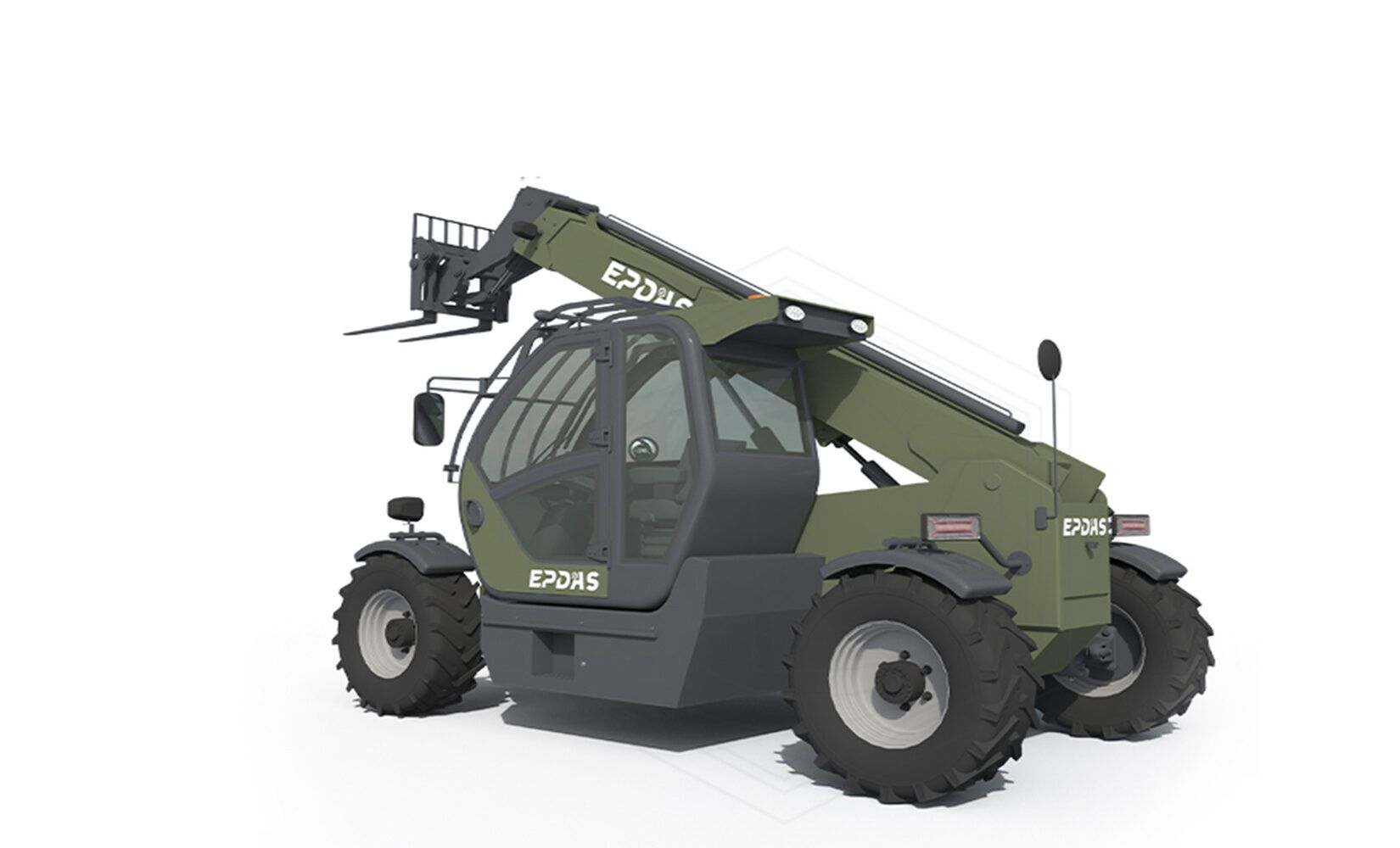
A telehandler (also called a telescopic forklift) is a type of lifting machine commonly used on construction sites, especially when materials need to be moved to height or over obstacles. It uses an extendable boom that can move both vertically and forward. It works with forks, buckets, and platforms to handle multiple jobs with one machine.
What Is a Standard Forklift
A standard forklift is the most common tool for material handling. Forklift mainly focus on pallet movement, stacking them, and transporting loads over short distances. A warehouse forklift performs best on flat, smooth floors, with a fixed mast that only lifts loads straight up. It comes in electric, gas, and diesel models to fit indoor and basic outdoor tasks.

Telehandler vs Forklift: Key Differences
Quick Comparison Table
| Comparison Item | Telehandler | Standard Forklift |
| Working Range | Reaches 20–70 feet, extends forward, clears obstacles | Vertical lift only (20–30 feet), no horizontal reach |
| Terrain Adaptability | Four-wheel drive, high clearance, works on rough/muddy ground | Only for flat, smooth, paved surfaces |
| Lifting Capacity | 1,000–15,000 lbs (medium-duty) | Up to 30,000+ lbs (heavy-duty) |
| Versatility | Multi-purpose with forks, buckets, platforms | Pallet handling only |
| Purchase Cost (New) | $70,000–$150,000 | $15,000–$60,000 |
| Maintenance | Higher cost, boom wear parts need regular care | Lower cost, simple structure |
| Operation Skill | Needs certified training (OSHA Class 7) | Easy to learn, basic certification |
| Best For | Construction, farms, rough terrain, high lifts | Warehouses, logistics, indoor pallet stacking |
Structure & Movement
A telehandler runs on an extendable boom that lifts and reaches outward. Four-wheel drive and high ground clearance help it handle mud, gravel, and uneven ground. It requires more room to turn, making tight spaces challenging.
A standard forklift uses a fixed vertical mast and lifts loads only straight up. It cannot reach over barriers or extend horizontally, which limits it to flat, open areas.
Lifting Height & Reach
Telehandlers stand out for long reach and high lift. They work well for elevated jobs or tasks that require clearing obstacles. Most models handle 1,000–15,000 pounds, enough for most outdoor projects.
Standard forklifts typically lift 20–30 feet vertically, with no forward reach. They are designed for heavy-duty vertical stacking, and some models can carry over 30,000 pounds, making them ideal for indoor warehouse operations.
Terrain Performance
Telehandlers handle rough, muddy, or uneven terrain reliably. Their four-wheel drive and high ground clearance keep them stable even in challenging outdoor environments.
Standard forklifts, on the other hand, perform best on flat concrete surfaces. On rough or uneven ground, they can slip or get stuck, which may lead to delays and additional wear on the equipment.
Attachments & Flexibility
Telehandlers can be fitted with forks, buckets, or aerial platforms, making it easy to handle different tasks without additional equipment.
Forklifts typically use clamps or side shifters and are mainly designed for pallet handling. They are not suitable for high-reach work or tasks requiring versatility.
Price and Cost
New telehandlers usually cost between $45,000 and $180,000, depending on lift height (4–18 meters) and capacity (1.5–6 tons). Used units start around $25,000 but may need more maintenance due to complex hydraulic systems. For small businesses, compact “super-mini” models offer an affordable option while still providing more flexibility than a standard forklift.
With expanding Low Emission Zone (LEZ) regulations in major cities, lithium-powered compact telehandlers are becoming more common. Their upfront cost is 15–20% higher than traditional diesel units. However, their quiet, zero-emission operation makes them ideal for sensitive areas like hospitals, schools, or nighttime urban construction.
Standard forklifts typically range from $15,000 to $60,000 for new units, depending on brand, capacity, and location. Used forklifts are also available from around $5,000, offering a budget-friendly option for simple warehouse tasks.
Renting or Buying
If your project only lasts a few months, renting is usually the most practical option. Telehandlers rent for around $2,000–$7,500 per month, while forklifts are a bit cheaper, typically $1,000–$2,100. Renting helps you avoid depreciation and idle costs, which is especially useful for seasonal work.
For daily, long-term operations, buying equipment can make more sense. It costs more upfront, but over time it can save you money on repeated rentals and gives you more control over when and how the machines are used.
Safety & Operation
Telehandlers need experienced operators who can safely manage the boom’s movement, angle, and load balance. When working on uneven or rough terrain, proper training and certification are essential. In the U.S., rough-terrain telehandlers require special certification, even if you already hold a standard forklift license. Always check load weights and make sure outriggers are properly deployed to prevent tipping.
Forklifts are generally easier to operate, with shorter training times. Still, proper training is necessary to avoid common risks such as overloading or collisions in tight spaces. For electric forklifts, operators should also follow basic electrical safety precautions.
Telehandler vs Forklift Pros and Cons
Telehandler Pros & Cons
Telehandlers offer long reach and high lift heights—up to 70 feet—making them ideal for outdoor job sites and rough terrain. They can handle multiple attachments, allowing a single machine to perform several different tasks. This versatility makes them particularly useful for construction or agricultural projects where multiple tools would otherwise be needed.
Despite these advantages, telehandlers come with higher purchase and maintenance expenses compared to standard forklifts. Beyond fuel costs, boom wear pads are often overlooked. Skipping preventive maintenance can result in repair bills of up to $4,500. Operators also need to pay close attention to the stability triangle, as extending the boom shifts the center of gravity forward, reducing the safety margin more quickly than with a fixed-mast forklift.
Forklift Pros & Cons
Forklifts are more affordable and easier to maintain. They are simple to operate and quick to train on, making them a reliable choice for warehouses and pallet handling.
However, forklifts are limited to vertical lifting only and do not perform well on muddy, uneven, or rough outdoor surfaces. Operators still need proper certification, but training is generally shorter and less complex than for telehandlers. Despite their limitations, forklifts remain highly effective for indoor and flat-surface material handling.
Best Use Cases by Application of Telehandler and Forklift
If you’re unsure whether to choose a telehandler or a forklift, looking at common application scenarios can help make the decision easier.
Telehandler Applications
Telehandlers are ideal for construction sites, farms, and other rough-terrain environments. They handle tasks that require extra height, long reach, and stability on uneven ground. With interchangeable attachments, such as forks, buckets, or platforms, a single telehandler can often replace multiple pieces of equipment, making it a versatile choice.
Forklift Applications
Forklifts work best in warehouses, logistics centers, and other flat indoor spaces. They can easily maneuver in narrow aisles and efficiently stack pallets. Electric forklifts, in particular, are quiet and cost-effective for daily indoor operations, making them a reliable option for many businesses.
Mixed Indoor & Outdoor Operations
If your worksite includes both rough outdoor terrain and flat indoor floors, using both machines is often the most efficient approach. Telehandlers can handle high-reach outdoor tasks, while forklifts manage indoor pallets and short-distance moves. For seasonal or short-term projects, renting either type of machine can also help reduce idle costs and minimize upfront investment.
Common Misconceptions of Telehandler and Forklift
Myth 1: Telehandlers can completely replace forklifts
Some businesses assume that a telehandler can do everything a forklift does. For example, a cold storage warehouse tried using a telehandler for stacking pallets. Its wide turning radius made it slow and cumbersome in narrow aisles. After switching to a narrow-aisle forklift, the team saw efficiency improve by 30%.
Myth 2: Forklifts are always safer
Safety depends on training and environment, not the machine alone. On rough ground, a trained telehandler operator faces fewer risks than a forklift. Conversely, in tight indoor spaces, forklifts are often the safer choice.
Myth 3: Telehandlers are too expensive for small businesses
While full-size telehandlers can be costly, smaller compact models are much more affordable. Many small companies opt to rent these machines for short-term projects. One construction firm, for example, rented a compact telehandler for three months and ended up replacing three separate machines, saving both money and space.
30 Second Quick Choice
| Need height and long reach? | Telehandler |
| Working indoors in warehouses? | Forklift |
| On a tight budget? | Forklift |
| Need to handle rough outdoor ground? | Telehandler |
| Want one machine for many jobs? | Telehandler |
| Stacking pallets daily? | Forklift |
Conclusion
Choosing between a telehandler and a forklift really comes down to your worksite and the tasks at hand. If you’re working on rough terrain, need high lifts, or want one machine to handle multiple jobs, a telehandler is the better choice. For flat indoor spaces, pallet handling, or tighter budgets, a forklift is usually the way to go.
In many cases, using both machines together gives the best efficiency and return on investment. And if you’re still unsure which one fits your needs, don’t worry, experts can provide free guidance and help you pick the right telehandler or forklift based on your site conditions, budget, and daily workflow.
FAQs
1. How often should you service a telehandler?
Check the hydraulic system every 500 hours. Lubricate moving parts every 200 hours. Maintain batteries or fuel systems following the manufacturer’s guide.
2. Which is better to rent?
Rent a telehandler for short-term high or reach jobs. Rent a forklift for warehouse and flat ground pallet work.
3. Can telehandlers work indoors?
Most are too large for tight aisles. Small compact models work in open factories or large warehouses.
4. Can forklifts drive on mud?
Standard forklifts can slip or get stuck on mud or uneven ground. For rough outdoor sites, use a telehandler or a forklift with off-road tires.
5. What certifications do operators need?
Forklift operators need basic training and a license. Telehandler operators need specialized training and certification for high and long-reach work.
6. Is renting or buying cheaper?
Buying saves money for long-term daily use. Renting works better for short, seasonal, or project based work.
7. Can a telehandler fully replace a forklift?
No. Telehandlers are too large for narrow aisles and pallet stacking. Using each machine in its best space creates the most efficient workflow.
8. Do telehandlers depreciate faster than forklifts?
Yes. Because telehandlers often operate in harsh rough-terrain conditions, structural components wear faster. According to 2026 market data, the 5-year residual value of a telehandler is roughly 10% lower than a same-capacity electric indoor forklift.