
Common Telehandler Faults and Troubleshooting Methods
2026-10-29 17:10:57
Telehandlers are mostly used for material handling on construction sites and loading and unloading in storage yards. The operating environment is dusty and the load changes frequently, making hydraulic, electrical, and engine components prone to various failures. Some problems can be identified through preliminary on-site inspections, but failures involving high-pressure hydraulic systems, internal engine components, or safety protection devices must be handled by professional maintenance personnel. The following sections cover common faults, possible causes, and troubleshooting methods for this equipment.
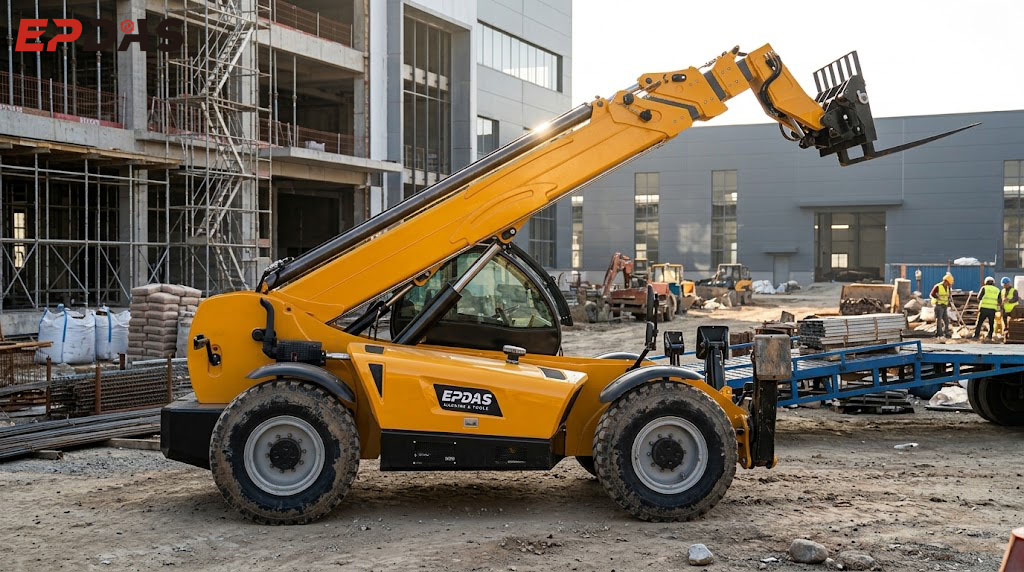
Telehandler Won’t Start
If the equipment does not respond at all after turning the key, or the starter motor rotates normally but the engine cannot start, you can first troubleshoot the electrical and fuel supply systems.
Battery and Electrical Connection Problems
Only a slight clicking sound is heard when starting, the starter motor does not turn, or the dashboard indicator light is dim. First, check the battery status. Long-term parking and low-temperature operation may cause battery power loss. Check whether the battery case is damaged and whether there is white or green corrosion on the battery terminals.
Loose terminals, corrosion, or a damaged ground wire will also affect the starting current supply. You can visually check the terminals and wiring harness with the equipment switched off. If the connections are normal and the battery is in good condition, but the equipment still does not respond, further checks are needed on the starting relay, the main power switch, and related circuits.
If you lack experience in electrical testing, do not disassemble the starting circuit by yourself. Further testing should be carried out by qualified maintenance personnel.
Fuel Supply and Engine Starting Problems
If the starter motor can rotate normally, but the engine cannot be started, the fuel supply should be checked, along with the preheating system and engine control system as applicable to the specific model.
First, check the actual fuel level in the tank, and do not rely entirely on the instrument display. A blocked fuel filter and water or impurities in the fuel may affect the fuel supply. If the equipment has difficulty starting after refueling, the fuel quality should also be checked.
A kinked or damaged fuel line, or air entering the fuel system, may also lead to abnormal fuel supply. Some models need to bleed air from the fuel system according to the procedures specified by the manufacturer. Do not disassemble the high-pressure fuel pipeline by yourself without training.
Telehandler Boom Won’t Move or Has Insufficient Lifting Power

The boom cannot be extended, the lifting action is slow, or the lifting capacity is reduced under load. These problems may involve safety interlocks, hydraulic oil supply, control valves, cylinders, and other components. When troubleshooting, you should first determine whether the fault affects a single action or multiple hydraulic functions.
The Boom Won’t Extend or Retract
After operating the joystick, the boom does not move at all. First, confirm whether the equipment’s safety lock and operating interlocks are engaged or whether all required operating conditions are met. Some models are equipped with a boom lock or other safety features. When the protection conditions are not satisfied, the relevant actions may not be available.
If the safety conditions are met, the control mechanism, electrical connections, and relevant control valve should be checked. A loose solenoid valve plug, damaged wiring harness, or abnormal control signal may prevent the hydraulic valve from shifting correctly.
If there is unusual hydraulic noise during operation, but the boom still does not work, the problem may involve hydraulic pressure, the control valve, or the cylinder. At this point, do not keep operating the controls. Stop operation and have the equipment further tested by professionals.
The Boom Moves Slowly or Has Insufficient Lifting Power
If the boom can still move, but its speed is significantly reduced or its lifting capacity under load is insufficient, determine whether the problem affects only one function or several hydraulic functions across the machine.
If only the boom moves abnormally, focus on checking the corresponding cylinder, branch oil line, and control valve. If lifting, boom extension, and other hydraulic movements are significantly slowed down, further checks are needed on the hydraulic oil level, the main hydraulic pump’s oil supply capacity, and system pressure.
If the boom operates normally without a load but cannot lift properly under load, the system may be unable to maintain the required operating pressure. However, the actual cause still needs to be confirmed through the testing procedures for the specific model.
If lifting becomes abnormal, the boom lowers unexpectedly, or the load cannot be held in position, stop loading and unloading immediately. Do not diagnose the problem through repeated operation or overload testing.
Hydraulic Pump, Main Control Valve, and Cylinder Problems
Wear or internal leakage in the hydraulic pump will reduce the system’s effective oil supply, slowing equipment movements or reducing lifting ability. Internal pump failure does not necessarily cause external oil leakage, so it must be assessed alongside operating performance, pressure test results, and abnormal noise.
A stuck, worn, or internally leaking spool in the multi-way control valve may also prevent hydraulic oil from flowing along the correct path. Symptoms may include unstable movements, abnormal speed, or slow actuator response.
Damage to the cylinder seals may cause internal leakage, preventing the cylinder from holding its position normally under load. If the boom is found to lower unexpectedly, stop using the equipment and have professionals inspect the cylinder, control valve, and load-holding device. This symptom alone is not enough to determine that the cylinder seals are damaged.
Hydraulic Leakage and Overheating in the Hydraulic System

Hydraulic leakage and system overheating are two different types of faults. They may occur at the same time or separately. When troubleshooting, determine the likely source of the problem based on the location of the leak, the condition of the oil, and changes in temperature.
Leakage from Hydraulic Hoses, Joints, and Seals
If oil marks are found under the equipment, first determine whether the leak comes from the hydraulic system. A cracked or bulging hose, or one with exposed steel reinforcement, may indicate pipeline damage. Loose joints, aging seals, or damaged sealing surfaces may also cause leakage.
Do not use temporary methods such as wrapping the hose with tape to deal with high-pressure hydraulic pipelines. High-pressure oil may penetrate the skin and cause serious injury. If a hose is damaged, continuously leaking, or spraying high-pressure oil, stop using the equipment and arrange repairs according to the manufacturer’s instructions.
Do not touch or try to locate high-pressure leaks with your hands. Residual pressure may remain after the hydraulic system is shut down. Before dismantling a pipeline, a professional must release the pressure according to the prescribed procedures.
The Hydraulic Oil Level Is Too Low or the Oil Is Contaminated
Insufficient hydraulic oil may cause the hydraulic pump to draw in air, resulting in unstable operation, abnormal noise, or reduced equipment performance. When checking the oil level, park the equipment on level ground and follow the boom position and inspection conditions specified in the operation manual.
Oil contamination can also affect the hydraulic system. If the oil is emulsified, cloudy, or unusually discolored, further checks are needed to determine whether it contains water or impurities or has deteriorated. However, the type and severity of contamination cannot be determined accurately from color alone.
If oil contamination is confirmed, inspect the oil, filter, and related components according to the manufacturer’s requirements. Replace the oil and clean the contaminated system if necessary. Simply adding new oil will not remove existing contaminants.
Hydraulic System Overheating
If the hydraulic oil temperature continues to rise, first check whether the hydraulic oil cooler is blocked by dirt, dust, plant fibers, or other debris. Obstructed airflow reduces cooling efficiency and can cause the oil temperature to rise.
Hydraulic oil with a viscosity that does not meet the manufacturer’s specifications may also affect system operation. Oil that is too viscous increases flow resistance, while oil that is too thin may increase internal leakage. Therefore, use hydraulic oil that meets the equipment specifications.
In addition, internal leakage in the hydraulic pump, control valves, or cylinders, as well as continuous flow through the system relief valve, may convert energy loss into heat. If the oil temperature rises abnormally in a short period or remains high even after heavy operation has stopped, stop using the equipment and have the system pressure, cooling performance, and related hydraulic components checked.
Steering System Problems
Abnormal steering directly affects equipment safety. When steering becomes heavy, the response is slow, or the steering mode cannot be switched, park the equipment in a safe position and avoid continued operation on slopes or in narrow areas.
Steering Is Heavy or Unresponsive
If steering is noticeably heavy when the equipment is stationary, or the steering response is slow while driving, the problem may be related to the steering hydraulic supply, steering unit, control valve, or steering cylinder.
If steering problems occur alongside other hydraulic faults, assess them together with the inspection results for the machine’s hydraulic system. If only the steering system is affected, check the steering circuit and related control components.
Wear or sticking in the steering unit or flow-control components may affect the normal distribution of steering fluid. Damaged steering-cylinder seals or internal leakage may also cause slow steering response or inconsistent wheel movement.
When steering is abnormal, do not try to restore normal operation by increasing engine speed or repeatedly turning the steering wheel to its limits. Stop the equipment and have professionals check the system. Do not return it to service until normal steering operation has been confirmed.
Steering Mode Switching Problems
The telehandler may be equipped with two-wheel steering, four-wheel steering, or crab steering. The available modes depend on the equipment model.
If the mode does not change after pressing the switch, first confirm whether the vehicle meets the switching conditions specified by the manufacturer, including whether it must be stationary, whether the wheels need to be in a specific position, and whether the mode selector is functioning correctly.
If the operating conditions are met but the mode still cannot be switched, the relevant switches, solenoid valves, wiring harnesses, and control systems should be checked. Do not switch steering modes at high speed or bypass the safety interlocks.
Engine Overheating
Overheating of the engine cooling system and excessive hydraulic oil temperature are different faults. When the engine coolant temperature warning appears, stop operation and shut down the machine safely according to the operation manual to avoid engine damage from continued operation at high temperatures.
Cooling System Problems
Insufficient coolant may reduce the engine’s cooling capacity. After the engine has cooled down, check the coolant level according to the manufacturer’s instructions and look for signs of coolant leakage.
Dirt, dust, or debris blocking the engine radiator can also restrict airflow and reduce cooling efficiency. Use appropriate cleaning methods to avoid directing high-pressure water at the cooling fins from close range.
If the coolant level is sufficient and the radiator is clean but the engine continues to overheat, the problem may involve the thermostat, water pump, coolant circulation, or other components. These issues require further testing and should not be diagnosed by visual inspection alone.
Never open the pressure cap of a hot cooling system while the engine is hot, as escaping hot coolant or steam can cause burns.
Restricted Airflow or Excessive Engine Load
An abnormal engine fan drive, a damaged belt, or insufficient belt tension may reduce cooling airflow. A severely clogged air filter can also affect engine intake and should be inspected and maintained according to the equipment requirements.
If the engine frequently overheats under continuous heavy loads, check whether the actual operating load is within the equipment’s rated capacity and whether the cooling system is functioning properly. Do not maintain productivity through prolonged overloading.
Equipment Warning Lights and Fault Codes

If a warning icon or fault code appears on the dashboard, it means the equipment has detected an abnormal condition or signal. Different warnings may have different levels of severity and require different responses. First, refer to the operation manual for the specific model.
Common Causes of Warning Alerts
Warnings may be triggered by abnormal sensor signals, electrical connection problems, system parameters exceeding permitted limits, or equipment protection functions.
For example, an abnormal boom-angle sensor signal, pressure sensor signal, or related wiring issue may cause the control system to display a fault warning. However, the warning does not necessarily mean the sensor itself is damaged; its connections and signal should also be checked.
If a load- or stability-related warning appears, stop the relevant movement and check whether the current load, boom position, and equipment condition are within the permitted limits. Do not try to eliminate the warning by reducing alarm sensitivity, disabling protective devices, or forcing the equipment to operate.
Read Fault Codes and Record the Conditions
Different brands and models may use different methods to read fault codes. Some equipment displays codes on the dashboard, while other models require special diagnostic tools.
Record the complete fault code, when the warning appeared, and what the equipment was doing at the time. For example, note whether the fault occurred during starting, lifting, boom extension, or steering. This information helps maintenance personnel narrow down the possible causes.
Do not clear fault codes before the cause has been identified. Clearing the records does not resolve the underlying fault and may affect subsequent diagnosis. If warnings persist, equipment functions are restricted, or safety systems are involved, stop the machine and contact qualified professionals according to the manual.
Safety Precautions When Troubleshooting a Telehandler
Troubleshooting should follow the equipment operation manual. Preliminary inspections can help identify the likely source of a problem, but they cannot replace hydraulic pressure testing, electrical diagnostics, or professional maintenance.
Confirm the Fault Symptoms and Warning Information
Before checking the equipment, confirm the conditions under which the fault occurs: whether it appears during starting, after overloading, or at high temperatures, and whether it affects one function or multiple systems.
Record any dashboard warnings, fault codes, and the specific circumstances in which the abnormality occurs. A clear description of the symptoms can help maintenance personnel reduce unnecessary repeated checks and improve diagnostic efficiency.
Carry Out Basic Visual Inspections
After parking the equipment securely and taking the necessary safety measures, inspect external hoses, wiring harnesses, joints, and visible signs of leakage. Check fluid levels according to the operation manual.
Do not touch moving parts or hot pipes while the equipment is running. When working on boom-related components, place the equipment in the safe condition specified by the manufacturer and use the required supports. Do not dismantle hydraulic pipes or joints without authorization while residual pressure remains in the system.
When Should You Stop Operation and Contact Maintenance Personnel?
Stop using the equipment and have it inspected by professionals in the following situations:
- The boom or load lowers unexpectedly.
- A hydraulic hose sprays high-pressure fluid or is visibly damaged.
- The engine continues to trigger a high-temperature warning or produces abnormal mechanical noise.
- Steering fails, the steering mode behaves abnormally, or a safety protection function does not work properly.
- Fault codes persist, equipment operation is restricted, or the cause of the fault cannot be confirmed.
Maintenance involving hydraulic pumps, control valves, cylinder internals, engine internals, or safety control systems requires appropriate tools, testing equipment, and the procedures specified by the manufacturer. Do not dismantle critical components yourself or disable safety protection devices. Return the equipment to service only after the fault has been addressed and safe operation has been confirmed.