
How Does Scraper Wear Affect the Vertical Shaft Concrete Mixer?
2026-11-16 16:29:18
Even if the scraper of the vertical shaft concrete mixer has been worn, the whole machine can still rotate and feed normally. As a result, many on-site operators will ignore the changes in the status of parts.
Most of the problems such as residual material attached to the cylinder wall and unclean unloading will not directly trigger the equipment alarm. Many people are used to judging whether the scraper should be replaced based on the operating time of the equipment, but the operating time does not truly reflect the actual degree of wear and tear of the scraper. In actual production, all kinds of abnormal phenomena in production should correspond to the physical wear state of the scraper in order to choose the right maintenance treatment method.
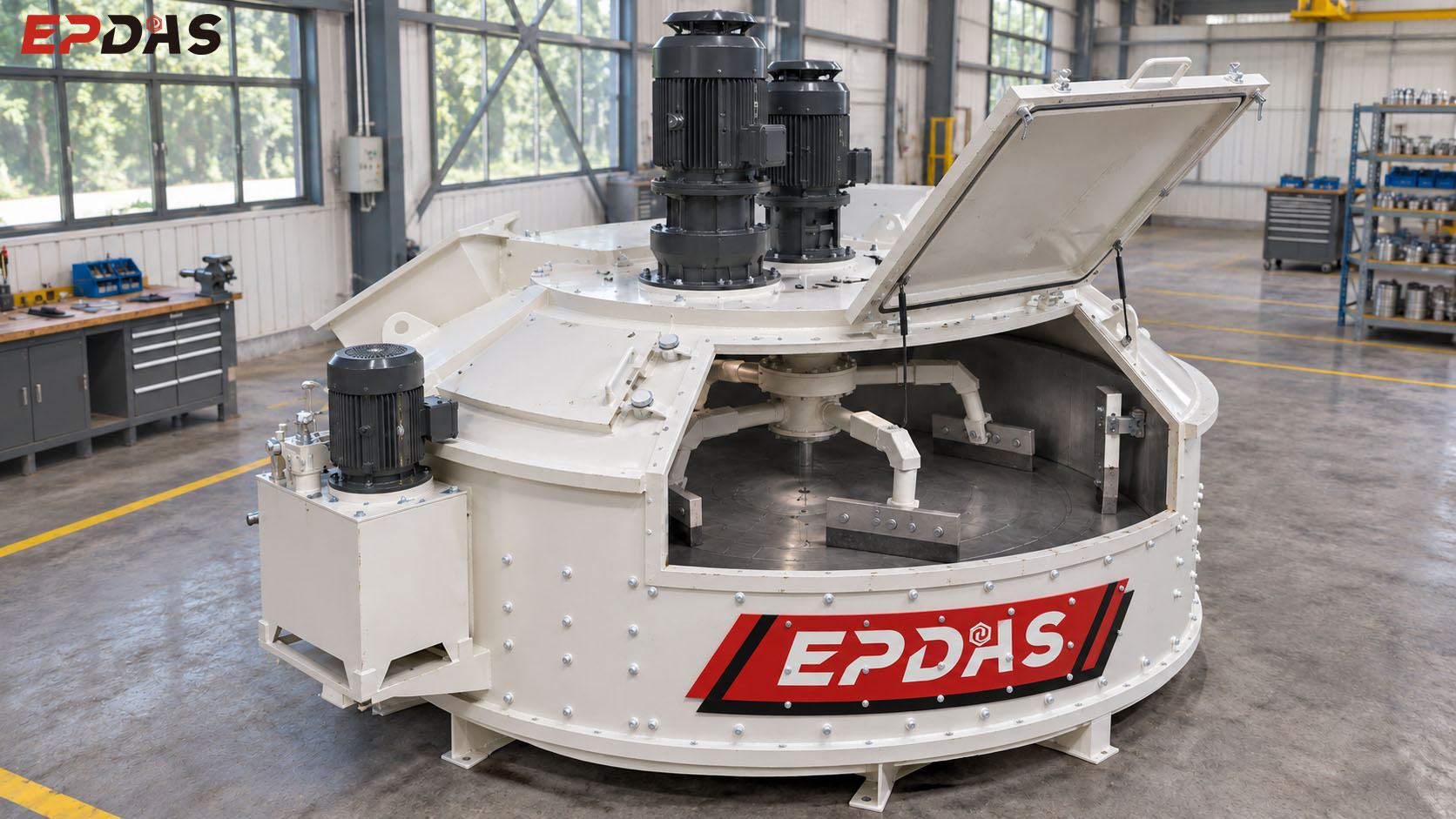
What Is the Function of the Scraper in the Vertical Concrete Mixer?
Many people confuse the work of the scraper and the main mixing blade, and the division of labor between the two is not the same.
The main mixing blade is mainly responsible for stirring most of the concrete materials in the middle of the mixing cavity to complete the main mixing action. The scraper handles more edge areas that are difficult to cover by the main blades of the cylinder wall and the bottom of the cavity, peels off the materials attached to the wall, and pushes the materials into the main mixing cycle.
There are differences in the scraper configuration of different models. Some devices are equipped with side scrapers and bottom scrapers at the same time, and some models are only equipped with one of them. The side scraper is close to the side wall of the mixing cylinder to reduce the accumulation and crusting of materials on the cylinder wall; the bottom scraper handles the linger material at the bottom plate position and assists the material to move in the direction of the unloading port.
The scraper does not need to be close to the liner and keep rubbing. The clearance between the scraper and the liner must follow the original manufacturer’s manual for the specific machine. This gap value will directly affect the cleaning effect after the end of each batch of production. If the gap is too large or too small, it will bring different on-site problems.
How Does Scraper Wear Affect Stirring and Unloading?
The Flow of Materials Near the Cylinder Wall and the Bottom Is Weakened
After the working edge of the scraper is worn out, the gap between the scraper and the liner will become larger. Part of the material close to the cylinder wall and the bottom plate does not get enough thrust, and it is difficult to return to the main mixing area in the middle.
This phenomenon is more likely to appear in the production of concrete ratio with low collapse and high viscosity. The sticky mixture itself is easy to stick to the metal surface. If the scraper thrust is insufficient, the edge material will stay in place for a long time.
There is no need to see the slight wear of the scraper to directly determine that the whole pot of concrete is unevenly mixed. The final actual impact depends on where the wear occurs and the degree of wear consumption, and then combined with the cavity structure of the mixer itself to make a comprehensive judgment. Slight local loss does not necessarily directly cause the unevenness of concrete.
The Residual Material Increases, and the Emptying Effect After Unloading Decreases

After the scraper wears out, the unloading is completed, and after the required shutdown and energy-isolation procedures have been completed, it can be observed that the residual material belt in a fixed position will appear on the cylinder wall or the bottom plate when the inspection door is opened. This residual comparison will be more obvious than before.
Part of the scraper itself assumes the function of unloading and diverting the flow. If there is a loss of this kind of scraper, the path of material flow to the unloading port will be obstructed, and there will be more residual material in the tank.
The accumulated residue will increase the workload of manual cleaning. If you need to switch the concrete color or change different ratios during production, the hardened crushed material left over from the previous batch will be mixed with the new material, bringing unnecessary quality hazards to the finished product.
The Production Cycle Is Extended and the Operating Cost Is Increased
After there are more residual materials in the cylinder, the site sometimes chooses to extend the stirring time, extend the unloading door opening time, or add additional manual cleaning processes. With the whole process, the complete production cycle of a single batch will be lengthened.
The additional cost is not only the cost of purchasing accessories. More from the working hours of the equipment, the manual input of cleaning posts, and the downtime that has to be arranged due to the handling of accumulated materials.
The wear of the scraper does not mean that the working current of the motor will definitely increase. Don’t rely on the ammeter reading alone to push back the wear of the scraper. There is no stable corresponding change relationship between the two.
What Phenomena Suggest That You Need to Check the Scraper?
Some abnormal conditions at the production site do not necessarily mean that the scraper has been damaged, but these signals remind us to open the cavity for on-site inspection of the scraper.
The following table sorts out the common on-site phenomena and the priority inspection parts, and lists other triggers that need to be investigated together.
| On-Site Performance | Priority Inspection Items | Factors That Need to Be Investigated at the Same Time |
| Fixed residual material belt appears on the cylinder wall. | Edge, gap and installation position of the side scraper | Material stickiness and daily cleaning implementation |
| There is a significant increase in the local residue at the bottom. | Bottom scraper and corresponding lining plate | Deformation of the lining plate, hardening and accumulation of material on the plate surface |
| The remaining materials in the tank increase after unloading. | Wear and installation position of the relevant scraper | Unloading door opening degree, unloading door opening time |
| It takes longer to mix the same formula to the qualified state. | State of scraper and mixing blade | Actual loading volume, moisture content of sand and stone, feeding order |
| There is a new scratching sound on the device, and there are local scratches on the wall of the cylinder. | Scraper gap, fastener and installation position | Hard foreign objects entering the cavity and loose lining screws |
These situations recorded in the form can only be used as troubleshooting clues, and cannot be directly concluded that it is scraper wear. The deformation of the lining plate, the incorrect parameters of the material, and the entry of foreign matter will also bring similar external performance. It is necessary to make a conclusion after field measurement and observation in the tank.
Should the Worn Scraper Be Adjusted or Replaced?
If you see that the scraper has signs of wear, you don’t need to buy new parts directly at the first time. First, look at the remaining thickness of the scraper and whether there is room for adjustment, and then decide whether to adjust the gap or replace the accessories directly.
Under What Circumstances Can It Be Restored by Adjustment?
The scraper body still has enough usable thickness, and there are no cracks or large pieces of collapse at the working blade. At the same time, the fixed bracket of the scraper and the movable adjustment margin. In this scenario, the gap can be adjusted.
When adjusting, according to the original manual of the equipment, restore the gap between the scraper and the lining plate to the factory specified range. In the process of adjusting the gap, you can not only stare at the scraper, but also check the loss of the corresponding position lining at the same time. If the lining plate has been dented and grooved, even if the scraper is adjusted in place, the actual working gap is still not up to the standard.
Under What Circumstances Do You Need to Replace It?
The wear of the scraper has reached the wear limit marked by the manufacturer, or, within the permitted adjustment range, the gap still cannot be restored to the specified range. At this time, it must be replaced.
If there are cracks, large notches, distortion and deformation in the scraper body, or damage to the installation base and fixing hole of the scraper, it is meaningless to adjust, and replace the accessories directly.
In some cases, if the installation position of the scraper is forcibly moved, it will cause the scraper, the stirring arm and the lining plate to collide and interfere with each other. In this case, it cannot continue to be adjusted and should be replaced directly.
The standard clearance, wear critical value and bolt tightening torque of different models of mixers are different. Do not use other model parameters.
Before entering the tank, follow the lockout/tagout (LOTO) procedures in the original manufacturer’s manual and the site’s safety rules. Isolate and lock out all hazardous energy sources, release or securely restrain stored energy, and verify effective isolation. Where mechanical blocking or support is required, use the manufacturer’s specified devices and methods. Enter the mixing chamber only after these measures and the applicable site entry requirements have been met.
How to Reduce the Abnormal Wear of the Scraper
Many scrapers are not lost prematurely by normal mixing and wear, and a lot of the extra consumption is caused by on-site operation.
Maintain the scraper gap according to the periodic measurement, and do not adjust the gap too small. If the gap is adjusted too narrowly, the scraper will continue to rub against the lining plate, and both of them will accelerate wear.
The accumulated materials that have formed hard lumps in the tank should be cleaned up in time. The hardened lump is stuck in the middle of the scraper and the lining plate. When running, it will constantly hit the blade of the scraper, causing the edge to collapse and deform.
The feeding weight should not exceed the loading limit allowed by the equipment for a long time. If the load continues to be overloaded, the material impact load of the scraper will increase, and the loss rate will be significantly accelerated.
The strength of gravel abrasion in aggregates is different, and the number of production batches will also affect the life of the scraper. You don’t need to copy the unified inspection cycle. You can determine how often to do the internal inspection of the tank according to the actual wear speed of your own on-site.
You can’t just stare at the scraper during maintenance. The lining plate, the scraper support arm, and each fastening bolt should be checked together. Only replace the new scraper, and ignore the deformed brackets and liners. The new scraper will soon wear out again.
Here, the two types of on-site abnormal sounds are distinguished in combination with the fault logic, which is convenient for the operator to quickly and initially judge the source of the problem:
- Continuous uniform metal friction sound: most of them belong to the small gap adjustment, and the scraper continues to scrape the lining plate; stop the machine, complete energy isolation, and remeasure and adjust the clearance according to the original manufacturer’s manual.
- Intermptent, impact rattling, clicking abnormal sound: biased dynamic impact failure. Common triggers include the excess of the aggregate particle size, large stones stuck between the gaps of the scraper lining, the loosening of the lining bolts, and intermittent impact during the stirring and rotation. If this kind of sound occurs, you can’t continue to produce with materials. Follow the tank-entry safety requirements above before checking for trapped material and inspecting the liner fasteners. Tighten any loose fasteners according to the manufacturer’s specified torque and procedure.
After replacing the scraper, turn on the trial production of several pots, pay attention to how much residue is unloaded, compare with the previous single batch of production, and confirm the actual status of the equipment after adjustment.
Conclusion
To judge whether the scraper needs to be maintained, you should not only look at the running time, but also combine the actual measurement of the gap at the tip and the actual remaining thickness of the scraper blade, and then make a comprehensive judgment against the various problems that occur at the production site. Don’t rely solely on feeling and experience to estimate the gap. Try to use a straight ruler and a plug ruler for actual measurement.
When contacting the equipment supplier for technical support, you can bring the complete model of the equipment, the cumulative production batch, photos of the wear part and the measurement data of the gap and residual thickness. If this information is given to the technician, it can also give suggestions for adjustments or replacements suitable for the site faster.