
Installation Requirements for a Cement Silo: Site, Foundation and On-Site Layout
2026-10-15 17:33:56
Preparation Before the Installation of the Cement Silo
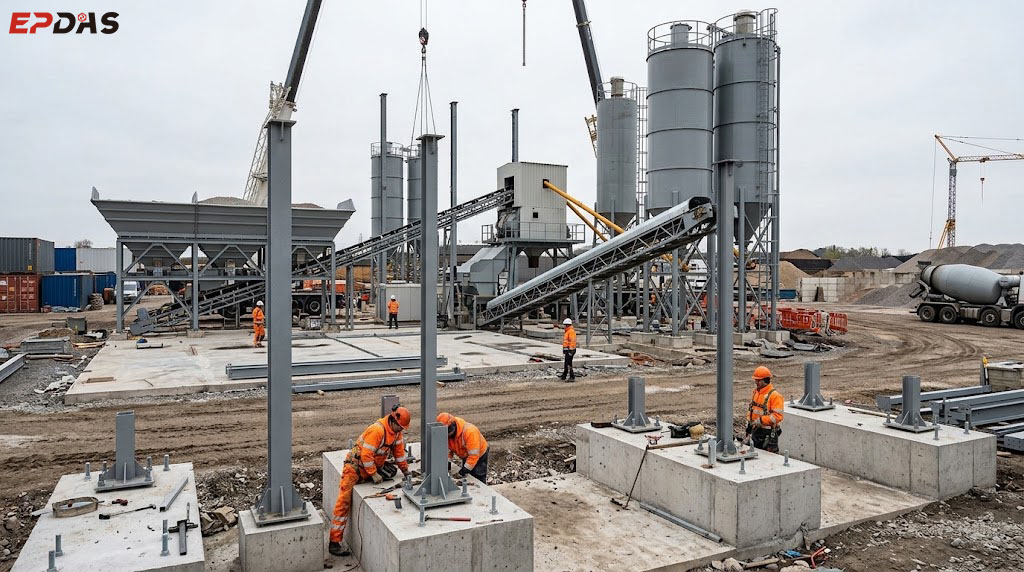
Many checks should be completed before the equipment arrives at the installation site. Lots of on-site installation problems in the later stage are due to the lack of confirmation in the early stage.
Check the size of the cement silo body and the factory configuration to ensure that the silo, legs, accessories and the ordered configuration are consistent. Confirm the on-site installation space and estimate the operating space required after installation.
Confirm the access and operating routes of transport vehicles and cranes, and complete the on-site survey before the equipment arrives. Study the installation drawings and the manufacturer’s manual, and coordinate the progress of foundation construction, power supply and supporting conveying equipment in advance.
All preparations should be completed before the equipment arrives, so as to avoid having to store the silo outdoors after delivery.
Requirements for the Site Conditions of the Cement Silo
Available space: In addition to the area occupied by the silo, space for the legs, screw conveyors and personnel access for maintenance should also be reserved. The areas around the dust collector and discharge valve should not be crowded by other equipment.
Ground condition: focus on checking the bearing capacity of the foundation to avoid the risk of uneven subsidence. Ensure proper site drainage. Long-term exposure of the foundation and legs to stagnant water will accelerate corrosion.
Transport and lifting access: verify the road load capacity and turning radius to ensure that vehicles and cranes can reach the designated operating area.
Overhead clearance: The lifting height required for a vertical silo is considerable. Avoid high-voltage lines, scaffolding, and overhanging buildings. If the clearance is insufficient, lifting operations must not proceed.
Maintenance space: the dust collector and pressure relief components on the top of the silo and the valve at the bottom of the silo should have sufficient space for personnel to operate and maintain them.
Note: Do not directly apply the common site and load-bearing values found on the Internet. The parameters need to be determined in combination with the silo type, ground conditions and local standards.
Requirements for the Foundation of the Cement Silo
Vertical cement silos with support legs generally cannot be placed directly on the original soil or ordinary floor. The load of the stored powder is large, and unsuitable ground may settle and crack, and most installations require independent concrete foundations.
The foundation design should take into account the total load and structural load of the silo, and fully assess the risk of soil subsidence. If the position of the support legs is uneven, the silo will tilt, and the support legs and the silo shell will bear additional stress.
The foundation dimensions and the positions of anchor bolts and embedded parts must strictly follow the manufacturer’s drawings, and must not be changed at will on the spot. The concrete must reach the required strength before the silo is installed.
If the foundation bearing capacity is inadequate, cracking and tilting of the silo may occur, creating structural risks. Before installation, review the position of the anchor bolts and the embedded plates, clean up the debris in the reserved holes, and ensure that the base of each support leg is fully supported.
Cement Silo Hoisting and Positioning

Lifting is a high-risk operation. It must strictly follow the manufacturer’s lifting instructions. Only the lifting points marked on the equipment and the designated lifting equipment must be used. It is forbidden to attach lifting gear to other parts of the silo shell.
Calculate the lifting capacity of the crane, and confirm the selection of the crane in combination with the silo’s weight, the crane’s lifting capacity and the operating radius. The lifting area must be isolated, and unrelated personnel are not allowed to enter the lifting area.
After the silo is lifted, position it according to the drawing. After it is in place, the verticality of the silo is checked, and it is confirmed that all the leg bases fit the foundation. Then the anchor bolts are tightened to complete the fixation.
Tips: The selection of lifting points, crane capacity, lifting equipment and safety plans shall be subject to the manufacturer’s documents, and the lifting plan must not be prepared based solely on general articles.
Connections Between the Cement Silo and the Powder System
The cement silo needs to be connected to upstream and downstream equipment, which is divided into two processes: feeding and unloading.
Feeding path: bulk cement tank truck → pneumatic conveying pipeline → cement silo. The pneumatic conveying pipeline is connected to the silo inlet, and the gasket and pipe clamp must be properly installed to prevent cement leakage and dust emissions during feeding.
Discharge path: cement silo → unloading device → screw conveyor → downstream mixing equipment. The flange at the bottom of the silo and the screw conveyor inlet must be properly aligned, and it is forbidden to force the bolts into place to avoid placing additional stress on the silo shell.
Assemble the unloading valves, fluidization devices and roof-mounted dust collectors. After all the pipelines are installed, check for component interference and ensure that the pipelines do not pull on the silo shell.
Electrical, Pneumatic and Pressure Safety Requirements
Electrical components such as level meters should be wired and protected against dust. The silo’s pneumatic components must receive compressed air at the pressure specified on the nameplate.
Focus on checking the pressure relief and dust removal components. Ordinary cement silos are not pressure vessels and cannot withstand excessive positive and negative pressure.
During the feeding operation, the dust removal and pressure relief devices must be in a usable state, and pneumatic filling must strictly follow the manufacturer’s design.
For models with safety interlocks, confirm that the interlock circuit functions normally, and all pressure safety requirements shall be subject to the equipment manual.
Commissioning and Inspection Before Use
The completion of installation does not mean that the silo is ready for operation, and functional checks should be completed before it is put into production.
- Checkall mechanical connection bolts and flanges to confirm that there is no leakage. Manually test the unloading and conveying mechanism to confirm that there is no jamming or interference.
- Check the material level monitoring and alarm devices, and confirm that the dust removal and pressure relief componentscan work normally. Carry out functional tests according to the manufacturer’s commissioning procedure.
- The configuration of different silos varies. Do not copy the commissioningsteps of other projects. The operator must be familiar with the feeding and unloading processes and know when to stop the system under abnormal conditions.
The installation quality of the cement silo is not determined by the verticality of the silo shell alone. The foundation, pipeline connections, dust collection system and pressure relief components should be coordinated according to the design, so that the equipment can run stably.
