
Trailer Concrete Pump vs Concrete Mixer Pump: What Is the Difference?
2026-11-02 17:52:27
At concrete construction sites, trailer concrete pumps and concrete mixer pumps are commonly used equipment for concrete pumping operations. Many people who come into contact with equipment selection for the first time can easily confuse these two devices. Although both of them can eventually transport concrete to the pouring point, there are essential differences in their basic functions, internal structure and overall operating processes.
The most important difference is whether the equipment itself can complete concrete mixing. Next, we will explain the differences between the two from the equipment structure, the operation process, and the actual use at construction sites.
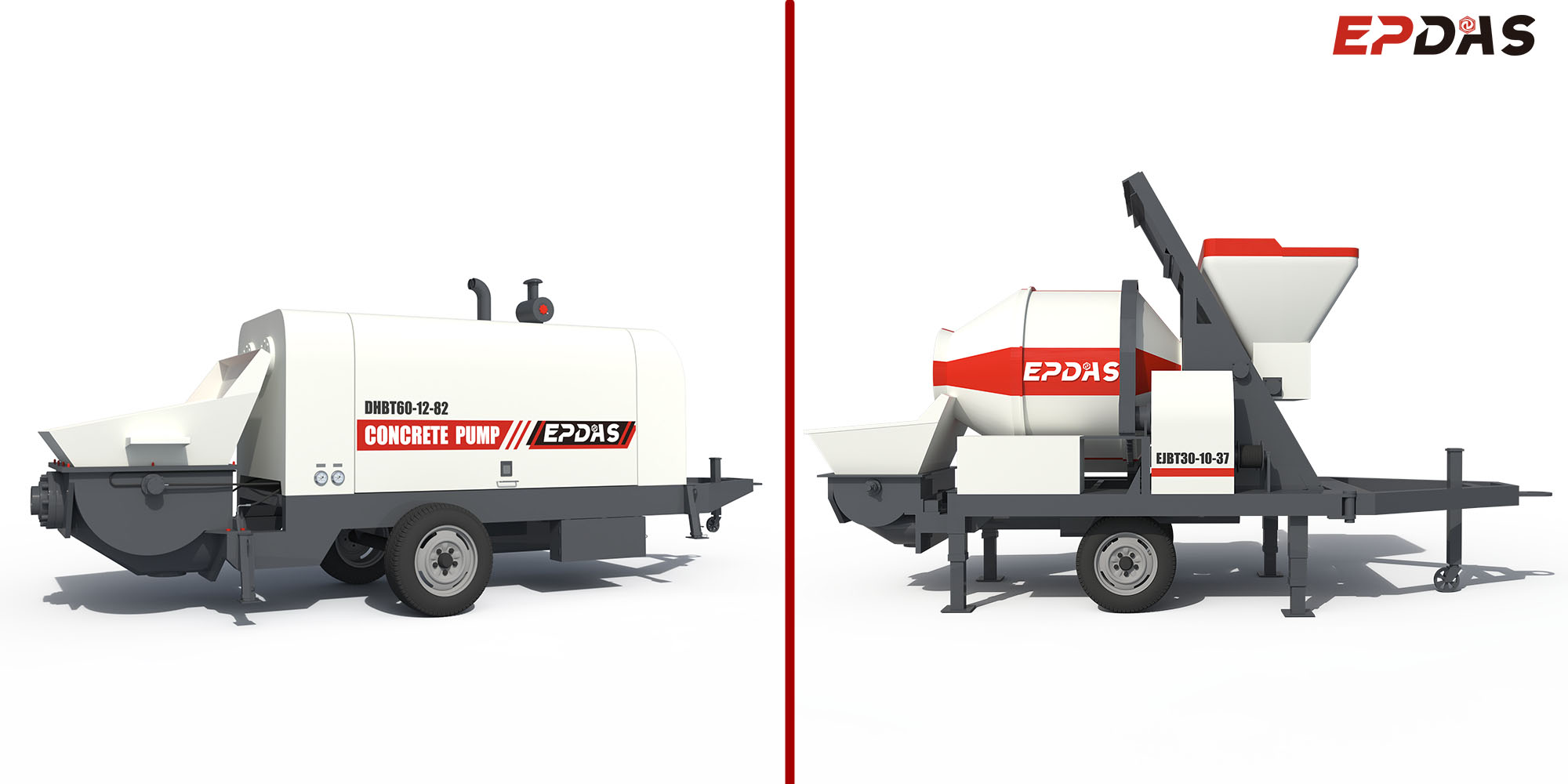
What is a trailer concrete pump?
Main functions
The core task of the trailer concrete pump is to transport concrete. It does not have the ability to mix, and cannot mix sand, cement and water into concrete. What is put into the equipment must be ready-mixed concrete that meets the required quality standards.
After the equipment receives the ready-mixed concrete, it relies on the pumping mechanism to transport the concrete along the pipeline to the floor, foundation pit or other construction locations that need to be poured.
Main components
- The hopper is the part that receives the incoming concrete. The finished concrete unloaded by the concrete mixer truck will be poured into the hopper first, which plays the role of temporary storage.
- The pumping system is the execution core of the whole machine. It relies on the reciprocating movement of the pumping cylinders to push the concrete into the delivery pipeline.
- The hydraulic system outputs power for the whole pumping action, controls the operating cycle of each cylinder, and directly affects whether the pumping equipment can operate continuously and stably.
- The delivery pipeline includes straight pipes, elbows and other accessories, which will be connected according to the on-site layout to determine the distance and direction that the concrete can reach.
Workflow
Concrete will not be produced inside this machine, and the preliminary mixing work will be completed by the mixing station or external mixing equipment. The concrete mixer truck transports the mixed finished concrete to the working surface and unloads it directly into the hopper of the delivery pump.
The materials in the hopper are continuously supplied to the pumping system, and the hydraulic mechanism drives the pump cylinder to operate alternately. The concrete is continuously delivered to the target pouring position along the pipeline installed in advance. The whole process only transfers materials and does not change the concrete mix ratio.
What is a concrete mixer pump?
Main functions
The concrete mixer pump integrates the two functions of mixing and pumping into the same device. There is no need to rely entirely on the finished concrete sent from the outside. The construction site is prepared with cement, sand, water and other basic raw materials, and the concrete mixing can be completed directly by the machine.
After mixing and obtaining qualified concrete, the equipment immediately starts the pumping process and directly transports the concrete outwards. A set of equipment covers the whole process from mixing to pumping. This model is more suitable for outdoor and small construction sites without large mixing stations.
Main components
- The mixing tank undertakes the material mixing work. After the sand and cement are put into the tank, the mixing is completed by the rotation of the blades in the tank.
- The loading system is used to lift the sand and stone aggregate into the mixing tank, which saves the trouble of manually shoveling the material.
- The water supply system can add water quantitatively, and work with the raw materials to achieve the corresponding concrete mix ratio.
- The principle of the pumping system is similar to that of an ordinary concrete delivery pump. The mixed concrete will be sent into the pumping mechanism and then pumped through the pipeline.
Workflow
Sand, cement and other raw materials are sent into the mixing tank through the loading system. The water supply system adds the corresponding amount of water to the tank according to the mix ratio required for construction. The mixing tank continues to rotate, so that all kinds of materials can be fully mixed to produce concrete that meets the construction requirements.
The mixed concrete enters the pumping unit and is transported to the pouring point of the construction site through the external delivery pipeline. The whole process is completed by this machine, from raw material feeding to concrete discharge and pouring.
The core differences between trailer concrete pumps and concrete mixer pumps

This part focuses on comparing the differences between the two devices themselves, making it easier to distinguish between them.
Mixing function
Ordinary trailer concrete pumps do not have a built-in mixing mechanism. They can only receive ready-mixed concrete, and the raw materials cannot be added directly to produce concrete that meets the required standards.
The concrete mixer pump has its own complete mixing unit, which can directly process sand and cement raw materials and complete concrete mixing inside the machine.
Equipment configuration
The configuration of the trailer concrete pump is relatively simple, mainly consisting of a hopper, pumping unit, hydraulic system and delivery pipeline. There is no need for accessories related to loading, water supply and mixing tanks.
On the basis of the pumping structure, the mixing tank, aggregate loading mechanism and water supply control system are added to the concrete mixer pump, and the structure of the whole machine will be more complex.
Concrete supply method
The trailer concrete pump relies entirely on the external supply of concrete. Generally, it comes from concrete delivered by mixer trucks from a commercial concrete batching plant, or the construction site is equipped with independent mixing equipment to supply the concrete. The equipment itself is not involved in material preparation.
There are two operating options for the concrete mixer pump. It can mix and produce concrete itself, or receive external finished concrete and use it as an ordinary delivery pump.
The starting point of the operation process
The trailer concrete pump starts operating when the finished concrete enters the hopper. The previous batching and mixing processes are all left to other equipment to complete.
The operation of the concrete mixer pump begins with the feeding of raw materials. Mixing is a part of the machine process. After the mixing is completed, it will enter the pumping stage.
| Comparison item | Concrete delivery pump | Concrete mixer pump |
| Mixing function | No mixing function | Built-in mixing function |
| Equipment configuration | Hopper, pumping, hydraulic, delivery pipeline | Mixing tank, loading system, water supply system, pumping system |
| Concrete supply | Relies entirely on external ready-mixed concrete. | Raw materials can be mixed by the machine, and external finished concrete can also be received. |
| Starting point of operation | Receiving ready-mixed concrete | Feeding sand, cement and other raw materials |
What impact will these differences have on actual construction?
After understanding the differences in the equipment itself, it is more important to see what changes these differences bring to actual construction sites. This part no longer repeats the equipment structure and focuses on the changes in practical site operations.
Construction site equipment layout
If you choose an ordinary trailer concrete pump, you must be equipped with the corresponding concrete mixing equipment on site.
If commercial concrete is used, it is necessary to reserve parking and unloading space for concrete mixer trucks. The mixer truck should be able to drive to the side of the delivery pump hopper to complete the unloading. If the construction site builds its own mixing station, it is also necessary to arrange the discharge channel between the mixing equipment and the pump.
The concrete mixer pump can reduce the number of external supporting equipment. There is no need to place a mixer separately, and there is no need to wait for the mixer truck to deliver concrete frequently. However, the equipment itself will occupy a larger area than a simple delivery pump, and it is necessary to reserve a space for raw material storage to facilitate the nearby loading of gravel and cement.
The two types of equipment have different requirements for the site. When choosing a delivery pump, focus on the unloading position of the mixer truck; when choosing a concrete mixer pump, it is necessary to reserve space for aggregate storage and equipment placement.
Cooperation with concrete supply
The key point in the construction of trailer concrete pumps is the matching of the concrete supply rate from mixer trucks and the pumping speed.
The mixer truck cannot keep up with the required supply rate, and the pump has to idle and wait, so the pouring operation is interrupted. If too much concrete is delivered at once, the concrete inside the hopper may stay for too long, which can lead to a loss of slump and clumping. On-site personnel need to continuously follow up the arrival of mixer trucks and balance the rhythm of incoming materials and pumping.
The concrete mixer pump should coordinate the mixing speed and pumping speed of the machine. The speed of mixing and producing concrete should keep up with the pumping rate. If the mixing speed can’t keep up, the pumping can only be intermittent.
No matter what kind of equipment, if there is a problem with the connection of the front and rear processes, it will cause pipeline blockages, interruption of pouring, and even premature setting and waste of concrete.
Concrete quality control
The concrete output by the two types of equipment must meet the basic conditions for pumping. The aggregate particle size should not exceed the standard, and the slump should be maintained within a reasonable range, otherwise the pipeline is easy to block.
When using an ordinary trailer concrete pump, the proportion and mixing uniformity of concrete are all the responsibility of the upstream mixing station or the external mixer. The on-site personnel mainly check whether the quality of the incoming materials meets the standard, and the equipment itself will not change the mix ratio of concrete.
The working condition of the concrete mixer pump will require an additional level of quality control. On-site personnel need to control the proportion of sand and cement and the amount of water added. At the same time, they need to pay attention to the mixing time in the tank to ensure that the texture of the mixed concrete is uniform. Fluctuations in the quality of raw materials will directly affect the quality of the final concrete.
How to choose between concrete pumps and concrete mixer pumps

Next, we will only talk about the selection and judgment conditions, and will not repeat the basic definition of equipment. Judging from the existing conditions of the construction site, the range of equipment selection can be narrowed.
Which situations are more suitable for a concrete delivery pump?
The first condition is that the construction site has a stable concrete supply channel. For example, the project directly purchases commercial concrete, and the concrete mixer truck can be continuously delivered to the site on time. The core requirement of the project is only to transport the finished concrete to the long-distance or high-altitude pouring position, and there is no need for the machine to mix.
After determining the selection, check the parameters according to the actual situation of the project. Combine the longest distance, vertical height, and the concrete volume of a single operation to match the pumping pressure and pumping displacement, and at the same time confirm the aggregate particle size allowed by the equipment to pass.
Which situations are more suitable for a concrete mixer pump?
There is no ready-made commercial supply at the construction site, and concrete needs to be mixed on the spot. Like some field projects and remote small projects, the round-trip transportation cost of mixer trucks is very high, and it may even be difficult for mixer trucks to reach the site.
There is no extra budget or site on site to arrange a set of independent mixers, and it is hoped that mixing and pumping can be combined into one device to complete the operation. This kind of equipment also has limitations. The mixing volume of this machine is limited, and it is not suitable for large-scale projects with large volumes of continuous pouring, and it is more inclined to small and medium-sized construction scenarios.
EPDAS concrete pumps and concrete mixer pumps
Trailer concrete pump
EPDAS trailer concrete pump is divided into diesel engine drive version and motor drive version, which can adapt to the power supply conditions of different construction sites. Different models correspond to different pumping displacement, conveying pressure and conveying distance. If you need to view the detailed technical parameters of each model, you can visit the [trailer concrete pump].
Concrete mixer pump
EPDAS concrete mixer pump also provides two power solutions: electric motor and diesel engine. The equipment integrates mixing and pumping, which is suitable for small and medium-sized construction sites that lack commercial concrete supply. If you want to check the specific model and configuration details, you can visit [concrete mixer pump].
Conclusion
To sum up, the concrete delivery pump is only responsible for transporting the finished concrete, relying on external mixing and supply; the concrete mixer pump can complete the mixing with raw materials on the spot, and then pump the material directly.
There is no absolute good or bad in the selection. It mainly depends on the concrete supply channel of the construction site, the on-site power supply, the site conditions, and the actual requirements of the pouring operation for the transportation distance and the concrete volume. If you are not sure what kind of equipment your project is more suitable for, you can contact us to discuss your project conditions and get recommendations.