
What Factors Affect the Purchase Cost of Concrete Pumps?
2026-11-03 16:16:05
When choosing a concrete pump, many people’s first reaction is to ask for a quotation. However, although they are all called concrete pumps, quotations on the market can vary significantly. It is not meaningful to simply compare the quoted prices. Behind the price are the equipment category, hardware configuration, whether the equipment is new or used, and there are many hidden expenses that are easy to be missed during procurement. Only by understanding these key points that affect the cost can we judge whether a quotation is reasonable and avoid spending more money on useless functions.
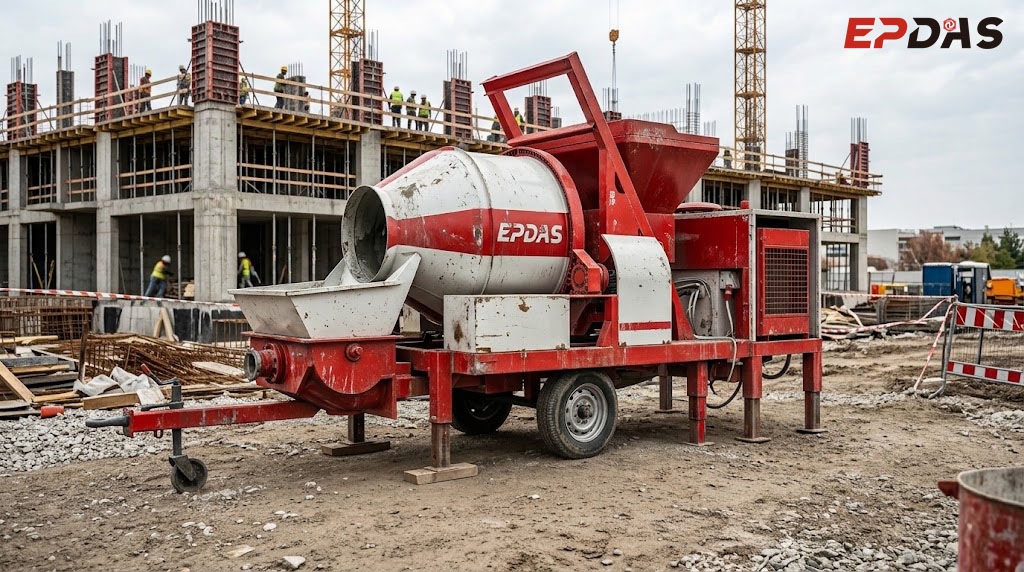
Concrete Pump Types
The common concrete pumps on the market are divided into concrete mixer pumps, trailer concrete pumps, concrete boom pumps, and spider boom pumps. These different categories have completely different overall structures, mobility, and operating methods, and the manufacturing complexity also varies, so the basic cost naturally differs.
The overall structure is often called the trailer pump, is relatively simple. It does not have its own driving system and needs to be towed between job sites. The whole machine mainly focuses on the function of pumping, which makes it one of these equipment types with the lowest entry-level purchase costs.
It integrates the mixing mechanism and the pumping unit. In addition to the pumping components, there are also mixing tanks, loading mechanisms and water supply components, and there are more parts. The manufacturing and assembly of the whole machine are more complicated, and the basic cost will be higher than that of ordinary trailer pumps.
It will integrate the pumping system directly into the truck chassis. With its own extendable placing boom, there is no need to assemble a large number of delivery pipes on the spot, and the transfer can also rely on the chassis to drive directly. The truck chassis, the whole set of boom steel structure, and delivery pipeline will increase the overall cost of the equipment.
It is equipment designed for specific applications, which is mostly used for indoor and old building renovation projects with limited space. Its boom structure is small and flexible, the hydraulic circuits are more complex, the machining precision of its components is high, and the procurement threshold is also higher. No kind of equipment is absolutely better, but the positioning of the equipment is different. The model that is suitable for your own construction site is a cost-effective choice.
Pumping Performance, Power System and Whole Machine Configuration

Even for the same type of concrete pump, the quotation will fluctuate a lot, and most of the differences come from the internal technical parameters and hardware configuration.
Pumping capacity and pumping pressure
They are the two most intuitive indicators. If you need to carry out large-volume, continuous pouring, or to send the concrete to a very high position or over a long distance, the equipment needs to achieve a larger pumping capacity and output pressure. To achieve this kind of performance, the pump cylinder and hydraulic parts need to use higher-specification accessories, and the cost will rise accordingly.
The maximum vertical and horizontal pumping distance is also closely related to the specifications of the entire hardware system. If you want to achieve a longer delivery distance, it is not enough to simply use longer pipelines. The main pumping cylinders and hydraulic valve groups also need to be upgraded accordingly.
The maximum aggregate particle size allowed by the equipment will also affect the material requirements. If you want to handle larger aggregate sizes, hoppers, cylinders, S pipes and other flow-passage components need to be widened and thickened.
Two power options: electric motor and diesel engine
For the motor-driven model, the whole machine does not need to be equipped with an engine; the diesel engine version needs to be equipped with a complete diesel engine unit, and the hardware cost itself is higher. In addition to the power source, the brand and specifications of the engine or motor itself will also be reflected in the final quotation.
The hydraulic system and pumping core components
They are the parts that account for a high proportion of equipment costs. There are differences in the materials and processing standards of hydraulic valves and oil pumps from different brands. For example, whether the core hydraulic components (main oil pump and multi-way valve) are sourced from leading international brands or established domestic brands will not only be directly reflected in the initial quotation but also affect the equipment’s continuous operating stability and overhaul intervals. Common international brands in the industry such as Rexroth, Kawasaki and Parker are often used in medium- and high-end models.
The material selection of wear-resistant parts cannot be ignored. For frequently worn parts such as S tubes, spectacle plates and cutting rings, if materials with higher wear resistance are selected, the factory price of the equipment will be higher, but the frequency of subsequent parts replacement may vary.
The difference in the control system will also bring about the price difference. The basic model only retains simple button operation, and the high-end version will be equipped with a display screen and more status monitoring points. Higher configuration does not mean that it is suitable for your project. If the actual working conditions of the construction site do not need high pressure and large displacement, blindly choosing high-configuration models will only increase the procurement expenditure in vain.
Cost Differences Between New and Used Concrete Pumps
When the budget is limited, many buyers will set their sights on second-hand concrete pumps. The purchase price of a used pump is usually much lower than that of a new one, but you can’t just focus on the initial transaction price to make a decision.
When you evaluate a used pump, the first thing to look at is the actual working condition of the equipment and the cumulative working hours. For the same type of pump, the remaining service life of a machine with a few thousand operating hours and one with tens of thousands of hours can be very different. The longer the equipment has been in operation, the greater the wear and aging of its internal parts.
You need to know the complete maintenance history. Have the wear-resistant parts and hydraulic oil been replaced on time? Have there been major failures in the past? Has the equipment undergone any major overhauls? For equipment without maintenance records, it is difficult for you to predict when a sudden failure will occur.
It is also necessary to evaluate the estimated remaining service life of the equipment. Some equipment looks intact on the outside, but the core pumping parts are nearing the end of their service life, and you may have to invest a large amount in repairs and replacement parts in a short time.
The advantage of a used pump is that the initial investment is small, but it is difficult to fully estimate the potential maintenance and parts replacement costs in advance. The total investment is not necessarily more cost-effective than choosing a new machine with sufficient configuration.
Additional Costs Beyond the Purchase Price

The purchase quotation of equipment is only a part of the whole investment. Many additional expenses will not be written in the unit price of equipment, and it is easy to be ignored in the procurement stage.
If it is cross-border procurement, the logistics cost of international sea and land transportation is a considerable expense. The equipment belongs to heavy machinery, with a large volume and weight. Depending on the destination port and transportation method, the freight gap is obvious. Some shipments will also incur various fees related to customs clearance. Especially in cross-border procurement, the size and weight of the equipment are often oversized, requiring transportation by flat rack containers or roll-on/roll-off (Ro-Ro) ships.
At the same time, the engine emission standards of the destination country (such as Tier 3/4 or European standards) and electrical safety certifications will also directly affect the compliance cost. Once the equipment does not meet the local mandatory standards, customs clearance will not be completed, and even a fine will be imposed after the equipment arrives.
After some models arrive at the job site, they need to be installed and commissioned. Although some suppliers will include this service, there are also cases where you need to pay a separate fee to arrange for technicians to come on-site.
Spare parts and daily maintenance are continuous expenses. Whether new or used, the wear parts such as the spectacle plates, cutting ring and conveying pipeline should be replaced from time to time. Hydraulic oil and filters should also be maintained according to the recommended schedule. The prices and supply lead times of spare parts are different for different brands and models, and these costs accumulate over time.
There are also energy expenses in the operation stage of the equipment. The diesel version consumes fuel, and the electric version consumes industrial electricity. Even if the purchase price of the two pieces of equipment is similar, the energy costs of long-term operation will be significantly different.
Operator training and daily operation and maintenance also need to be taken into account. Operators should be familiar with the key points of equipment operation and know how to perform basic troubleshooting. If the personnel are not familiar with the equipment, it will increase the risk of equipment damage and indirectly bring more costs.
Only by taking all these items into consideration can it be regarded as a complete calculation of the total equipment investment.
Choosing Concrete Pumps Within the Budget
After understanding the various cost factors, you can select models based on your own budget and avoid being misled by impressive-looking specifications.
Match the pumping capacity with the actual needs of the project. There is no need to pursue the maximum value on the parameter table. The standard is set according to the typical concrete pouring volume and delivery height and distance of the project. Most of the projects are small- and medium-scale pouring projects, so there is no need to buy large pumps for large-scale projects.
Determine the type of equipment suitable for your project. If there is a lack of external power supply in the field, it is necessary to consider the diesel engine model; if there is a stable supply of ready-mixed concrete on the construction site, there is no need to pay extra for the mixing function.
Pay attention to the on-site power supply and operating environment of the construction site. If the site’s power supply capacity is limited, choosing a high-power electric model may mean that the site cannot meet its operating requirements even after the equipment is purchased.
Include the long-term maintenance cost in the evaluation. Don’t just compare how much it costs when you buy it, but also consider whether consumable parts are readily available and their approximate prices. A machine with a slightly lower quotation but difficult-to-source spare parts may cause trouble during subsequent use.