
Which One Should I Choose, a Diesel or Electric Concrete Mixer Pump?
2026-11-04 15:35:26
Diesel and electric concrete mixer pumps can complete concrete mixing and pumping operations on site, eliminating the need for a separate mixer and concrete pump. The core difference between the two types of equipment comes from the power source. Different power sources lead to differences in on-site power supply requirements, daily expenses and site adaptability.
Neither type of equipment is better in every respect. In the end, whether to choose diesel or electric depends on the conditions at your site and the actual requirements of the project itself. You can’t make a decision based on the equipment parameters alone.
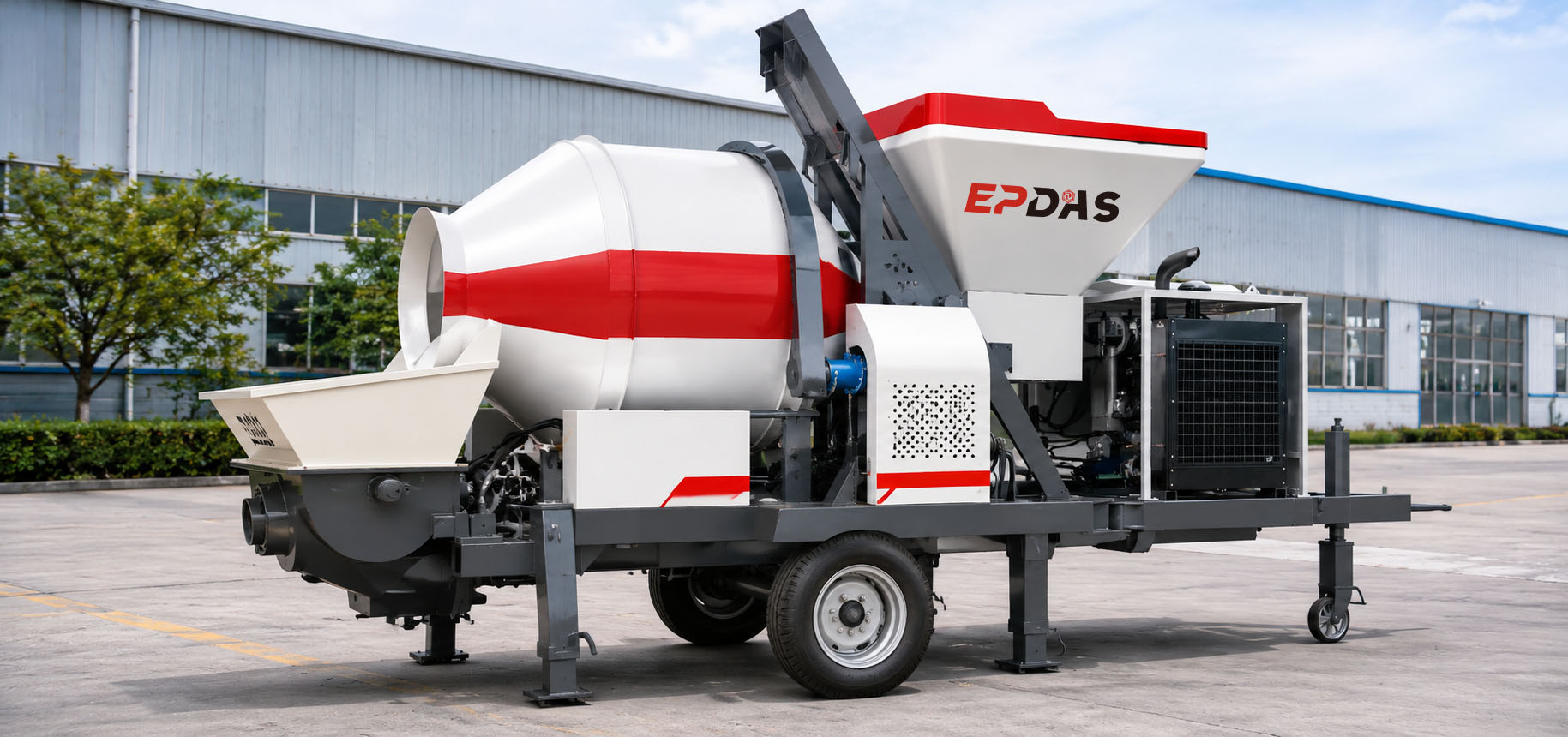
The Core Difference Between Diesel and Electric Concrete Mixer Pumps
The following table shows the objective differences between the two types of equipment in actual use. It only presents their characteristics without judging which is better. The actual impact of these differences is then discussed in relation to construction site conditions.
| Comparison item | Diesel concrete mixer pump | Electric concrete mixer pump |
| Power source | Diesel engine | Motor |
| External power supply demand | No external mains power is required for normal pumping operation. | External power supply is required. |
| Composition of operating costs | Diesel consumption + engine maintenance | Electricity bill + maintenance of electrical components |
| Site adaptability | Suitable for construction sites with poor power grid conditions | Subject to on-site power supply conditions |
| Noise and emissions | The engine produces noise, and there are exhaust emissions during operation. | No diesel engine exhaust emissions in operation |
| Key points of maintenance | Diesel engine + pumping system | Motor and electrical components + pumping system |
Many purchasing customers will use the table directly to make their selection. However, the table only shows the basic differences. In actual construction, the same equipment may perform very differently at different sites.
Take noise as an example. The engine noise of diesel equipment has limited impact on open construction sites, but if it is placed in a closed foundation pit, the impact will be amplified. Although the electric equipment does not have engine noise, the stirring and hydraulic parts still produce noise, which is easy to ignore.
Power Supply Conditions and Site Adaptation Requirements

Power supply is one of the most important differences between the two types of equipment. Many equipment failures after entering the site are not caused by problems with the machine itself, but by a failure to evaluate the on-site power supply conditions in advance.
Diesel concrete mixer pump: does not rely on external power to operate
The entire machine is powered by its own diesel engine.
This kind of machine is more suitable for field construction sites where there is no industrial power supply, or where the voltage fluctuates frequently and the power supply is intermittent. In mountainous infrastructure construction and remote rural housing construction, diesel models are often preferred.
Not needing a connection to the power grid does not mean the equipment has no limitations. The transportation and storage of diesel should be considered in advance at the site. The engine will discharge exhaust gas. When working in a closed area, it is necessary to ensure adequate ventilation to prevent the accumulation of exhaust gas.
Fuel supply should also be included in the preliminary planning. If the construction site is particularly remote and the diesel delivery time is long, it is necessary to estimate the daily fuel consumption and prepare reserve fuel to avoid interrupting work.
Electric concrete mixer pump: requires a stable power supply
The electric mixer pump is completely driven by an electric motor, and the voltage, frequency and power supply capacity of the on-site power supply must match the parameters marked on the equipment nameplate.
If the on-site cables are undersized and the transformer capacity is insufficient, the motor output will be insufficient and circuit breakers may trip frequently, which will directly interrupt the concrete pouring. Many on-site failures are rooted in the power supply line, not the pump body.
In addition to the transformer capacity, the cable laying method should not be overlooked. Too long and too thin cables will produce voltage drops. After the machine load increases, the voltage will drop, mixing and pumping will be affected, which may also accelerate the aging of the motor.
At sites with a stable industrial power supply, electric models do not need regular diesel purchases. As long as the power supply is in place, the on-site management work associated with fuel transportation and storage can be reduced.
Pumping Performance: Is the Power of Diesel Models Necessarily Higher?

Many customers assume that the output capacity of the diesel version of the mixer pump will be better than that of the electric one. In practice, this is not necessarily true.
Pumping capacity and conveying pressure
To judge the working capacity of a mixer pump, you need to consider the actual pumping volume, concrete output pressure, and the vertical and horizontal conveying distance that can be achieved.
These indicators are determined by the power configuration of the whole machine, the design of the hydraulic circuit and the structure of the pumping cylinder. The theoretical pumping capacity of diesel and electric models with similar specifications can be close.
What really limits the actual pumping performance on site is often not the power source. The ratio of concrete sand and stone, the slump, as well as the length of the conveying pipeline and the number of elbows will greatly change the actual pumping rate. With the same pump and different concrete mix proportions, the performance will be obviously different.
The influence of power source on pumping stability
To maintain a stable output, the diesel engine needs to be kept in the appropriate speed range. When the load suddenly rises, if the operation is improper, the speed will fluctuate greatly, which will indirectly affect the continuity of pumping.
The stability of the electric model is dependent on the external power supply. If the voltage is stable, the motor output will be stable; once the power grid fluctuates, the output power of the motor will also change.
As long as the model configuration is selected correctly and the power supply or fuel supply is normal, both devices can pump concrete continuously for a long time. When choosing equipment, don’t look directly at whether it is diesel or electric. It is more reliable to directly check the technical specifications of pumping pressure and theoretical pumping capacity.
Comparison of Operating Expenses: Diesel Fuel Cost VS Electricity Cost
The purchase of equipment should not only be based on the purchase price. Long-term operating and maintenance expenses can create a considerable cost difference over the equipment’s service life.
Fuel consumption and electricity expenses
The fuel consumption of diesel models is not a fixed value. The size of the equipment load, the condition of the engine, and the continuous daily working time will change the fuel consumption per unit of time. The difference in fuel consumption between light-load stirring and full-load long-distance pumping is obvious.
The electricity cost of the electric model depends on the power consumption of the whole machine and the industrial electricity price of the project location. There is a big difference in electricity prices between different regions, which will directly change the daily use cost of electric models.
Don’t use the rated power on the nameplate of the equipment to calculate the actual cost directly. The machine will not run at full capacity all the time. No-load operation and intermittent waiting time for pouring will reduce average energy consumption.
If the same model is used in two different countries or different provinces in China, the prices of diesel and electricity are different, and the cost advantages of the two models may be reversed.
Maintenance and long-term maintenance expenditure
In addition to the routine maintenance of the mixing, pumping and hydraulic systems, the diesel model also needs engine-related maintenance. Regularly changing the oil, oil filter, fuel filter, and checking the fuel injection system are all necessary items. As engine parts age, repairs and replacement parts will also bring additional expenses.
The electric model does not require maintenance of the internal combustion engine, but it is not maintenance-free. Motor bearings, contactors, cable joints and electrical control cabinet components should be checked regularly. In the humid and dusty construction site environment, the failure rate of electrical components may increase.
The wear rates of components shared by both types of machines, such as mixing blades, pumping cylinders, seals and hydraulic pipelines, are not directly determined by the power source. Wear parts should be replaced regularly according to the workload. Both models will bear this expense.
The frequency of use of the equipment will also change the long-term cost. If the number of operating days in a year is small, the engine may wear more slowly, and the maintenance requirements of diesel models may be lower; if the equipment operates for long periods almost every day with a stable power supply, the operation and maintenance advantages of electric models are more likely to be apparent.
Noise, Exhaust Emissions and Operating Environment
The surrounding environment of the construction site and the size of the operation space are also points that need to be weighed when selecting the model. The power source will directly change the environmental impact of on-site operation.
Diesel concrete mixer pump
The engine will continue to produce noise and exhaust gas at the same time. At open-air construction sites with sufficient ventilation, the exhaust gas can dissipate quickly, and the impact of noise is relatively controllable. If you work in poorly ventilated foundation pits and semi-enclosed spaces, exhaust gas can easily accumulate, and there will be risks for personnel working in the surrounding area for a long time. Extra caution is required in such conditions.
Some urban construction areas have restrictions on on-site exhaust emissions, and the relevant local requirements for construction machinery exhaust should be confirmed before entering the site.
Electric concrete mixer pump
During operation, it will not produce on-site exhaust gas from a diesel engine, which is one of its main advantages.
Many people will mistakenly think that the electric mixer pump is completely noiseless. The noise of the motor itself is low, but the stirring mechanism stirs the sand and stone, the hydraulic system operates, and the concrete flows inside the pipeline, all of which still produce noise, but the overall noise level will be lower than that of the diesel model of the same specification.
The absence of exhaust gas does not mean the equipment can be used in any indoor environment without precautions. For indoor or semi-enclosed space operation, in addition to confirming the power supply capacity, it is necessary to ensure proper cable protection, provide leakage protection, and implement all electrical safety measures before the work can be started.
Diesel or Electric: Make a Quick Selection Based on Project Conditions
Based on the actual situation of the construction site, you can quickly narrow down the scope of selection by using the following table.
| On-site conditions of the project | Preferred model |
| There is no reliable power supply at the site. | Diesel model |
| The project is located at a remote construction site. | Diesel model |
| Frequent transfer is required, and the power supply conditions of each construction site are different. | Diesel model |
| A stable industrial power supply is available | Electric model |
| The local industrial electricity price is low, which can save a lot of operating expenses compared with diesel. | Electric model |
| Strict exhaust emission restrictions at the construction site | Electric model |
| The ventilation conditions of the operation area are limited, and at the same time, the site can meet the electrical safety standards. | Electric model |
| High requirements for pumping capacity | Compare the technical specifications of different models, don’t look at the power type |
Neither diesel nor electric mixer pumps are better in every situation. For remote construction sites with unreliable electricity, diesel models are more suitable; for projects with a stable industrial power supply, electric models may have advantages in operating costs and on-site emissions. No matter which category is chosen, it is necessary to check the pumping pressure, conveying distance and other parameters in the end to match the pouring needs of the project.
EPDAS Diesel and Electric Concrete Mixer Pump Reference Models
Based on the selection criteria above, you can consider the following EPDAS mixer pump models.
EPDAS diesel concrete mixer pumps
These diesel engines make them suitable for construction sites with unstable power supply or no external power supply. When selecting the type, it is still necessary to consider your actual delivery distance and the amount of concrete to be poured per hour, and then determine the specific model.
EPDAS electric concrete mixer pumps
The electric series relies on an external industrial power supply. Before confirming the purchase, be sure to check the capacity and cable specifications of the site transformer, and confirm that the on-site power supply can meet the equipment’s operating requirements.
No model is suitable for all working conditions. If you are not sure whether the parameters match the project, you can review the power supply, pumping distance and concrete conditions of the construction site, and then further check whether the equipment is suitable.